While the right side wins at takeoff for Chennai's coastline views, the left side dominates the majority of the flight. Heading northeast, the left side tracks the Bay of Bengal coast during climb, then faces the Andaman Sea, the Malay Peninsula coastline, the South China Sea, and the dramatic approach into Tokyo Bay. The landing views from the left into Tokyo are among the most spectacular urban arrivals in Asia.
Flown MAA to HND? Did we get it right?
Flight Path
Madras to Tokyo is 3,999 miles (6,436 km), a flight of about 8 hours 30 minutes.
The route tracks northeast across the Bay of Bengal, passing over or near the Andaman and Nicobar Islands, then crosses the Malay Peninsula near southern Thailand or the Strait of Malacca, traverses the South China Sea, passes over or near the Philippine Sea, crosses the Ryukyu Islands chain including Okinawa, and descends over the East China Sea before entering Japanese airspace and approaching Tokyo Bay from the south.
Great circle distance and headings ›


Phase by phase
Takeoff from MAA
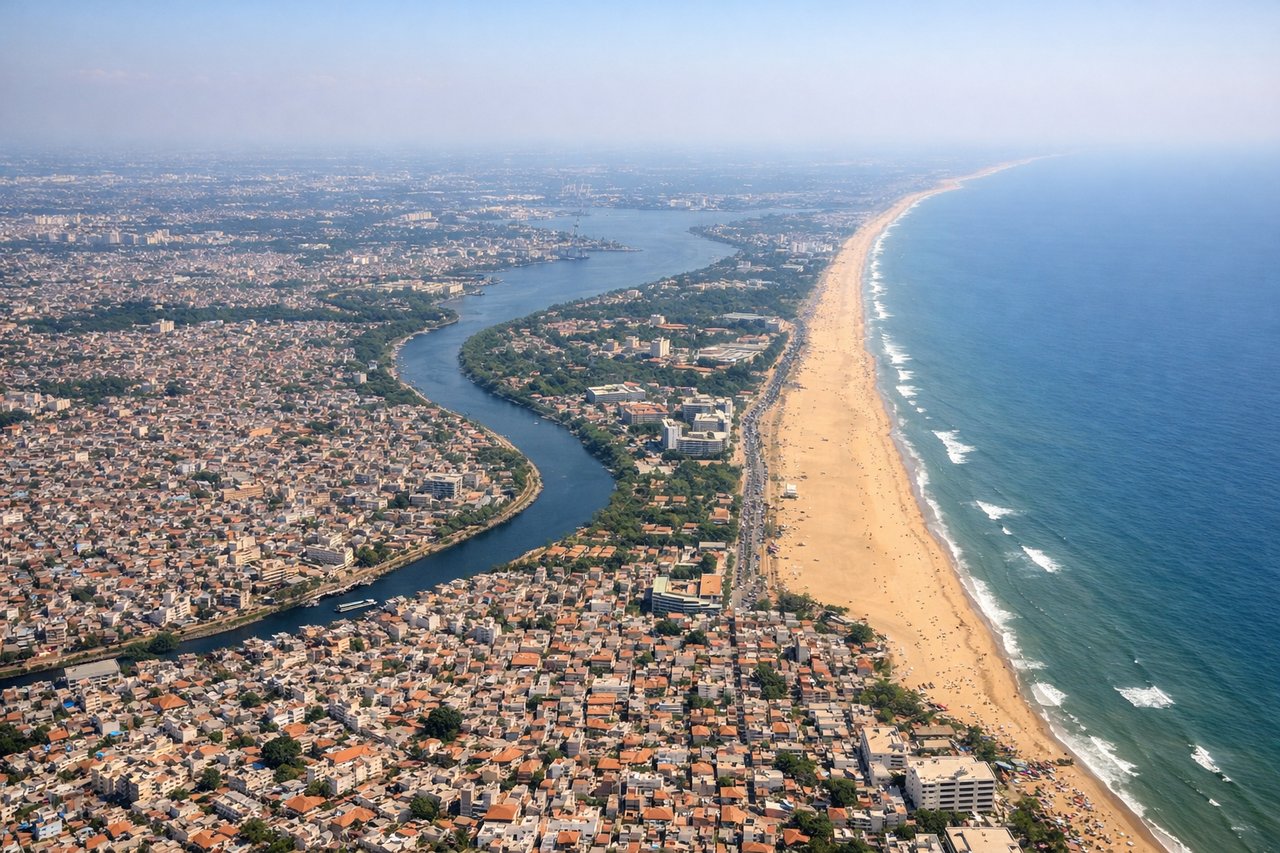
RIGHTChennai airport's primary departure runway 07 sends aircraft eastward over the Bay of Bengal. The right side faces north, giving views back over the Chennai city grid, the Cooum and Adyar rivers threading through the urban fabric, and Marina Beach — one of the longest urban beaches in the world — stretching along the coastline.
Landing at HND
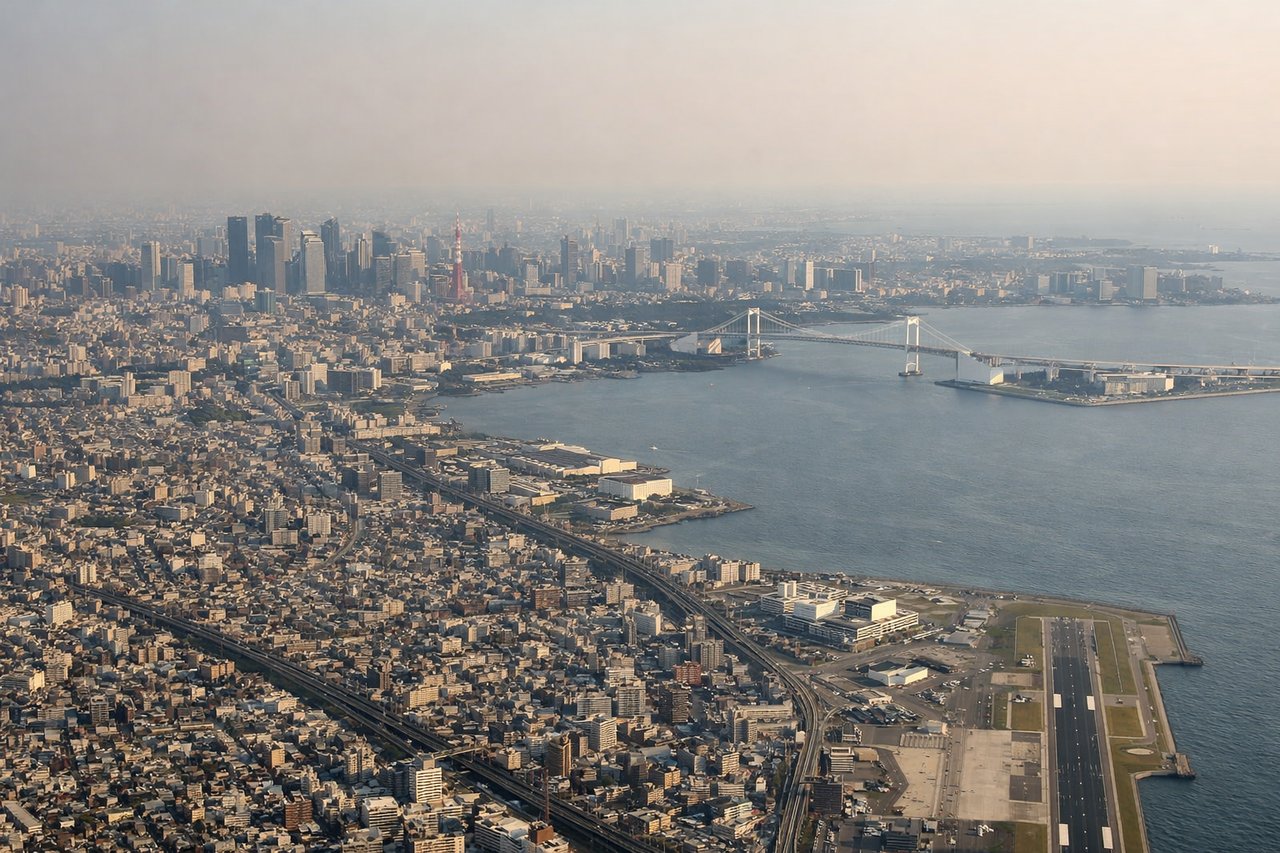
LEFTTokyo Haneda primarily uses runways 34L/34R for northerly arrivals, meaning the approach comes from the south over Tokyo Bay. The left side faces east toward the bay and gives a clear view of the Tokyo waterfront, Odaiba, the Rainbow Bridge, and the dense urban sprawl of eastern Tokyo and Yokohama to the south.
Will your flight be in sunlight?
Pick a date and time in the Sun Map to watch the sun move across your whole flight.
About This Route
Which side of the plane should I sit on flying from Chennai International (MAA) to Tokyo International (HND)?
Sit on the Left side of the plane for the best views on flights from Madras to Tokyo. While the right side wins at takeoff for Chennai's coastline views, the left side dominates the majority of the flight. Heading northeast, the left side tracks the Bay of Bengal coast during climb, then faces the Andaman Sea, the Malay Peninsula coastline, the South China Sea, and the dramatic approach into Tokyo Bay. The landing views from the left into Tokyo are among the most spectacular urban arrivals in Asia.
What can I see during takeoff from Chennai International in Madras?
During takeoff from Chennai International (MAA), sit on the Right side for the best views. Chennai airport's primary departure runway 07 sends aircraft eastward over the Bay of Bengal. The right side faces north, giving views back over the Chennai city grid, the Cooum and Adyar rivers threading through the urban fabric, and Marina Beach — one of the longest urban beaches in the world — stretching along the coastline. Notable sights include: Marina Beach coastline, Cooum and Adyar river mouths, Chennai city grid and port area, Bay of Bengal open water.
What can I see when landing at Tokyo International in Tokyo?
When landing at Tokyo International (HND), sit on the Left side for the best views. Tokyo Haneda primarily uses runways 34L/34R for northerly arrivals, meaning the approach comes from the south over Tokyo Bay. The left side faces east toward the bay and gives a clear view of the Tokyo waterfront, Odaiba, the Rainbow Bridge, and the dense urban sprawl of eastern Tokyo and Yokohama to the south. Notable sights include: Tokyo Bay and Odaiba waterfront, Rainbow Bridge and Tokyo Port, Yokohama city and port to the south, Tokyo urban grid extending to the horizon.
How long is the flight from Madras to Tokyo?
The flight from Chennai International (MAA) to Tokyo International (HND) takes about 8 hours 30 minutes. The shortest flight path between them is 3,999 miles (6,436 km); winds and air traffic control usually add a few percent.
What does the Madras to Tokyo flight path pass over?
The route tracks northeast across the Bay of Bengal, passing over or near the Andaman and Nicobar Islands, then crosses the Malay Peninsula near southern Thailand or the Strait of Malacca, traverses the South China Sea, passes over or near the Philippine Sea, crosses the Ryukyu Islands chain including Okinawa, and descends over the East China Sea before entering Japanese airspace and approaching Tokyo Bay from the south.