The left side delivers the more dramatic takeoff experience over central Tokyo and also captures the Himalayas and Bay of Bengal coastline during the cruise portion of the flight as the route tracks southwest over Myanmar and the Bay of Bengal. The Tokyo departure view alone makes left the stronger overall choice.
Flown HND to MAA? Did we get it right?
Flight Path
Tokyo to Madras is 3,999 miles (6,436 km), a flight of about 9 hours 30 minutes.
The route tracks southwest from Tokyo across the East China Sea, over southern China and Yunnan province, then across Myanmar where the Irrawaddy River valley is visible below. The southern Himalayas and the high ridgelines of the Arakan Mountains appear to the north. The aircraft then crosses the Bay of Bengal — a long overwater segment of roughly 2 to 3 hours — before descending toward the Tamil Nadu coast and Chennai.
Great circle distance and headings ›


Phase by phase

Takeoff from HND
LEFTHaneda typically departs southward or westward over Tokyo Bay on runways 16L/16R or 34L/34R. A left-side seat during a southward departure gives you a clear view of central Tokyo, the Rainbow Bridge, and the dense urban grid of the Yamanote loop area before the aircraft turns westward toward the route. Right side faces open Tokyo Bay water with less visual interest.
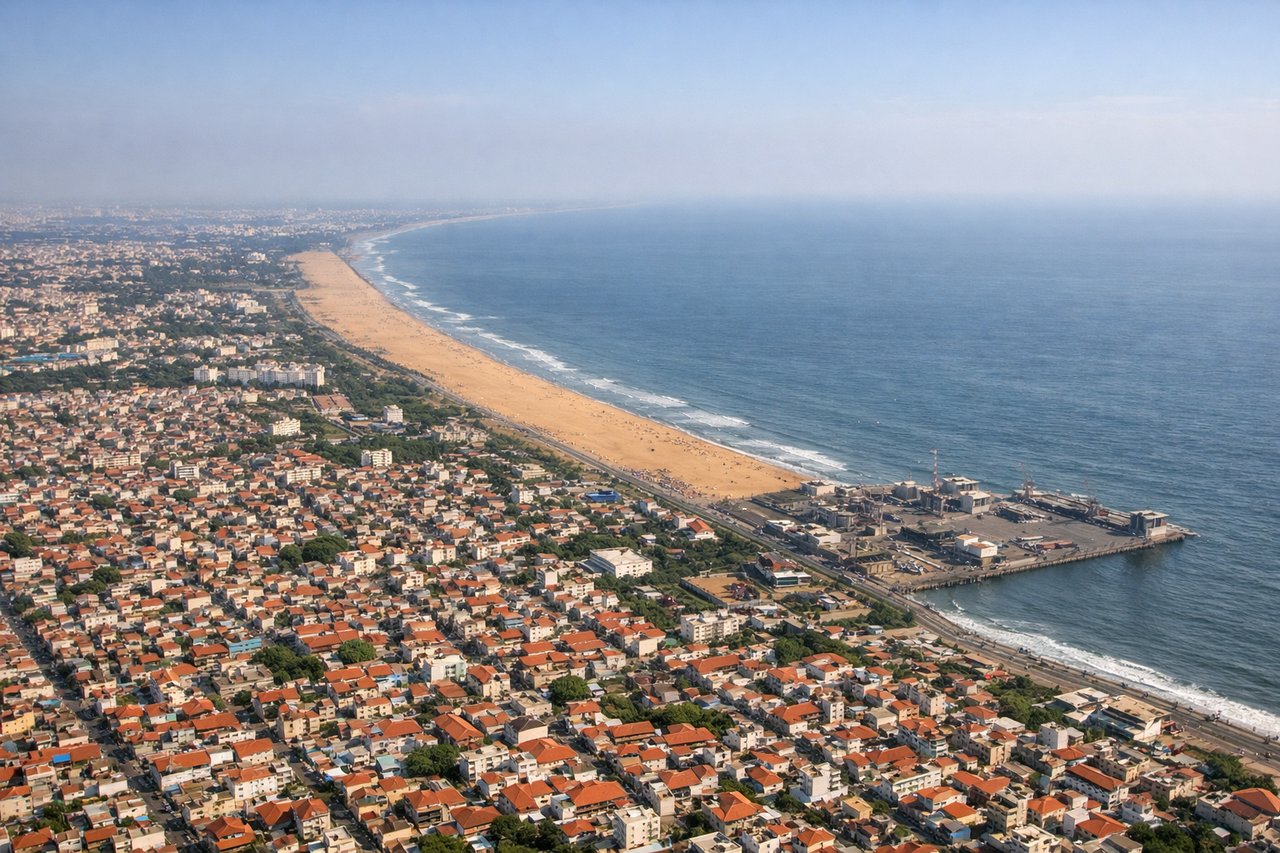
Landing at MAA
RIGHTChennai airport typically lands from the north on runway 07/25 or approaches from the Bay of Bengal side. A right-side seat on approach from the north gives views over the Bay of Bengal coastline, Marina Beach — one of the longest urban beaches in the world — and the city's coastal layout. Left side faces inland toward less distinctive flat terrain.
Will your flight be in sunlight?
Pick a date and time in the Sun Map to watch the sun move across your whole flight.
About This Route
Which side of the plane should I sit on flying from Tokyo International (HND) to Chennai International (MAA)?
Sit on the Left side of the plane for the best views on flights from Tokyo to Madras. The left side delivers the more dramatic takeoff experience over central Tokyo and also captures the Himalayas and Bay of Bengal coastline during the cruise portion of the flight as the route tracks southwest over Myanmar and the Bay of Bengal. The Tokyo departure view alone makes left the stronger overall choice.
What can I see during takeoff from Tokyo International in Tokyo?
During takeoff from Tokyo International (HND), sit on the Left side for the best views. Haneda typically departs southward or westward over Tokyo Bay on runways 16L/16R or 34L/34R. A left-side seat during a southward departure gives you a clear view of central Tokyo, the Rainbow Bridge, and the dense urban grid of the Yamanote loop area before the aircraft turns westward toward the route. Right side faces open Tokyo Bay water with less visual interest. Notable sights include: Rainbow Bridge and Odaiba waterfront, central Tokyo skyline including the Tokyo Tower and Skytree visible to the north, Tokyo Bay shipping lanes, Yokohama port and Minato Mirai district to the southwest.
What can I see when landing at Chennai International in Madras?
When landing at Chennai International (MAA), sit on the Right side for the best views. Chennai airport typically lands from the north on runway 07/25 or approaches from the Bay of Bengal side. A right-side seat on approach from the north gives views over the Bay of Bengal coastline, Marina Beach — one of the longest urban beaches in the world — and the city's coastal layout. Left side faces inland toward less distinctive flat terrain. Notable sights include: Marina Beach and the Bay of Bengal coastline, Chennai city urban grid approaching from the north, the Cooum and Adyar river mouths cutting through the coastal plain, Ennore port industrial area to the north.
How long is the flight from Tokyo to Madras?
The flight from Tokyo International (HND) to Chennai International (MAA) takes about 9 hours 30 minutes. The shortest flight path between them is 3,999 miles (6,436 km); winds and air traffic control usually add a few percent.
What does the Tokyo to Madras flight path pass over?
The route tracks southwest from Tokyo across the East China Sea, over southern China and Yunnan province, then across Myanmar where the Irrawaddy River valley is visible below. The southern Himalayas and the high ridgelines of the Arakan Mountains appear to the north. The aircraft then crosses the Bay of Bengal — a long overwater segment of roughly 2 to 3 hours — before descending toward the Tamil Nadu coast and Chennai.