While Madrid's departure offers mountain scenery (Sierra de Guadarrama), the cruise phase over central Spain, southern France, and the Mediterranean is dominated by 8+ hours of open water and featureless terrain. Osaka's approach and landing sequence (right side) provides concentrated urban and bay scenery with recognizable landmarks (Osaka Bay, Kobe, bridge infrastructure) during the most visually engaging phases of the flight. The right side captures the dramatic descent into a major metropolitan area, outweighing the left side's brief mountain views at takeoff.
Flown MAD to ITM? Did we get it right?
Flight Path
Madrid to Osaka is 6,619 miles (10,653 km), a flight of about 11 hours 50 minutes.
Pyrenees mountains (Spain-France border, visible during climb to cruise altitude), Mediterranean Sea (6+ hours of open water between southern France and Greece), Greek islands and Aegean Sea (Crete, Rhodes visible during cruise), Turkish coast near Antalya, eastern Mediterranean approaching Cyprus, Levantine coast, Arabian Peninsula (Saudi Arabia, Oman), Arabian Sea (4+ hours open water), Indian subcontinent (western coast of India visible during descent), Bay of Bengal, Southeast Asian mainland (Thailand, Myanmar), and final approach over Japan's Inland Sea and Osaka Bay
Great circle distance and headings ›

Phase by phase
Takeoff from MAD
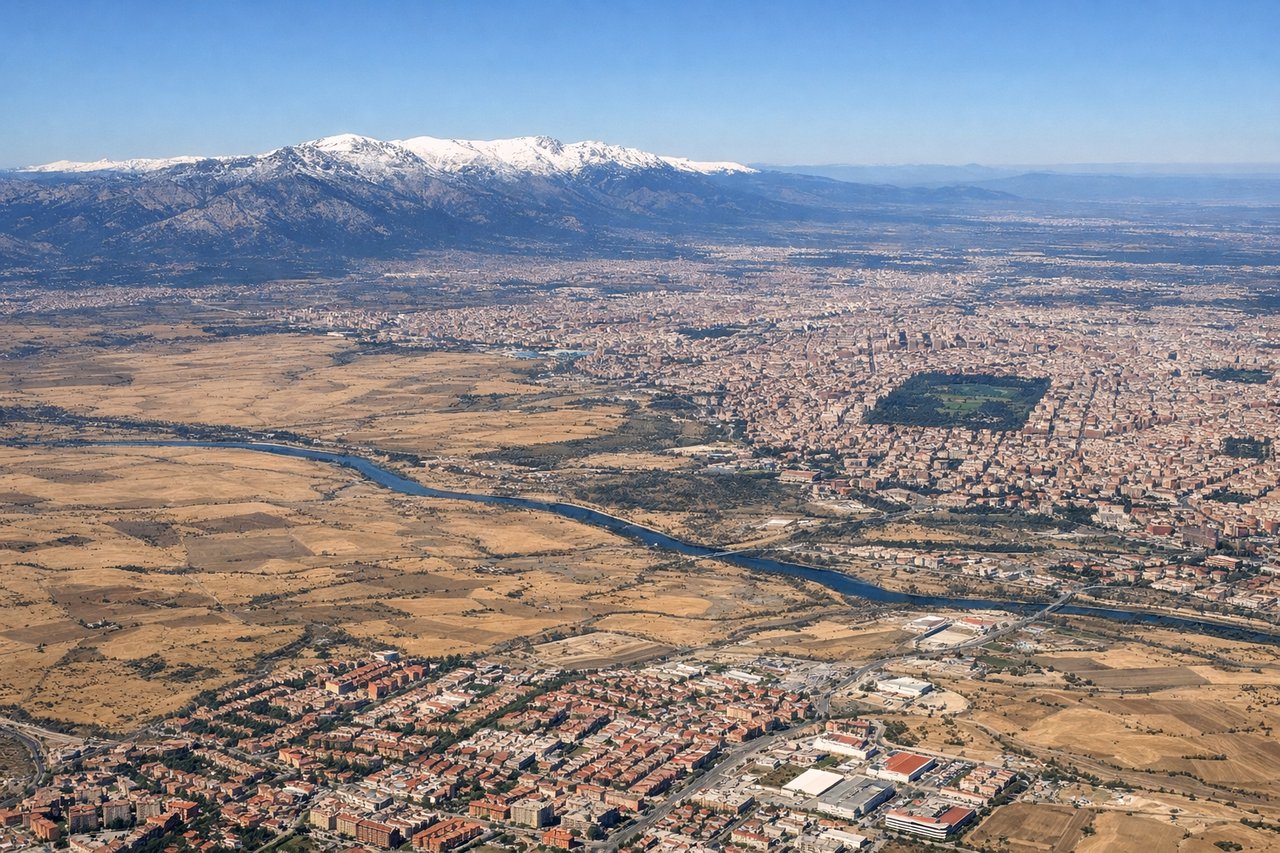
LEFTMadrid's north configuration departure (heading south-southwest initially) orients the left side toward the Sierra de Guadarrama mountains and the Tagus River valley. The right side faces the flat Meseta Central plateau with minimal relief.
Landing at ITM
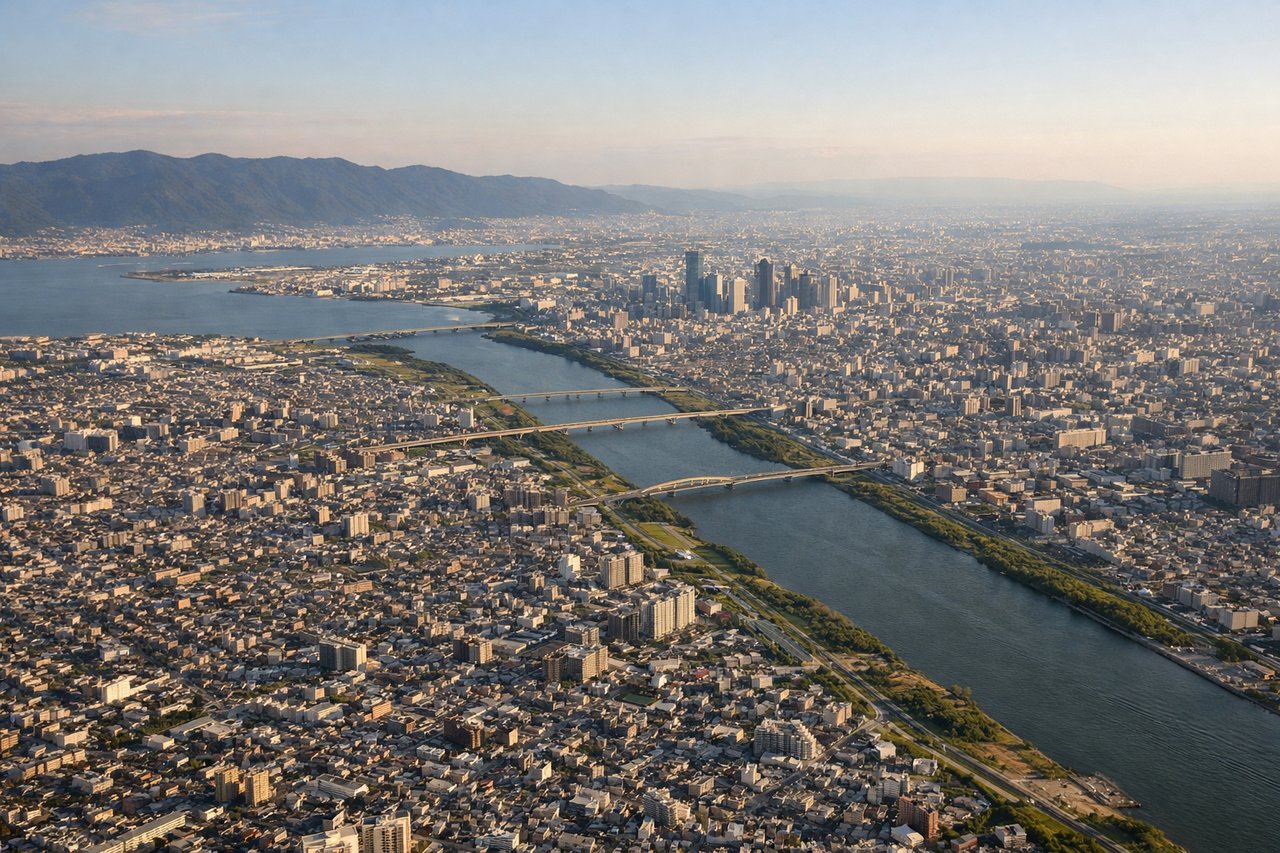
RIGHTOsaka International (ITM) typically uses runway 32 (northwest) for noise abatement, requiring a descent and approach from the southeast over Osaka Bay and the city itself. The right side faces the bay, Kobe across the water, and the urban sprawl of the Kansai region. The left side sees only open water and distant mountains.
Will your flight be in sunlight?
Pick a date and time in the Sun Map to watch the sun move across your whole flight.
About This Route
Which side of the plane should I sit on flying from Barajas (MAD) to Osaka International (ITM)?
Sit on the Right side of the plane for the best views on flights from Madrid to Osaka. While Madrid's departure offers mountain scenery (Sierra de Guadarrama), the cruise phase over central Spain, southern France, and the Mediterranean is dominated by 8+ hours of open water and featureless terrain. Osaka's approach and landing sequence (right side) provides concentrated urban and bay scenery with recognizable landmarks (Osaka Bay, Kobe, bridge infrastructure) during the most visually engaging phases of the flight. The right side captures the dramatic descent into a major metropolitan area, outweighing the left side's brief mountain views at takeoff.
What can I see during takeoff from Barajas in Madrid?
During takeoff from Barajas (MAD), sit on the Left side for the best views. Madrid's north configuration departure (heading south-southwest initially) orients the left side toward the Sierra de Guadarrama mountains and the Tagus River valley. The right side faces the flat Meseta Central plateau with minimal relief. Notable sights include: Sierra de Guadarrama (snow-capped in winter, visible 30+ miles south), Tagus River valley cutting through central Spain, Madrid city sprawl receding northward.
What can I see when landing at Osaka International in Osaka?
When landing at Osaka International (ITM), sit on the Right side for the best views. Osaka International (ITM) typically uses runway 32 (northwest) for noise abatement, requiring a descent and approach from the southeast over Osaka Bay and the city itself. The right side faces the bay, Kobe across the water, and the urban sprawl of the Kansai region. The left side sees only open water and distant mountains. Notable sights include: Osaka Bay with its industrial waterfront and container terminals, Kobe city visible across the bay to the northwest, Kobe-Awaji-Naruto Expressus bridge spanning the bay, Osaka city skyline and urban grid.
How long is the flight from Madrid to Osaka?
The flight from Barajas (MAD) to Osaka International (ITM) takes about 11 hours 50 minutes. The shortest flight path between them is 6,619 miles (10,653 km); winds and air traffic control usually add a few percent.
What does the Madrid to Osaka flight path pass over?
Pyrenees mountains (Spain-France border, visible during climb to cruise altitude), Mediterranean Sea (6+ hours of open water between southern France and Greece), Greek islands and Aegean Sea (Crete, Rhodes visible during cruise), Turkish coast near Antalya, eastern Mediterranean approaching Cyprus, Levantine coast, Arabian Peninsula (Saudi Arabia, Oman), Arabian Sea (4+ hours open water), Indian subcontinent (western coast of India visible during descent), Bay of Bengal, Southeast Asian mainland (Thailand, Myanmar), and final approach over Japan's Inland Sea and Osaka Bay