Right side scores 3.5 versus left's 2.5 due to superior scenery on both ends of the flight. Departure offers Madrid's urban landscape and plateau views; the 11-hour cruise over Europe and Asia provides modest variety (Alps, Middle East deserts, Central Asian steppes visible at altitude but distant); arrival delivers dramatic Kii Peninsula mountains and Osaka Bay's industrial waterfront with the distinctive Kansai Island approach. Left side faces mostly inland European plains during departure and open water/distant landmass during arrival, with limited visual drama across the full flight.
Flown MAD to KIX? Did we get it right?
Flight Path
Madrid to Osaka is 6,635 miles (10,678 km), a flight of about 11 hours 15 minutes.
Alps (visible as distant peaks during early cruise over southern Europe), Mediterranean coast near Greece, Taurus Mountains (southern Turkey), Persian Gulf and Arabian Peninsula (desert terrain), Hindu Kush and Pamir ranges (distant, far north of typical flight path), Taklamakan Desert (visible as tan expanse in Central Asia), Himalayas (distant peaks on northern horizon during approach to Japan), Sea of Japan (final hours before descent)
Great circle distance and headings ›

Phase by phase

Takeoff from MAD
RIGHTRight side captures Madrid's urban sprawl and the initial climb over the Meseta Central plateau. Left side faces inland terrain with minimal visual interest during departure.
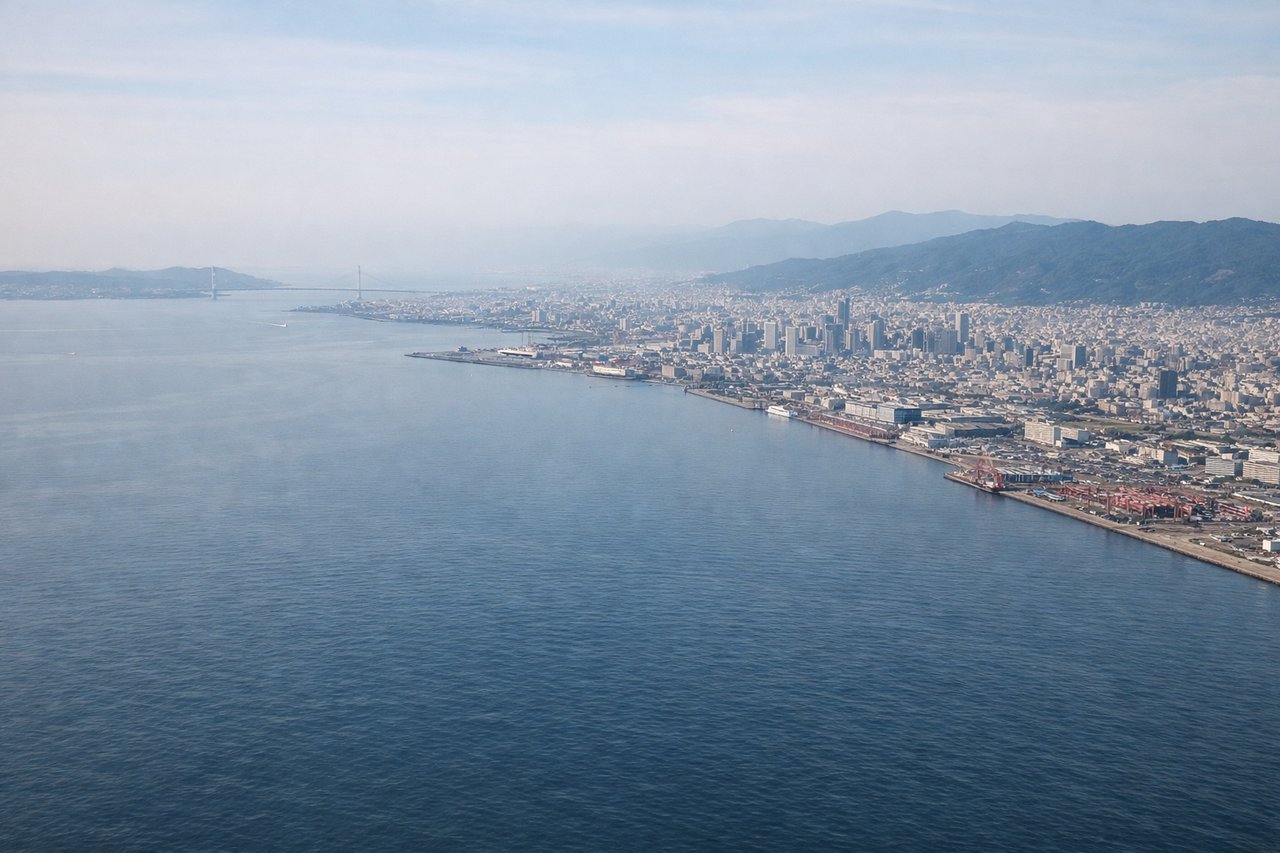
Landing at KIX
RIGHTRight side offers superior approach scenery: the Kii Peninsula's mountainous terrain, Osaka Bay's industrial waterfront, and the Kansai International Airport's artificial island are all visible during descent and final approach. Left side sees mostly open water and distant landmass.
Will your flight be in sunlight?
Pick a date and time in the Sun Map to watch the sun move across your whole flight.
About This Route
Which side of the plane should I sit on flying from Barajas (MAD) to Kansai International (KIX)?
Sit on the Right side of the plane for the best views on flights from Madrid to Osaka. Right side scores 3.5 versus left's 2.5 due to superior scenery on both ends of the flight. Departure offers Madrid's urban landscape and plateau views; the 11-hour cruise over Europe and Asia provides modest variety (Alps, Middle East deserts, Central Asian steppes visible at altitude but distant); arrival delivers dramatic Kii Peninsula mountains and Osaka Bay's industrial waterfront with the distinctive Kansai Island approach. Left side faces mostly inland European plains during departure and open water/distant landmass during arrival, with limited visual drama across the full flight.
What can I see during takeoff from Barajas in Madrid?
During takeoff from Barajas (MAD), sit on the Right side for the best views. Right side captures Madrid's urban sprawl and the initial climb over the Meseta Central plateau. Left side faces inland terrain with minimal visual interest during departure. Notable sights include: Madrid city center and suburbs, Meseta Central plateau, Sierra de Guadarrama mountains (distant, northeast).
What can I see when landing at Kansai International in Osaka?
When landing at Kansai International (KIX), sit on the Right side for the best views. Right side offers superior approach scenery: the Kii Peninsula's mountainous terrain, Osaka Bay's industrial waterfront, and the Kansai International Airport's artificial island are all visible during descent and final approach. Left side sees mostly open water and distant landmass. Notable sights include: Kii Peninsula mountains, Osaka Bay industrial zone and port facilities, Kansai International Airport's artificial island, Akashi Strait.
How long is the flight from Madrid to Osaka?
The flight from Barajas (MAD) to Kansai International (KIX) takes about 11 hours 15 minutes. The shortest flight path between them is 6,635 miles (10,678 km); winds and air traffic control usually add a few percent.
What does the Madrid to Osaka flight path pass over?
Alps (visible as distant peaks during early cruise over southern Europe), Mediterranean coast near Greece, Taurus Mountains (southern Turkey), Persian Gulf and Arabian Peninsula (desert terrain), Hindu Kush and Pamir ranges (distant, far north of typical flight path), Taklamakan Desert (visible as tan expanse in Central Asia), Himalayas (distant peaks on northern horizon during approach to Japan), Sea of Japan (final hours before descent)