Right-side seats score higher (3.5 vs 2.5) due to superior landing scenery: Lake Mead's striking blue water, Colorado River canyon geology, and desert basin drama provide visual interest that left-side desert monotony cannot match. Takeoff is comparable, but the landing advantage is decisive for a transatlantic flight where the final descent is memorable.
Flown MAD to LAS? Did we get it right?
Flight Path
Madrid to Las Vegas is 5,597 miles (9,007 km), a flight of about 9 hours 15 minutes.
Pyrenees Mountains (Spain-France border), Bay of Biscay coastline, Atlantic Ocean crossing (5+ hours), Appalachian Mountains (eastern United States), Great Plains transition zone, Rocky Mountain foothills approaching Nevada
Great circle distance and headings ›Phase by phase

Takeoff from MAD
RIGHTRight-side departures from Madrid's north configuration runways (18L/18R) turn southeast over the Tagus River valley and the sprawling Madrid metropolitan area, offering urban texture and river geography. Left-side departures turn northwest over flat central Spanish plains with minimal visual interest.
Landing at LAS
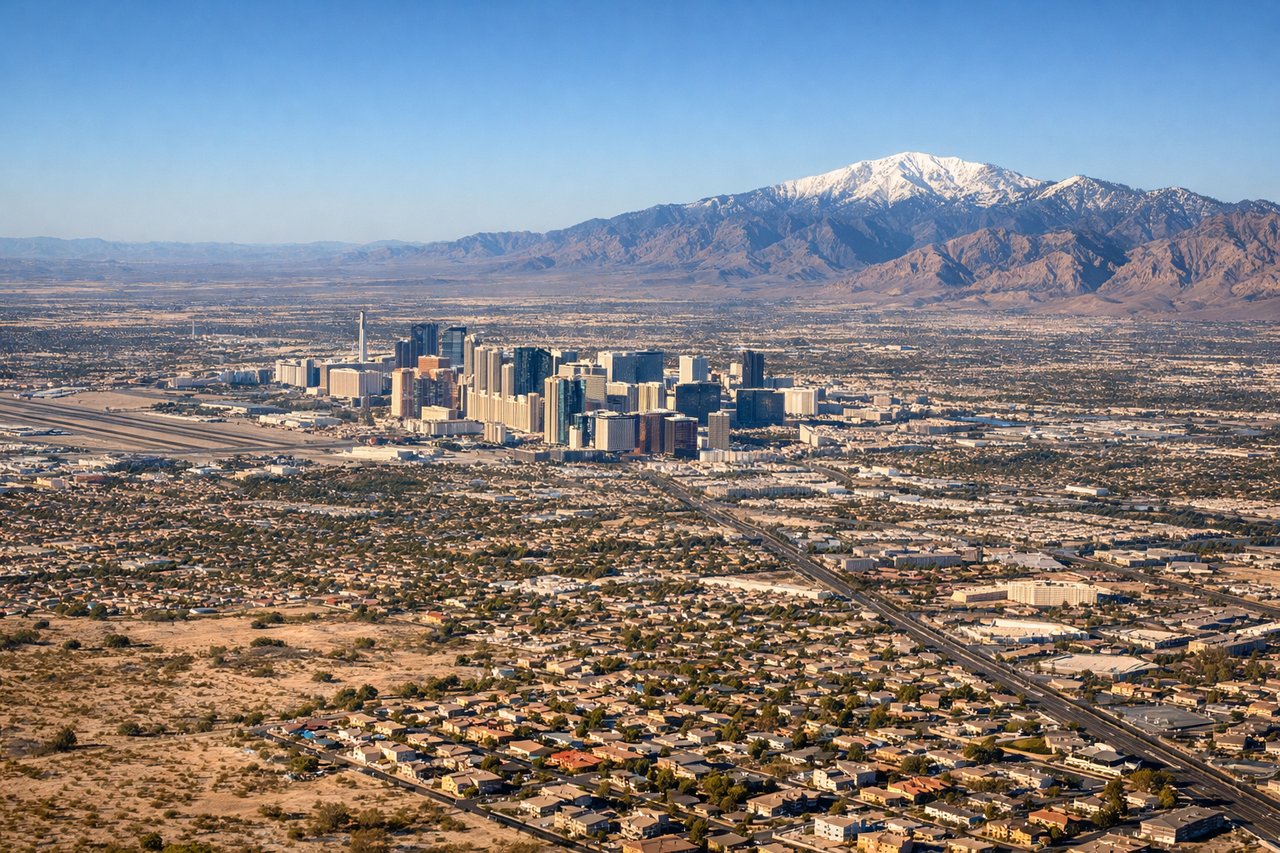
RIGHTRight-side arrivals into Las Vegas typically descend over the Mojave Desert and approach from the east or northeast, offering extended views of desert terrain, Lake Mead's blue water body, and the Colorado River canyon system. Left-side arrivals over the western desert lack comparable geographic drama and water features.
Will your flight be in sunlight?
Pick a date and time in the Sun Map to watch the sun move across your whole flight.
About This Route
Which side of the plane should I sit on flying from Barajas (MAD) to Mc Carran International (LAS)?
Sit on the Right side of the plane for the best views on flights from Madrid to Las Vegas. Right-side seats score higher (3.5 vs 2.5) due to superior landing scenery: Lake Mead's striking blue water, Colorado River canyon geology, and desert basin drama provide visual interest that left-side desert monotony cannot match. Takeoff is comparable, but the landing advantage is decisive for a transatlantic flight where the final descent is memorable.
What can I see during takeoff from Barajas in Madrid?
During takeoff from Barajas (MAD), sit on the Right side for the best views. Right-side departures from Madrid's north configuration runways (18L/18R) turn southeast over the Tagus River valley and the sprawling Madrid metropolitan area, offering urban texture and river geography. Left-side departures turn northwest over flat central Spanish plains with minimal visual interest. Notable sights include: Tagus River valley, Madrid city sprawl, Sierra de Guadarrama foothills (distant northeast), flat Castilian plateau.
What can I see when landing at Mc Carran International in Las Vegas?
When landing at Mc Carran International (LAS), sit on the Right side for the best views. Right-side arrivals into Las Vegas typically descend over the Mojave Desert and approach from the east or northeast, offering extended views of desert terrain, Lake Mead's blue water body, and the Colorado River canyon system. Left-side arrivals over the western desert lack comparable geographic drama and water features. Notable sights include: Lake Mead (bright blue reservoir), Colorado River canyon, Mojave Desert basin, Las Vegas Valley urban sprawl.
How long is the flight from Madrid to Las Vegas?
The flight from Barajas (MAD) to Mc Carran International (LAS) takes about 9 hours 15 minutes. The shortest flight path between them is 5,597 miles (9,007 km); winds and air traffic control usually add a few percent.
What does the Madrid to Las Vegas flight path pass over?
Pyrenees Mountains (Spain-France border), Bay of Biscay coastline, Atlantic Ocean crossing (5+ hours), Appalachian Mountains (eastern United States), Great Plains transition zone, Rocky Mountain foothills approaching Nevada