Left side captures the dramatic Guadarrama Mountains during takeoff from Madrid, a genuine alpine feature visible from altitude. While the landing approach favors the right side with Cordillera Central views, the takeoff experience is more visually compelling and the cruise phase over Spain and the Atlantic offers more varied terrain on the left. The right side's landing advantage is offset by the left side's superior overall journey experience.
Flown MAD to MDE? Did we get it right?
Flight Path
Madrid to Rio Negro is 4,990 miles (8,031 km), a flight of about 9 hours 15 minutes.
Bay of Biscay (open Atlantic, 5+ hours of ocean crossing), Portuguese coast near Lisbon (if visible during cruise), Azores region (if flight path passes nearby), West African coast approaching Senegal/Mauritania, Canary Islands region (depending on routing), Moroccan Atlas Mountains (if southern routing), Sahara Desert (if southern routing), Caribbean approach to Colombia with Venezuelan coast visible, Andes foothills of Colombia appearing as terrain rises toward Medellín
Great circle distance and headings ›Phase by phase
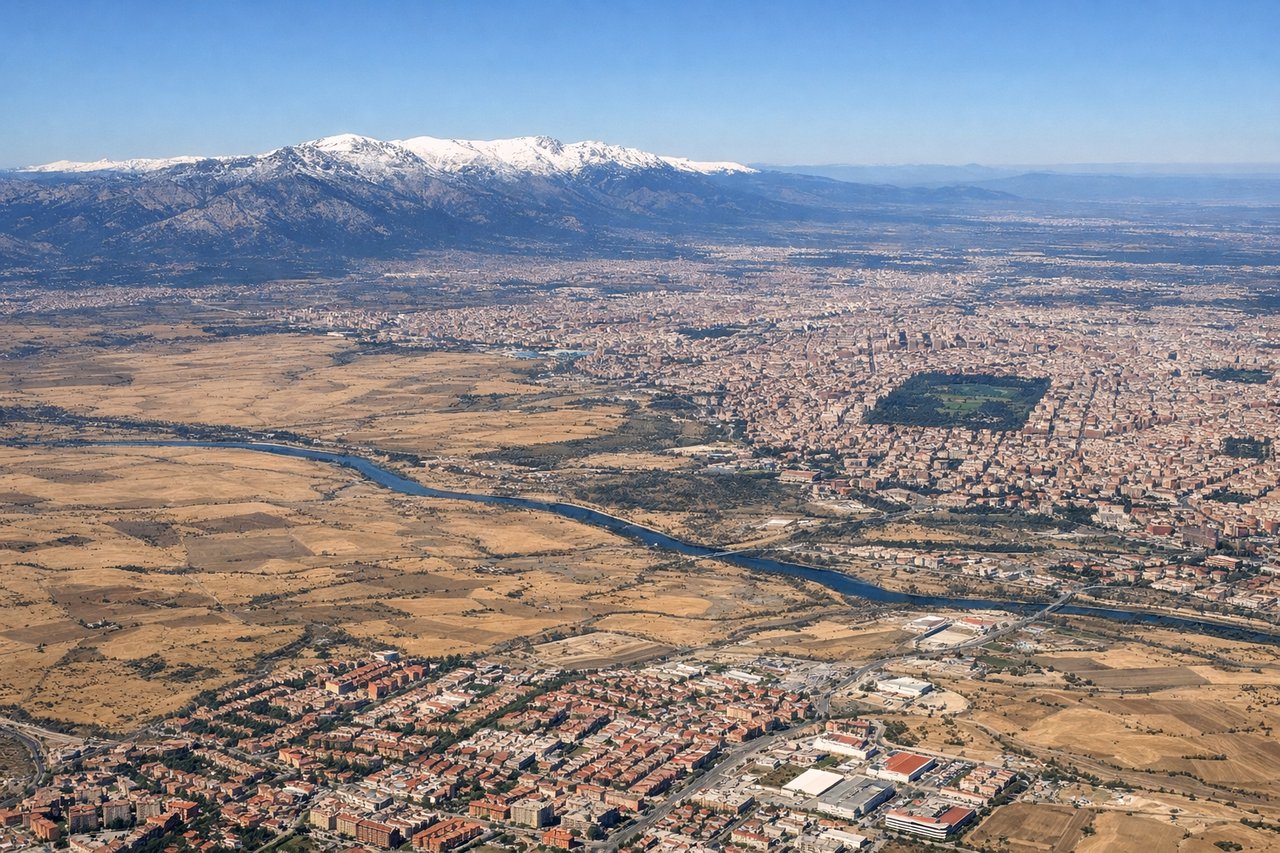
Takeoff from MAD
LEFTMadrid's north configuration departure (typical) rolls northwest from Barajas, immediately revealing the Guadarrama Mountains rising dramatically to the northwest. Left-side passengers see the snow-capped peaks and the Sierra de Guadarrama National Park terrain during climb-out. Right side faces the flat Meseta Central plateau.
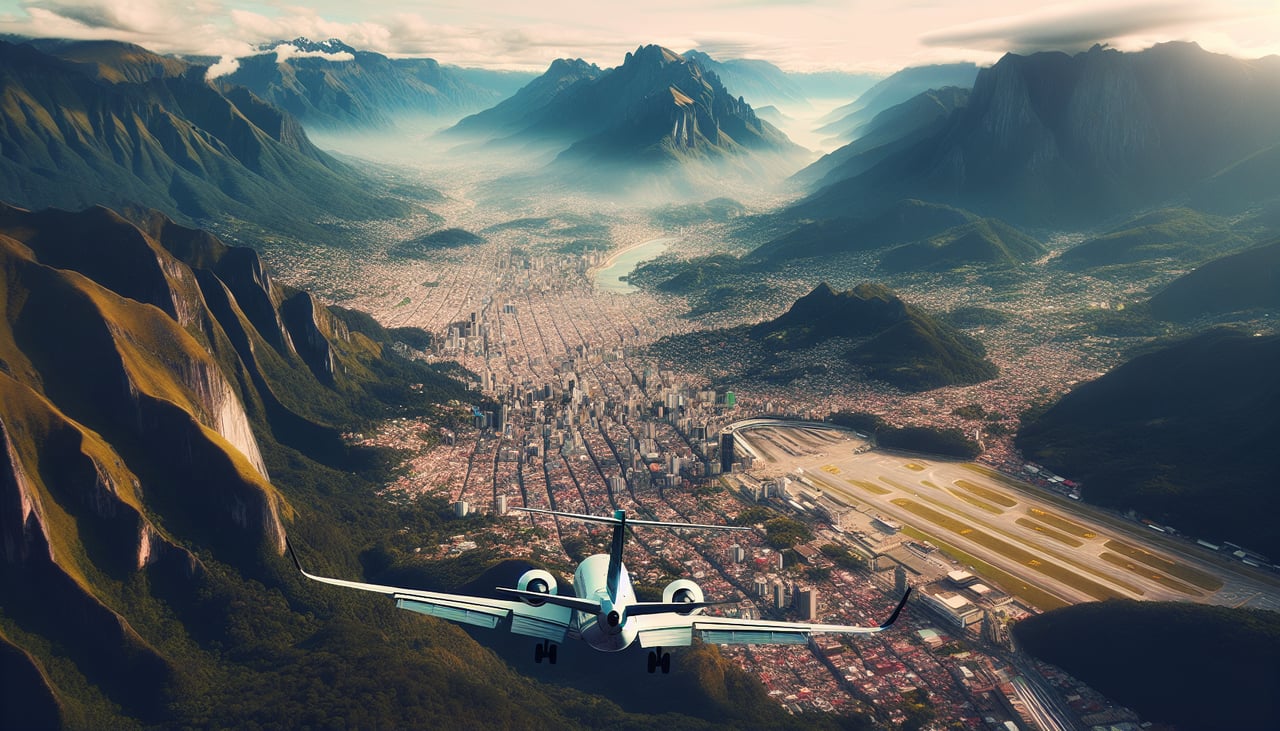
Landing at MDE
RIGHTApproach to MDE typically uses runway 01 (northbound landing), requiring a descent from the south. Right-side passengers see the Aburrá Valley's dramatic topography, the Cauca River gorge, and the Cordillera Central peaks rising steeply on approach. Left side faces the valley floor and urban sprawl of Medellín.
Will your flight be in sunlight?
Pick a date and time in the Sun Map to watch the sun move across your whole flight.
About This Route
Which side of the plane should I sit on flying from Barajas (MAD) to Jose Maria Cordova (MDE)?
Sit on the Left side of the plane for the best views on flights from Madrid to Rio Negro. Left side captures the dramatic Guadarrama Mountains during takeoff from Madrid, a genuine alpine feature visible from altitude. While the landing approach favors the right side with Cordillera Central views, the takeoff experience is more visually compelling and the cruise phase over Spain and the Atlantic offers more varied terrain on the left. The right side's landing advantage is offset by the left side's superior overall journey experience.
What can I see during takeoff from Barajas in Madrid?
During takeoff from Barajas (MAD), sit on the Left side for the best views. Madrid's north configuration departure (typical) rolls northwest from Barajas, immediately revealing the Guadarrama Mountains rising dramatically to the northwest. Left-side passengers see the snow-capped peaks and the Sierra de Guadarrama National Park terrain during climb-out. Right side faces the flat Meseta Central plateau. Notable sights include: Guadarrama Mountains (northwest), Sierra de Guadarrama National Park, Segovia region foothills, Madrid urban sprawl receding southward.
What can I see when landing at Jose Maria Cordova in Rio Negro?
When landing at Jose Maria Cordova (MDE), sit on the Right side for the best views. Approach to MDE typically uses runway 01 (northbound landing), requiring a descent from the south. Right-side passengers see the Aburrá Valley's dramatic topography, the Cauca River gorge, and the Cordillera Central peaks rising steeply on approach. Left side faces the valley floor and urban sprawl of Medellín. Notable sights include: Cordillera Central (eastern ridge), Aburrá Valley terrain, Cauca River gorge, Medellín metropolitan area sprawl.
How long is the flight from Madrid to Rio Negro?
The flight from Barajas (MAD) to Jose Maria Cordova (MDE) takes about 9 hours 15 minutes. The shortest flight path between them is 4,990 miles (8,031 km); winds and air traffic control usually add a few percent.
What does the Madrid to Rio Negro flight path pass over?
Bay of Biscay (open Atlantic, 5+ hours of ocean crossing), Portuguese coast near Lisbon (if visible during cruise), Azores region (if flight path passes nearby), West African coast approaching Senegal/Mauritania, Canary Islands region (depending on routing), Moroccan Atlas Mountains (if southern routing), Sahara Desert (if southern routing), Caribbean approach to Colombia with Venezuelan coast visible, Andes foothills of Colombia appearing as terrain rises toward Medellín