The left side scores higher due to the dramatic Medellín departure over steep Andean terrain and the sustained scenic interest of the Colombian highlands during early climb. While Madrid's approach on the right is visually engaging, the 9+ hours of Atlantic Ocean crossing heavily weights the left side's advantage. The takeoff experience from MDE—surrounded by dramatic valley walls and peaks—outweighs the landing sequence at MAD in overall scenic value for this long-haul flight.
Flight Path
Caribbean coast of Colombia and Venezuela (northern coast visible during climb to cruise altitude), Atlantic Ocean (5+ hours of open water at cruise), Iberian Peninsula coastline approaching Spain (Portuguese coast, then Spanish interior plateau), Guadarrama Mountains west of Madrid
Great circle distance and headings ›Phase by phase
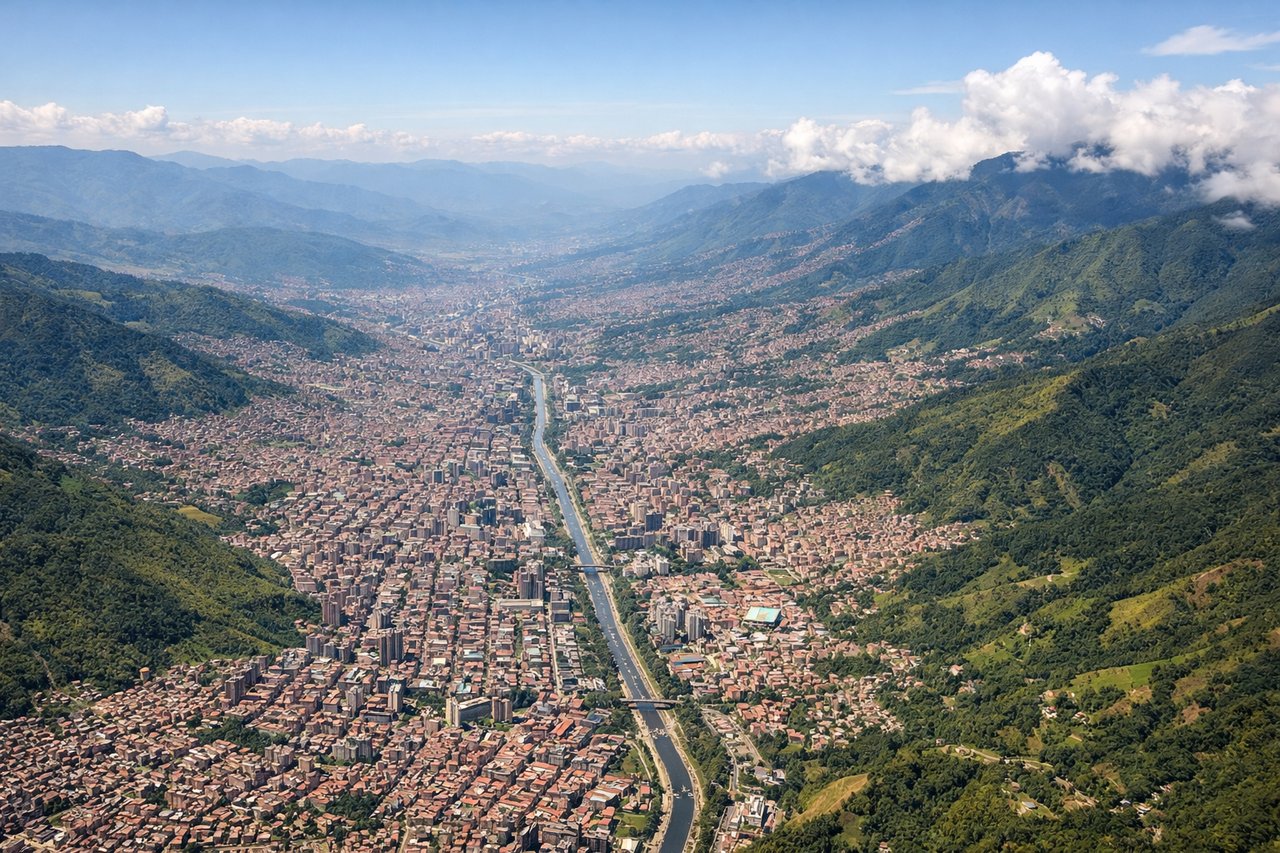
Takeoff from MDE
LEFTLeft side captures the dramatic Aburrá Valley terrain and Medellín's urban sprawl nestled between steep Andean ridges. The city's distinctive north-south orientation and surrounding peaks create immediate visual interest during climb-out.
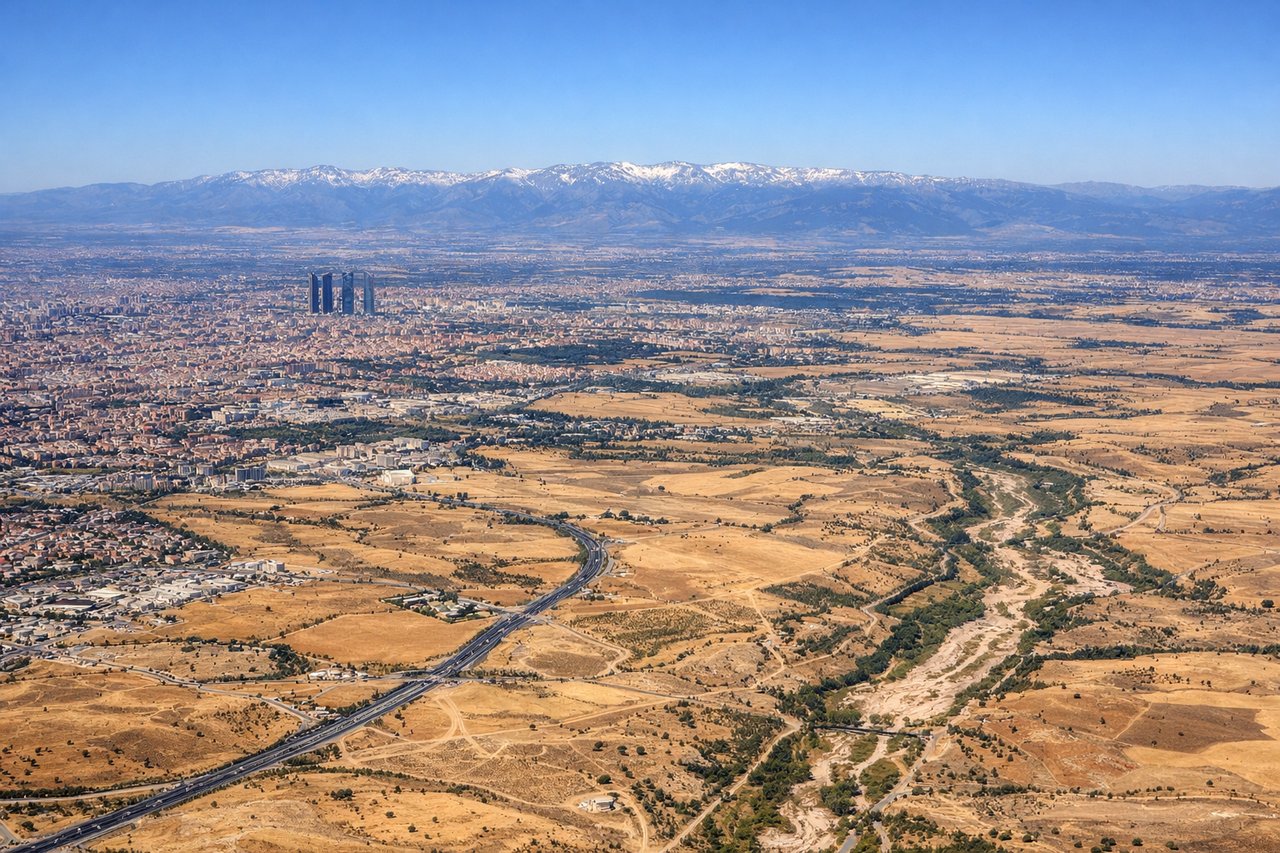
Landing at MAD
RIGHTRight side offers the most dramatic approach into Madrid. Passengers see the Guadarrama Mountains to the northwest, the Tajo River valley, and the sprawling Madrid metropolitan area with its distinctive radial street pattern and urban density increasing toward Barajas in the northeast.
Will your flight be in sunlight?
See exactly which side of the plane gets sun and shade at your departure time.
About This Route
Which side of the plane should I sit on flying from Jose Maria Cordova (MDE) to Barajas (MAD)?
Sit on the Left side of the plane for the best views on flights from Rio Negro to Madrid. The left side scores higher due to the dramatic Medellín departure over steep Andean terrain and the sustained scenic interest of the Colombian highlands during early climb. While Madrid's approach on the right is visually engaging, the 9+ hours of Atlantic Ocean crossing heavily weights the left side's advantage. The takeoff experience from MDE—surrounded by dramatic valley walls and peaks—outweighs the landing sequence at MAD in overall scenic value for this long-haul flight.
What can I see during takeoff from Jose Maria Cordova in Rio Negro?
During takeoff from Jose Maria Cordova (MDE), sit on the Left side for the best views. Left side captures the dramatic Aburrá Valley terrain and Medellín's urban sprawl nestled between steep Andean ridges. The city's distinctive north-south orientation and surrounding peaks create immediate visual interest during climb-out. Notable sights include: Medellín city center and surrounding neighborhoods in the valley floor, Arví Peak (4,680 ft) to the east, western ridge of the Aburrá Valley rising steeply.
What can I see when landing at Barajas in Madrid?
When landing at Barajas (MAD), sit on the Right side for the best views. Right side offers the most dramatic approach into Madrid. Passengers see the Guadarrama Mountains to the northwest, the Tajo River valley, and the sprawling Madrid metropolitan area with its distinctive radial street pattern and urban density increasing toward Barajas in the northeast. Notable sights include: Guadarrama Mountains (northwest horizon), Tajo River valley and meanders, Madrid city sprawl with concentric ring roads, Barajas airport complex on the northeastern edge of the city.
How long is the flight from Rio Negro to Madrid?
The flight from Jose Maria Cordova (MDE) to Barajas (MAD) takes 9h 15m.
What does the Rio Negro to Madrid flight path pass over?
Caribbean coast of Colombia and Venezuela (northern coast visible during climb to cruise altitude), Atlantic Ocean (5+ hours of open water at cruise), Iberian Peninsula coastline approaching Spain (Portuguese coast, then Spanish interior plateau), Guadarrama Mountains west of Madrid