Right side scores 3.5 vs left's 2.5 due to Shanghai's superior landing sequence. While Madrid's departure offers modest mountain views (Guadarrama), the 11-hour cruise over central Asia provides minimal scenic variation on either side—mostly flat terrain, deserts, and open air space. Shanghai's approach compensates significantly: the Hangzhou Bay estuary, Yangtze delta waterways, and Pudong's dramatic skyline create concentrated visual interest during descent and landing. Right side captures this entire sequence; left side misses it entirely.
Flown MAD to PVG? Did we get it right?
Flight Path
Madrid to Shanghai is 6,381 miles (10,269 km), a flight of about 11 hours 15 minutes.
Central European plains (Austria, Hungary, Romania), Carpathian Mountains (eastern Romania), Black Sea coast (Turkey), Caucasus Mountains (Georgia/Azerbaijan border), Caspian Sea, Central Asian steppes (Kazakhstan, Uzbekistan), Tian Shan Mountains (Kyrgyzstan/China border), Taklamakan Desert (western China), Altai Mountains (far western China), Gobi Desert transitions, North China Plain, Yellow River valley, approaching Yangtze River basin
Great circle distance and headings ›Phase by phase
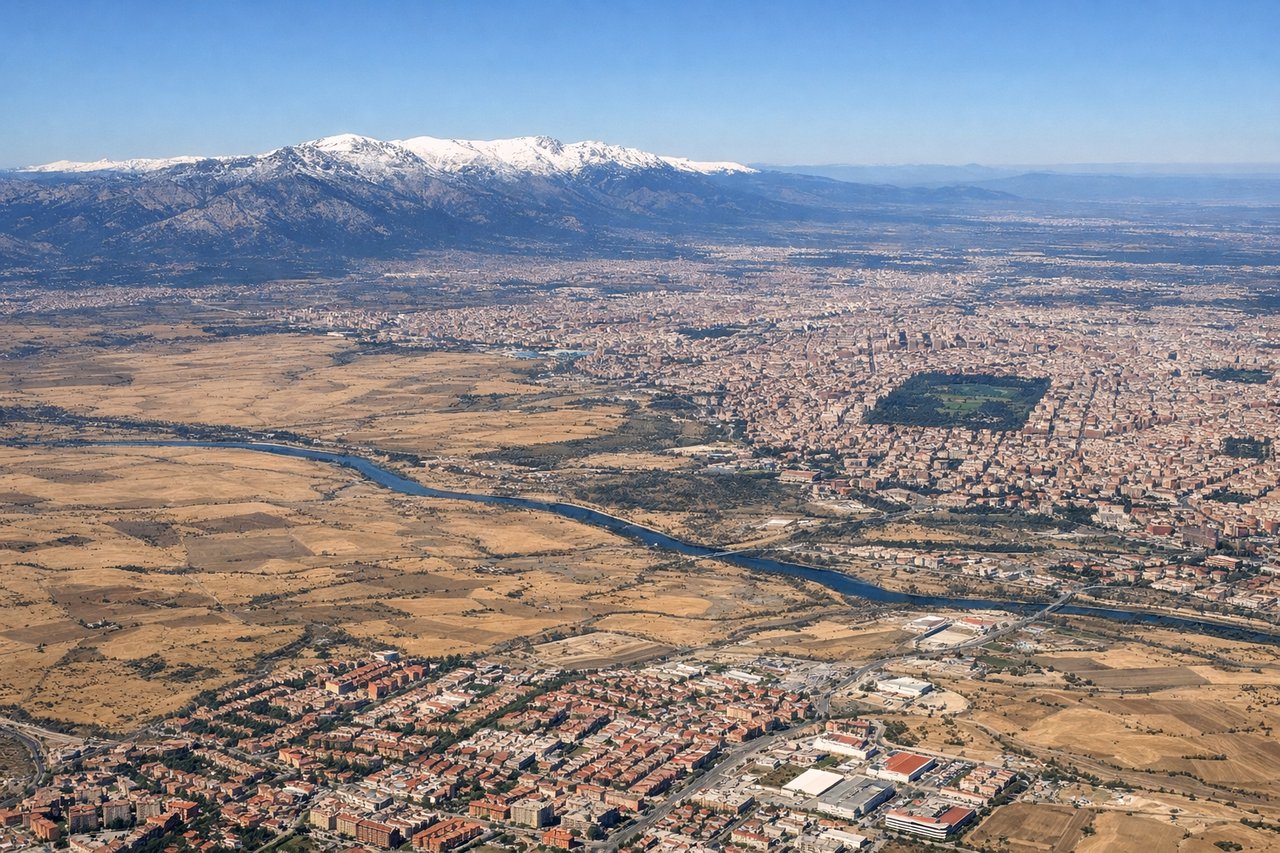
Takeoff from MAD
LEFTMadrid's departure from the north configuration offers views of the city's urban sprawl and the Guadarrama Mountains to the northwest. Right side departs over flat central Spanish plains with minimal visual interest.

Landing at PVG
RIGHTShanghai Pudong's approach from the southeast over Hangzhou Bay offers dramatic coastal and estuary scenery. The Yangtze River delta's complex waterways, tidal flats, and the transition from open water to urban development create visual variety. Left side approaches over inland suburbs with less distinctive features.
Will your flight be in sunlight?
Pick a date and time in the Sun Map to watch the sun move across your whole flight.
About This Route
Which side of the plane should I sit on flying from Barajas (MAD) to Shanghai Pudong International (PVG)?
Sit on the Right side of the plane for the best views on flights from Madrid to Shanghai. Right side scores 3.5 vs left's 2.5 due to Shanghai's superior landing sequence. While Madrid's departure offers modest mountain views (Guadarrama), the 11-hour cruise over central Asia provides minimal scenic variation on either side—mostly flat terrain, deserts, and open air space. Shanghai's approach compensates significantly: the Hangzhou Bay estuary, Yangtze delta waterways, and Pudong's dramatic skyline create concentrated visual interest during descent and landing. Right side captures this entire sequence; left side misses it entirely.
What can I see during takeoff from Barajas in Madrid?
During takeoff from Barajas (MAD), sit on the Left side for the best views. Madrid's departure from the north configuration offers views of the city's urban sprawl and the Guadarrama Mountains to the northwest. Right side departs over flat central Spanish plains with minimal visual interest. Notable sights include: Madrid city center and suburbs, Guadarrama Mountains (northwest), Tagus River valley.
What can I see when landing at Shanghai Pudong International in Shanghai?
When landing at Shanghai Pudong International (PVG), sit on the Right side for the best views. Shanghai Pudong's approach from the southeast over Hangzhou Bay offers dramatic coastal and estuary scenery. The Yangtze River delta's complex waterways, tidal flats, and the transition from open water to urban development create visual variety. Left side approaches over inland suburbs with less distinctive features. Notable sights include: Hangzhou Bay (open water and tidal mudflats), Yangtze River delta channels and islands, Shanghai's Pudong skyline and Huangpu River, East China Sea coastline.
How long is the flight from Madrid to Shanghai?
The flight from Barajas (MAD) to Shanghai Pudong International (PVG) takes about 11 hours 15 minutes. The shortest flight path between them is 6,381 miles (10,269 km); winds and air traffic control usually add a few percent.
What does the Madrid to Shanghai flight path pass over?
Central European plains (Austria, Hungary, Romania), Carpathian Mountains (eastern Romania), Black Sea coast (Turkey), Caucasus Mountains (Georgia/Azerbaijan border), Caspian Sea, Central Asian steppes (Kazakhstan, Uzbekistan), Tian Shan Mountains (Kyrgyzstan/China border), Taklamakan Desert (western China), Altai Mountains (far western China), Gobi Desert transitions, North China Plain, Yellow River valley, approaching Yangtze River basin