While the takeoff offers pleasant moorland views on the right, the landing approach on the left provides far more dramatic and distinctive scenery—the Palm Jumeirah islands and Dubai's iconic skyline are unmistakable landmarks visible only from the left side during descent.
Flown MAN to DWC? Did we get it right?
Flight Path
Manchester to Dubai is 3,525 miles (5,672 km), a flight of about 7 hours 15 minutes.
The flight path crosses the Alps (visible from either side depending on exact routing—typically the southern edge near Mont Blanc region), then over the Mediterranean Sea, across southern Italy or Greece, over the Eastern Mediterranean toward the Levantine coast, then across the Arabian Peninsula including the Syrian Desert, Iraqi plains, and into the Persian Gulf region. Notable landmarks include the Apennine Mountains (Italy), Aegean Sea islands, the Taurus Mountains (Turkey) if routed northerly, the Dead Sea region, and the Zagros Mountains (Iran) on the eastern horizon during the mid-flight cruise phase.
Great circle distance and headings ›


Phase by phase
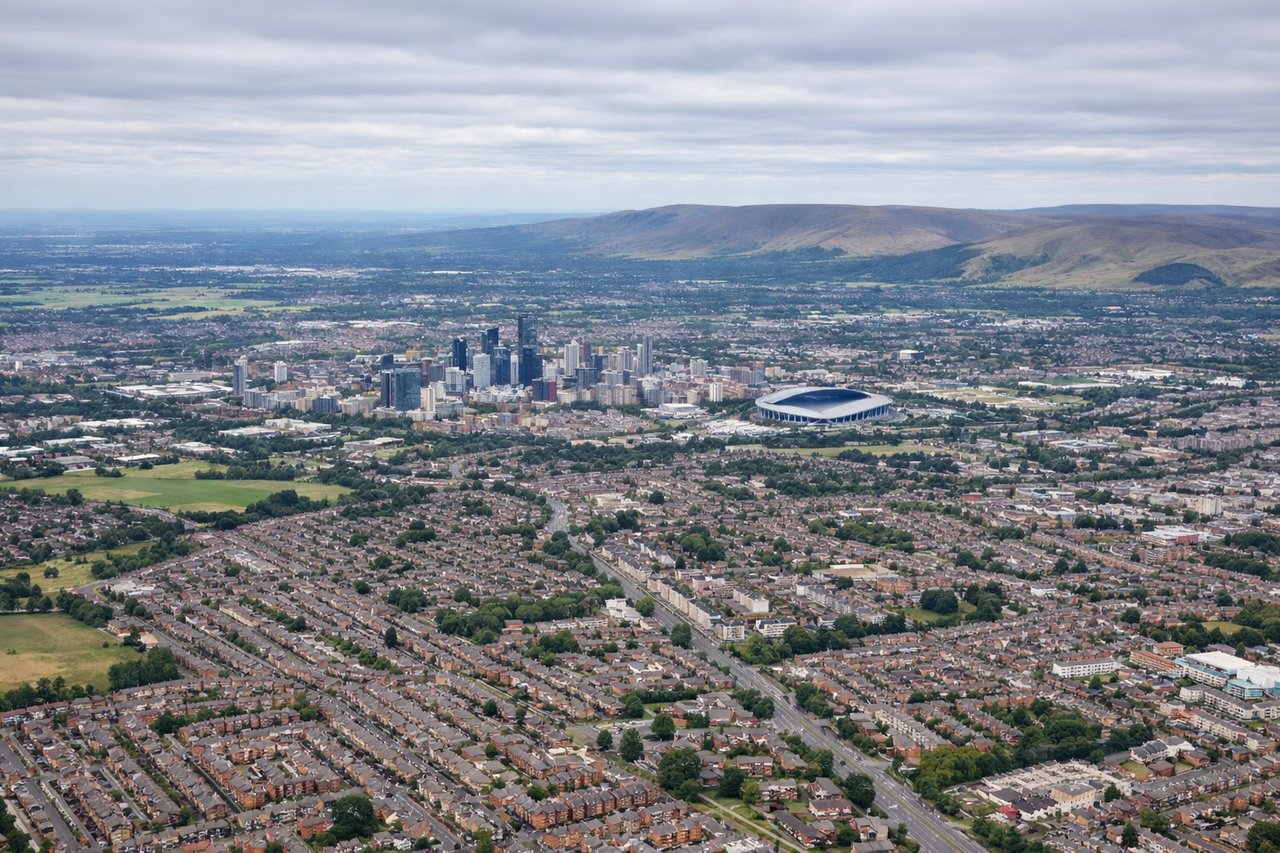
Takeoff from MAN
RIGHTRight-side seats offer views of the Pennines and moorlands southeast of Manchester during the initial climb. The aircraft departs runways 05L/05R heading northeast initially before turning southeast, positioning right-side passengers to see the rolling hills and valleys of the Peak District edge.
Landing at DWC
LEFTLeft-side seats provide excellent views during descent into Dubai. The aircraft approaches from the northwest over the Persian Gulf, and left-side passengers see the Dubai coastline, Palm Jumeirah, and the city's high-rise core along the coast as the plane descends toward Al Maktoum International Airport (located inland south of the main city).
Will your flight be in sunlight?
Pick a date and time in the Sun Map to watch the sun move across your whole flight.
About This Route
Which side of the plane should I sit on flying from Manchester (MAN) to Al Maktoum International Airport (DWC)?
Sit on the Left side of the plane for the best views on flights from Manchester to Dubai. While the takeoff offers pleasant moorland views on the right, the landing approach on the left provides far more dramatic and distinctive scenery—the Palm Jumeirah islands and Dubai's iconic skyline are unmistakable landmarks visible only from the left side during descent.
What can I see during takeoff from Manchester in Manchester?
During takeoff from Manchester (MAN), sit on the Right side for the best views. Right-side seats offer views of the Pennines and moorlands southeast of Manchester during the initial climb. The aircraft departs runways 05L/05R heading northeast initially before turning southeast, positioning right-side passengers to see the rolling hills and valleys of the Peak District edge. Notable sights include: Pennine Hills, Peak District moorlands, Manchester urban sprawl to the northwest, Cheshire plains extending south.
What can I see when landing at Al Maktoum International Airport in Dubai?
When landing at Al Maktoum International Airport (DWC), sit on the Left side for the best views. Left-side seats provide excellent views during descent into Dubai. The aircraft approaches from the northwest over the Persian Gulf, and left-side passengers see the Dubai coastline, Palm Jumeirah, and the city's high-rise core along the coast as the plane descends toward Al Maktoum International Airport (located inland south of the main city). Notable sights include: Persian Gulf waters, Palm Jumeirah artificial islands, Dubai Marina and downtown skyline, Arabian Desert inland.
How long is the flight from Manchester to Dubai?
The flight from Manchester (MAN) to Al Maktoum International Airport (DWC) takes about 7 hours 15 minutes. The shortest flight path between them is 3,525 miles (5,672 km); winds and air traffic control usually add a few percent.
What does the Manchester to Dubai flight path pass over?
The flight path crosses the Alps (visible from either side depending on exact routing—typically the southern edge near Mont Blanc region), then over the Mediterranean Sea, across southern Italy or Greece, over the Eastern Mediterranean toward the Levantine coast, then across the Arabian Peninsula including the Syrian Desert, Iraqi plains, and into the Persian Gulf region. Notable landmarks include the Apennine Mountains (Italy), Aegean Sea islands, the Taurus Mountains (Turkey) if routed northerly, the Dead Sea region, and the Zagros Mountains (Iran) on the eastern horizon during the mid-flight cruise phase.