Manchester to Hamburg is 504 miles (811 km), a flight of about 1 hour 15 minutes.
While landing favors the left, the takeoff view of the Pennines and Peak District is more dramatic and geographically distinctive than Hamburg's approach. Right-side seats capture the most visually compelling terrain of the entire route.
Flight Path
The flight crosses the North Sea at roughly 15,000-25,000 feet. The Pennines and Peak District are left behind within 20 minutes of takeoff. The North Sea crossing offers minimal visual interest—open water with occasional shipping traffic visible below. As you approach continental Europe (around 45 minutes into flight), the German coast becomes visible: the Frisian Islands appear as thin strips of land, and the transition from sea to the flat North German Plain is gradual. The Elbe estuary becomes identifiable about 15 minutes before landing, with its characteristic wide, muddy waterway clearly visible from altitude.
Great circle distance and headings ›Phase by phase
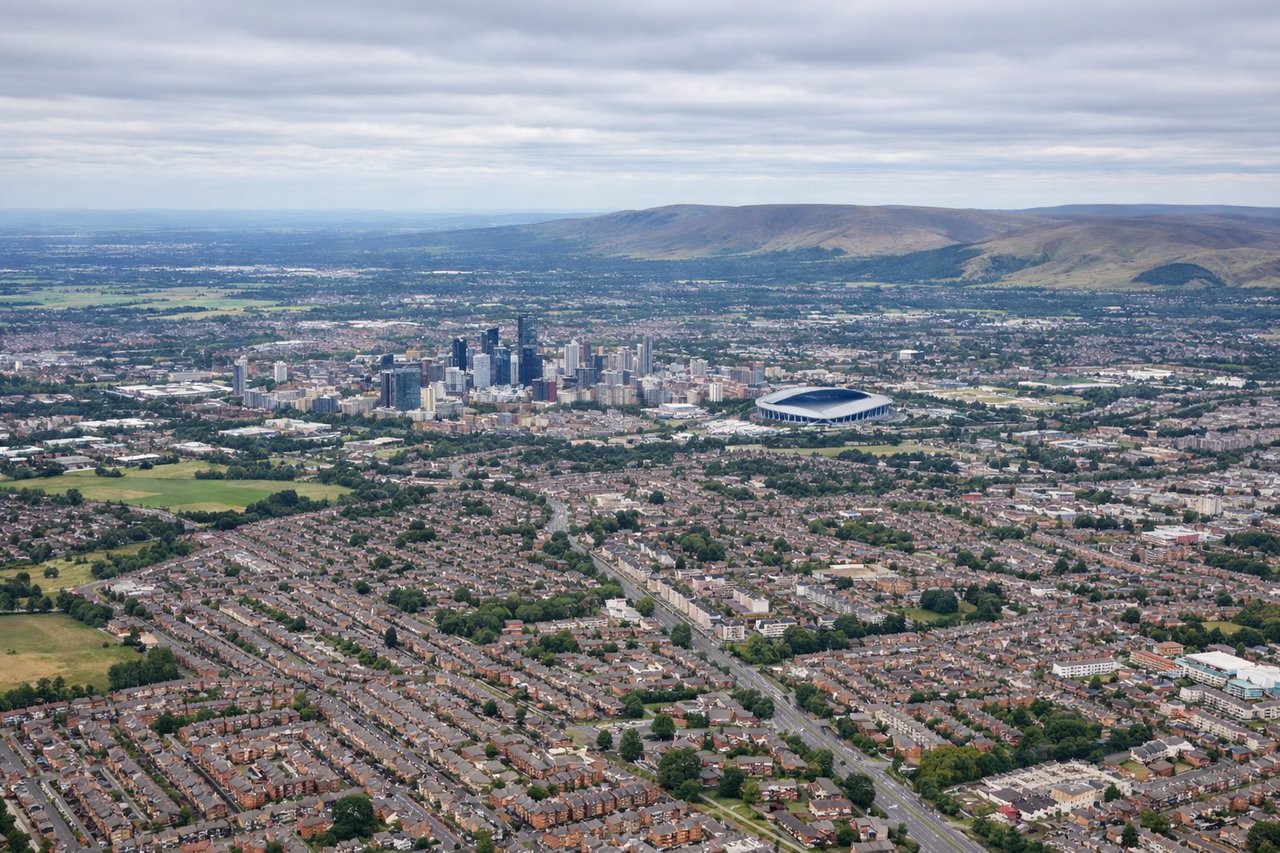
Takeoff from MAN
RIGHTManchester typically departs runway 05L/05R (northeast heading). Right-side seats face toward the Peak District and the Pennines as you climb out, offering clear views of the upland terrain that dominates the landscape east of Manchester.
Landing at HAM
LEFTHamburg's primary approach is from the southwest (runways 05L/05R or 15L/15R depending on wind). Left-side seats on descent provide views of the Elbe River estuary, the city's port infrastructure, and the distinctive geography of the North German Plain as you approach from the west.
Will your flight be in sunlight?
Pick a date and time in the Sun Map to watch the sun move across your whole flight.
About This Route
Which side of the plane should I sit on flying from Manchester (MAN) to Hamburg (HAM)?
Sit on the Right side of the plane for the best views on flights from Manchester to Hamburg. While landing favors the left, the takeoff view of the Pennines and Peak District is more dramatic and geographically distinctive than Hamburg's approach. Right-side seats capture the most visually compelling terrain of the entire route.
What can I see during takeoff from Manchester in Manchester?
During takeoff from Manchester (MAN), sit on the Right side for the best views. Manchester typically departs runway 05L/05R (northeast heading). Right-side seats face toward the Peak District and the Pennines as you climb out, offering clear views of the upland terrain that dominates the landscape east of Manchester. Notable sights include: Peak District hills (southeast), Pennine ridge line (east), Manchester conurbation sprawl (below and behind), Cheshire Plain (southwest).
What can I see when landing at Hamburg in Hamburg?
When landing at Hamburg (HAM), sit on the Left side for the best views. Hamburg's primary approach is from the southwest (runways 05L/05R or 15L/15R depending on wind). Left-side seats on descent provide views of the Elbe River estuary, the city's port infrastructure, and the distinctive geography of the North German Plain as you approach from the west. Notable sights include: Elbe River estuary (wide, meandering waterway), Hamburg port and docks (extensive industrial waterfront), North German Plain (flat agricultural landscape), Alster Lakes (urban water features within city).
How long is the flight from Manchester to Hamburg?
The flight from Manchester (MAN) to Hamburg (HAM) takes about 1 hour 15 minutes. The shortest flight path between them is 504 miles (811 km); winds and air traffic control usually add a few percent.
What does the Manchester to Hamburg flight path pass over?
The flight crosses the North Sea at roughly 15,000-25,000 feet. The Pennines and Peak District are left behind within 20 minutes of takeoff. The North Sea crossing offers minimal visual interest—open water with occasional shipping traffic visible below. As you approach continental Europe (around 45 minutes into flight), the German coast becomes visible: the Frisian Islands appear as thin strips of land, and the transition from sea to the flat North German Plain is gradual. The Elbe estuary becomes identifiable about 15 minutes before landing, with its characteristic wide, muddy waterway clearly visible from altitude.