While the right side offers a fleeting glimpse of the Alps during cruise, the left side wins overall thanks to the Peak District at departure and, more importantly, the spectacular caldera approach into Santorini — one of the most visually striking landings in commercial aviation.
Flight Path
French Alps foothills, Adriatic Sea, Italian coastline near Brindisi, Ionian Sea islands
Great circle distance and headings ›


.jpg?width=600)
Phase by phase
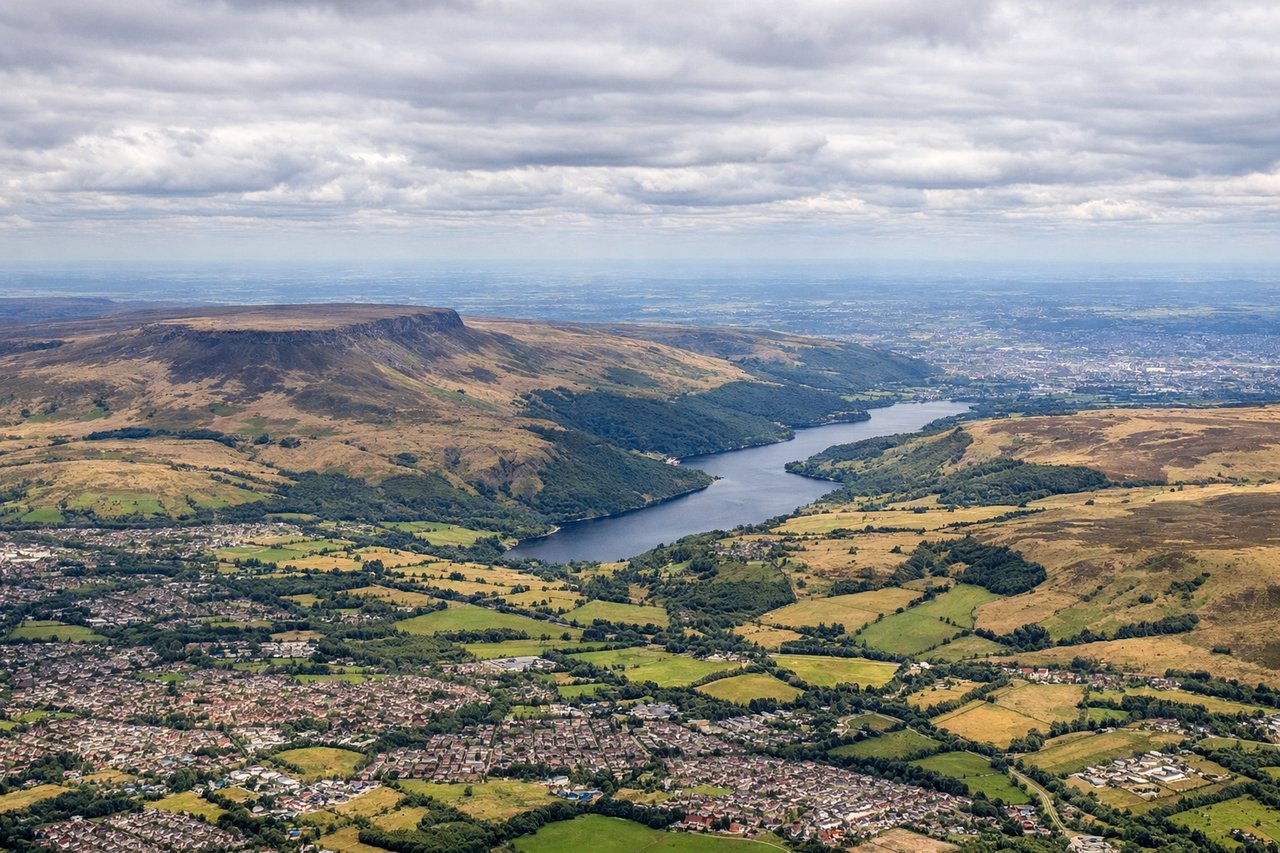
Takeoff from MAN
LEFTDeparting Manchester on runway 23R, the aircraft climbs southwest before turning onto its southeasterly routing, briefly exposing the Peak District's hills and reservoirs on the left side. The right side shows mostly flat Cheshire plain and suburban sprawl.
Landing at JTR
LEFTLanding on runway 33 approaches from the south, and as the aircraft turns northwest along Santorini's east coast, the dramatic caldera cliffs and whitewashed villages of Fira and Oia come into view on the left. The right side mainly shows open Aegean water during this turn.
Landmarks on this routeAll landmarks →
Will your flight be in sunlight?
See exactly which side of the plane gets sun and shade at your departure time.
About This Route
Which side of the plane should I sit on flying from Manchester (MAN) to Santorini (JTR)?
Sit on the Left side of the plane for the best views on flights from Manchester to Santorini. While the right side offers a fleeting glimpse of the Alps during cruise, the left side wins overall thanks to the Peak District at departure and, more importantly, the spectacular caldera approach into Santorini — one of the most visually striking landings in commercial aviation.
What can I see during takeoff from Manchester in Manchester?
During takeoff from Manchester (MAN), sit on the Left side for the best views. Departing Manchester on runway 23R, the aircraft climbs southwest before turning onto its southeasterly routing, briefly exposing the Peak District's hills and reservoirs on the left side. The right side shows mostly flat Cheshire plain and suburban sprawl. Notable sights include: Peak District hills, Cheshire plain, Manchester suburbs, River Mersey valley.
What can I see when landing at Santorini in Santorini?
When landing at Santorini (JTR), sit on the Left side for the best views. Landing on runway 33 approaches from the south, and as the aircraft turns northwest along Santorini's east coast, the dramatic caldera cliffs and whitewashed villages of Fira and Oia come into view on the left. The right side mainly shows open Aegean water during this turn. Notable sights include: Santorini caldera, Fira cliffside town, Oia village, volcanic islet of Nea Kameni.
How long is the flight from Manchester to Santorini?
The flight from Manchester (MAN) to Santorini (JTR) takes 3h 50m.
What does the Manchester to Santorini flight path pass over?
French Alps foothills, Adriatic Sea, Italian coastline near Brindisi, Ionian Sea islands