While takeoff favors the right for Pennine views, the landing approach on left seats provides the more dramatic and sustained scenery—the Troodos Mountains and Mediterranean coastline are far more visually distinctive than Manchester's industrial landscape. The landing experience outweighs the takeoff.
Flight Path
The flight path crosses the English Channel near Dover, then proceeds over northern France (Normandy and Île-de-France regions visible), continues southeast over the Alps (Mont Blanc and surrounding peaks visible on clear days, typically on the left/south side of the route), then crosses the Mediterranean over Italy and Greece. The Apennines in central Italy, the Ionian Sea between Greece and Albania, and the Greek mainland (Peloponnese) are notable midpoint features. The final approach to Cyprus brings the Taurus Mountains of southern Turkey visible on the northern horizon before descent into Larnaca.
Great circle distance and headings ›Phase by phase
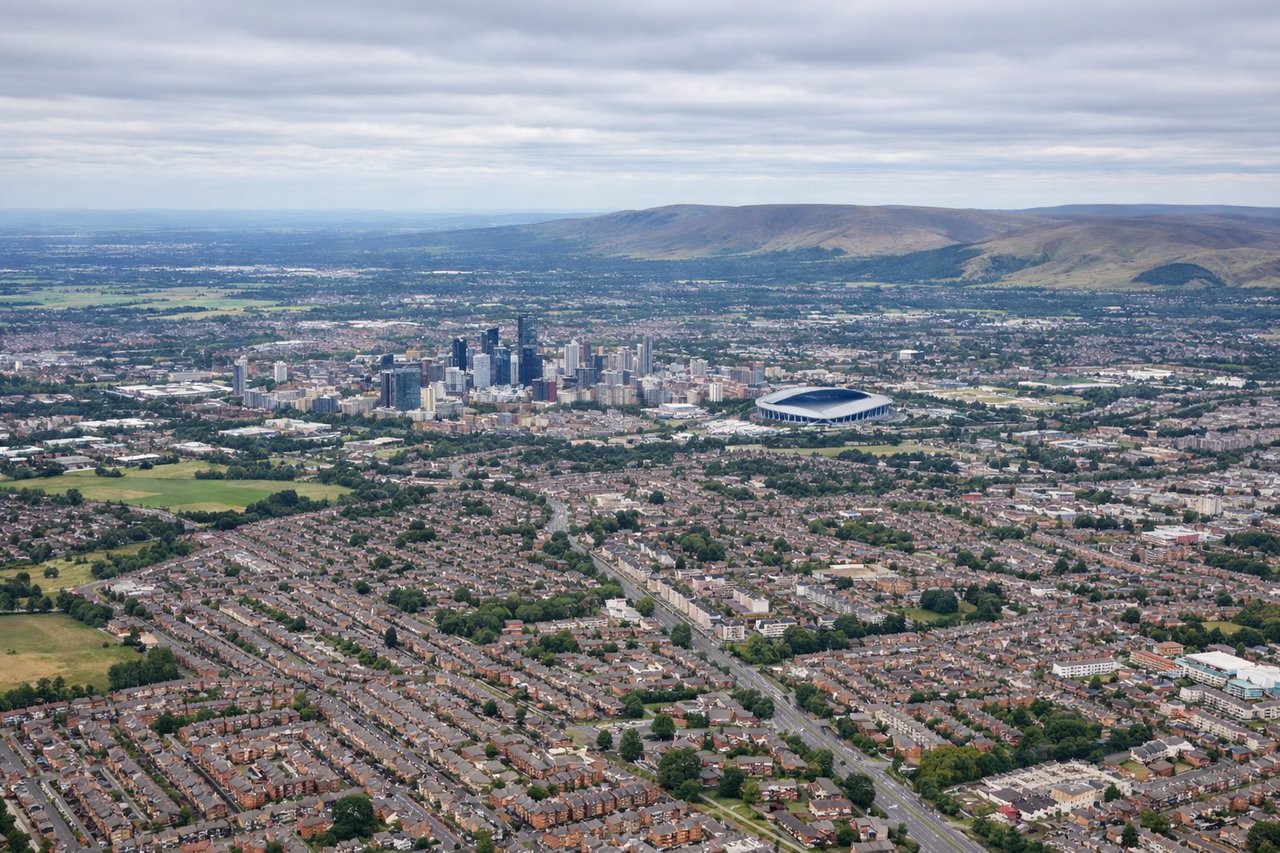
Takeoff from MAN
RIGHTManchester typically departs runways 05L/05R or 23L/23R. Eastbound departures (05L/05R) on right seats offer views of the Pennines and the industrial landscape of Greater Manchester spreading southeast. Westbound departures show less interesting terrain.
Landing at LCA
LEFTApproaching Larnaca typically uses runway 29 (westerly approach). Left seats provide superior views of the Troodos Mountains inland and the Larnaca Bay coastline. The descent path brings these features into clear view on the left side of the aircraft.
Landmarks on this routeAll landmarks →
Will your flight be in sunlight?
See exactly which side of the plane gets sun and shade at your departure time.
About This Route
Which side of the plane should I sit on flying from Manchester (MAN) to Larnaca (LCA)?
Sit on the Left side of the plane for the best views on flights from Manchester to Larnaca. While takeoff favors the right for Pennine views, the landing approach on left seats provides the more dramatic and sustained scenery—the Troodos Mountains and Mediterranean coastline are far more visually distinctive than Manchester's industrial landscape. The landing experience outweighs the takeoff.
What can I see during takeoff from Manchester in Manchester?
During takeoff from Manchester (MAN), sit on the Right side for the best views. Manchester typically departs runways 05L/05R or 23L/23R. Eastbound departures (05L/05R) on right seats offer views of the Pennines and the industrial landscape of Greater Manchester spreading southeast. Westbound departures show less interesting terrain. Notable sights include: Pennine Hills to the east, Manchester city center and Salford urban sprawl, Cheshire Plain extending south, Mersey Valley.
What can I see when landing at Larnaca in Larnaca?
When landing at Larnaca (LCA), sit on the Left side for the best views. Approaching Larnaca typically uses runway 29 (westerly approach). Left seats provide superior views of the Troodos Mountains inland and the Larnaca Bay coastline. The descent path brings these features into clear view on the left side of the aircraft. Notable sights include: Troodos Mountains (inland, snow-capped in winter), Larnaca Bay and Mediterranean coastline, Akrotiri Peninsula to the west, Salt Lake (Aliki) north of the airport.
How long is the flight from Manchester to Larnaca?
The flight from Manchester (MAN) to Larnaca (LCA) takes Approximately 4 hours 15 minutes.
What does the Manchester to Larnaca flight path pass over?
The flight path crosses the English Channel near Dover, then proceeds over northern France (Normandy and Île-de-France regions visible), continues southeast over the Alps (Mont Blanc and surrounding peaks visible on clear days, typically on the left/south side of the route), then crosses the Mediterranean over Italy and Greece. The Apennines in central Italy, the Ionian Sea between Greece and Albania, and the Greek mainland (Peloponnese) are notable midpoint features. The final approach to Cyprus brings the Taurus Mountains of southern Turkey visible on the northern horizon before descent into Larnaca.