While Manchester's departure offers moorland and Pennine views, the transatlantic flight is dominated by 5+ hours of open Atlantic Ocean on both sides during cruise. The right side's advantage comes from the superior landing experience: Manhattan's iconic skyline, Hudson River, and East River waterfront provide dramatic urban scenery that outweighs the modest takeoff advantage of the left side. Right scores 3.0 (good landing scenery compensates for ocean-heavy cruise); left scores 2.5 (decent departure but ocean-dominated cruise and less impressive landing).
Flown MAN to LGA? Did we get it right?
Flight Path
Manchester to New York is 3,329 miles (5,358 km), a flight of about 7 hours 5 minutes.
The flight path crosses the Atlantic Ocean for approximately 5 hours. Notable geographic features along the route include: departure over the Irish Sea and western UK coastline; the Mid-Atlantic Ridge (underwater, not visible); Greenland's southern tip and Davis Strait region (visible on clear days, typically to the north); the Canadian Maritime provinces (Nova Scotia, Newfoundland) as the aircraft approaches North America; and the St. Lawrence River estuary before turning south toward New York. During cruise at 35,000 feet, passengers see primarily open ocean with occasional cloud formations. The most visually interesting segments are the first 30 minutes (UK/Irish coastline) and the final 45 minutes (Canadian Maritime approach and descent toward the US Northeast).
Great circle distance and headings ›Phase by phase
Takeoff from MAN
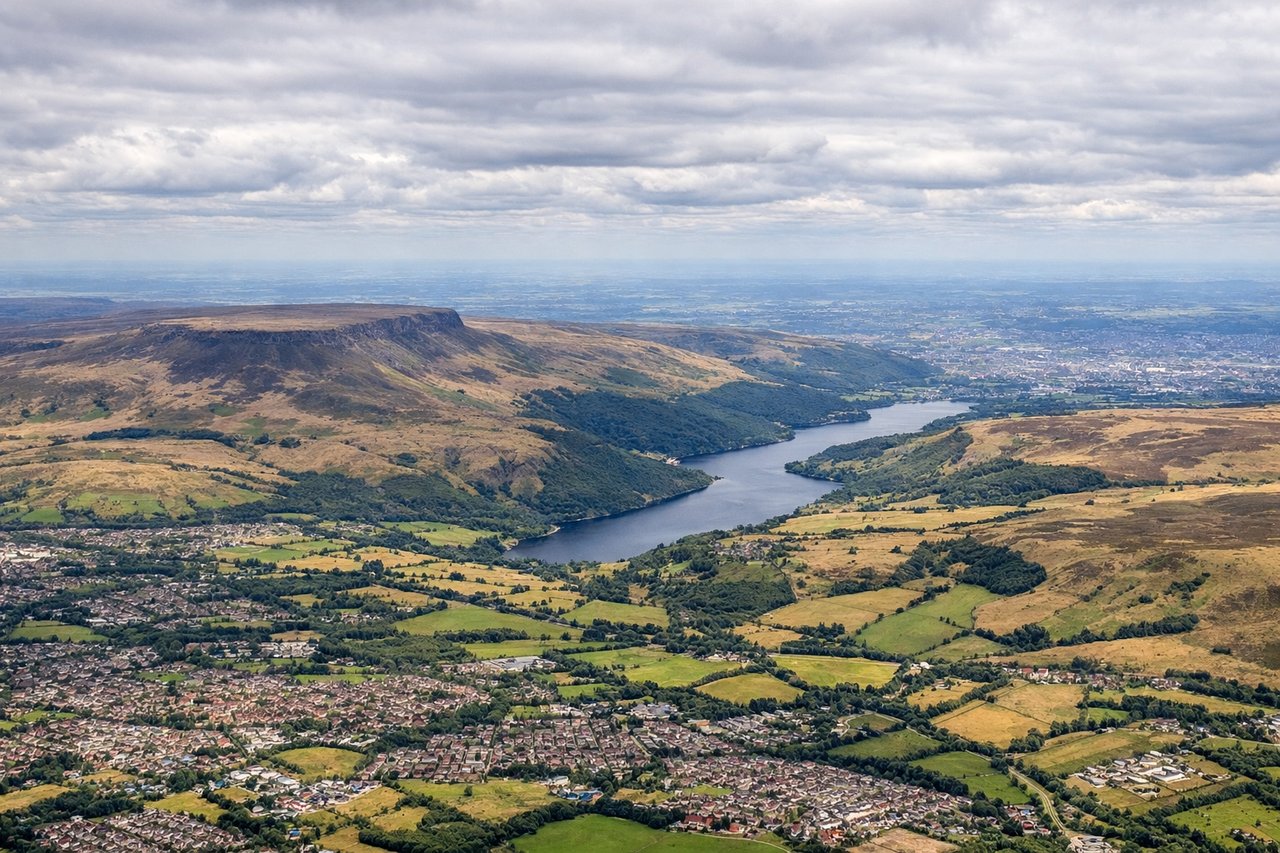
LEFTManchester's typical departure on runway 23 (southwest) climbs over the Cheshire Plain toward Wales. Left-side passengers see the initial urban sprawl of Greater Manchester, then the moorlands and early foothills of the Pennines rising to the southeast. Right side faces northwest toward the Irish Sea and flat coastal plains—less dramatic terrain.
Landing at LGA
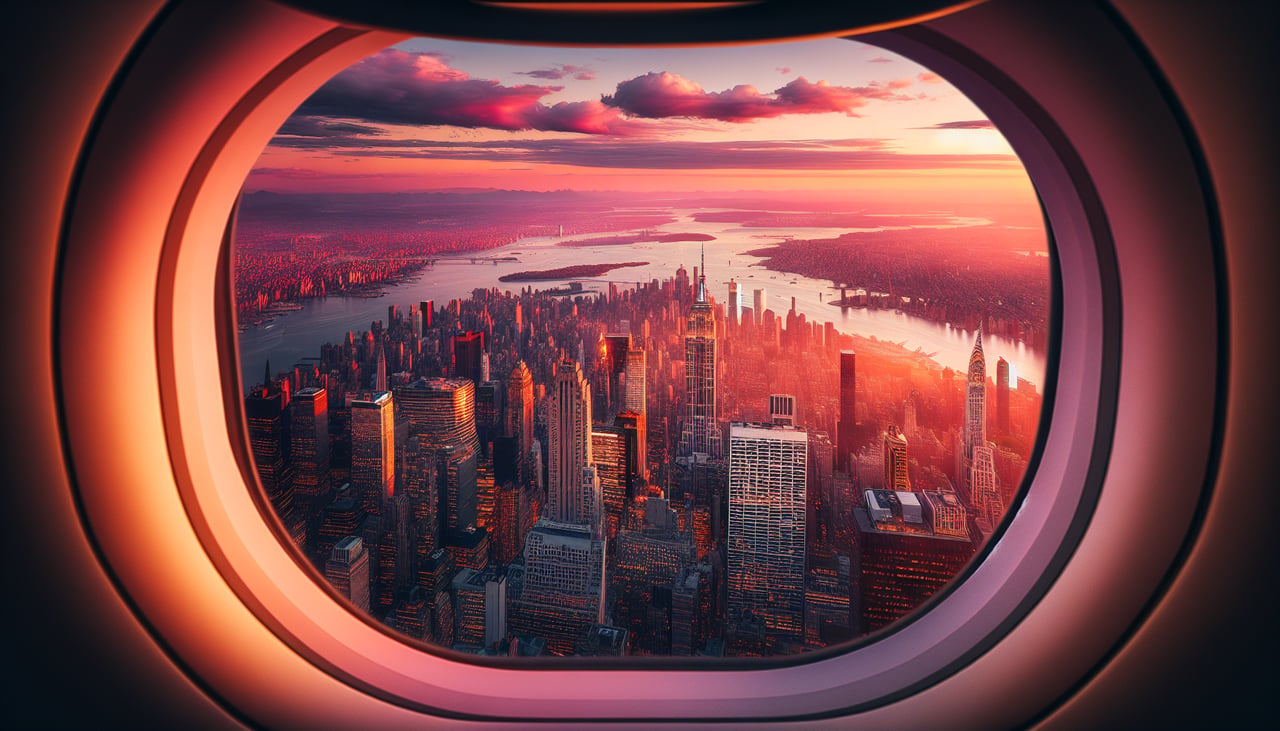
RIGHTApproach to LGA typically uses runway 04 (southwest heading) or runway 22 (northeast heading). On a westbound transatlantic arrival, runway 04 is more common. Right-side passengers descending toward runway 04 see the Hudson River, Manhattan's skyline, and the East River waterfront in dramatic detail. Left side faces New Jersey's industrial areas and the Hackensack Meadowlands—less visually compelling.
Will your flight be in sunlight?
Pick a date and time in the Sun Map to watch the sun move across your whole flight.
About This Route
Which side of the plane should I sit on flying from Manchester (MAN) to La Guardia (LGA)?
Sit on the Right side of the plane for the best views on flights from Manchester to New York. While Manchester's departure offers moorland and Pennine views, the transatlantic flight is dominated by 5+ hours of open Atlantic Ocean on both sides during cruise. The right side's advantage comes from the superior landing experience: Manhattan's iconic skyline, Hudson River, and East River waterfront provide dramatic urban scenery that outweighs the modest takeoff advantage of the left side. Right scores 3.0 (good landing scenery compensates for ocean-heavy cruise); left scores 2.5 (decent departure but ocean-dominated cruise and less impressive landing).
What can I see during takeoff from Manchester in Manchester?
During takeoff from Manchester (MAN), sit on the Left side for the best views. Manchester's typical departure on runway 23 (southwest) climbs over the Cheshire Plain toward Wales. Left-side passengers see the initial urban sprawl of Greater Manchester, then the moorlands and early foothills of the Pennines rising to the southeast. Right side faces northwest toward the Irish Sea and flat coastal plains—less dramatic terrain. Notable sights include: Greater Manchester urban area, Pennine moorlands to the southeast, Cheshire Plain, early views toward the Welsh uplands.
What can I see when landing at La Guardia in New York?
When landing at La Guardia (LGA), sit on the Right side for the best views. Approach to LGA typically uses runway 04 (southwest heading) or runway 22 (northeast heading). On a westbound transatlantic arrival, runway 04 is more common. Right-side passengers descending toward runway 04 see the Hudson River, Manhattan's skyline, and the East River waterfront in dramatic detail. Left side faces New Jersey's industrial areas and the Hackensack Meadowlands—less visually compelling. Notable sights include: Hudson River, Manhattan skyline and skyscrapers, East River, Queens waterfront and Astoria neighborhoods.
How long is the flight from Manchester to New York?
The flight from Manchester (MAN) to La Guardia (LGA) takes about 7 hours 5 minutes. The shortest flight path between them is 3,329 miles (5,358 km); winds and air traffic control usually add a few percent.
What does the Manchester to New York flight path pass over?
The flight path crosses the Atlantic Ocean for approximately 5 hours. Notable geographic features along the route include: departure over the Irish Sea and western UK coastline; the Mid-Atlantic Ridge (underwater, not visible); Greenland's southern tip and Davis Strait region (visible on clear days, typically to the north); the Canadian Maritime provinces (Nova Scotia, Newfoundland) as the aircraft approaches North America; and the St. Lawrence River estuary before turning south toward New York. During cruise at 35,000 feet, passengers see primarily open ocean with occasional cloud formations. The most visually interesting segments are the first 30 minutes (UK/Irish coastline) and the final 45 minutes (Canadian Maritime approach and descent toward the US Northeast).