Right side captures the most dramatic scenery on both legs: Lake Michigan and Chicago's urban core during departure, then the volcanic landscape and Pacific approach during landing. The westbound routing over the continental interior offers less distinctive ground features, making the coastal views on the right side the clear winner.
Flight Path
The flight path crosses the Great Plains and Rocky Mountain region. Notable features include the Mississippi River valley (visible around 1.5 hours out), the Missouri River system, the Rocky Mountains (particularly visible in Colorado and Wyoming airspace around 2.5-3 hours), and the Great Basin terrain of Nevada and Utah. The transition from green agricultural lands to high desert and mountain terrain is gradual but distinct. By the time you reach the Pacific coast near California, you're over open ocean for the final 2+ hours with no significant landmarks until the Hawaiian Islands appear.
Great circle distance and headings ›

.jpg?width=600)


Phase by phase
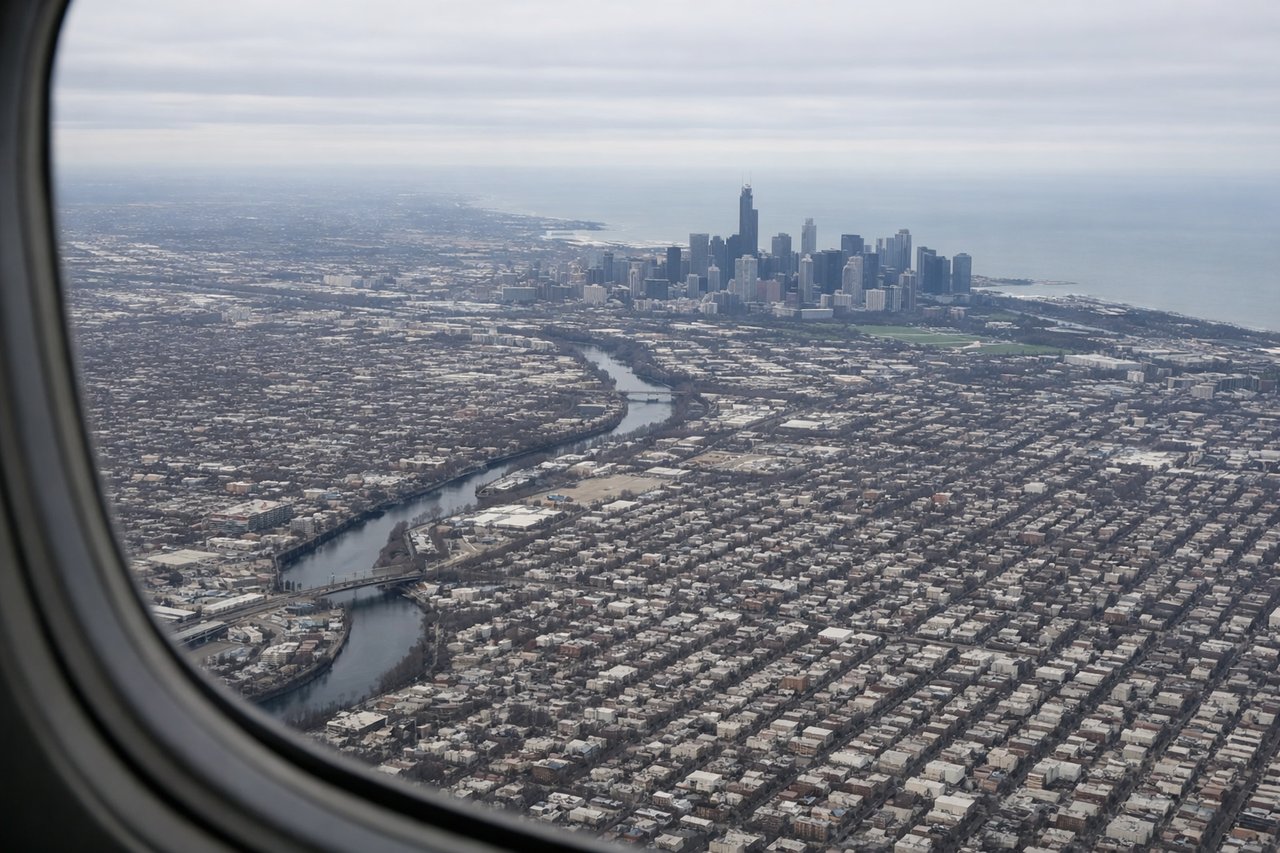
Takeoff from MDW
LEFTLeft side offers views of Lake Michigan and the Chicago shoreline as the aircraft climbs westbound. You'll see the downtown skyline recede and the lake's eastern edge clearly defined against the landmass.
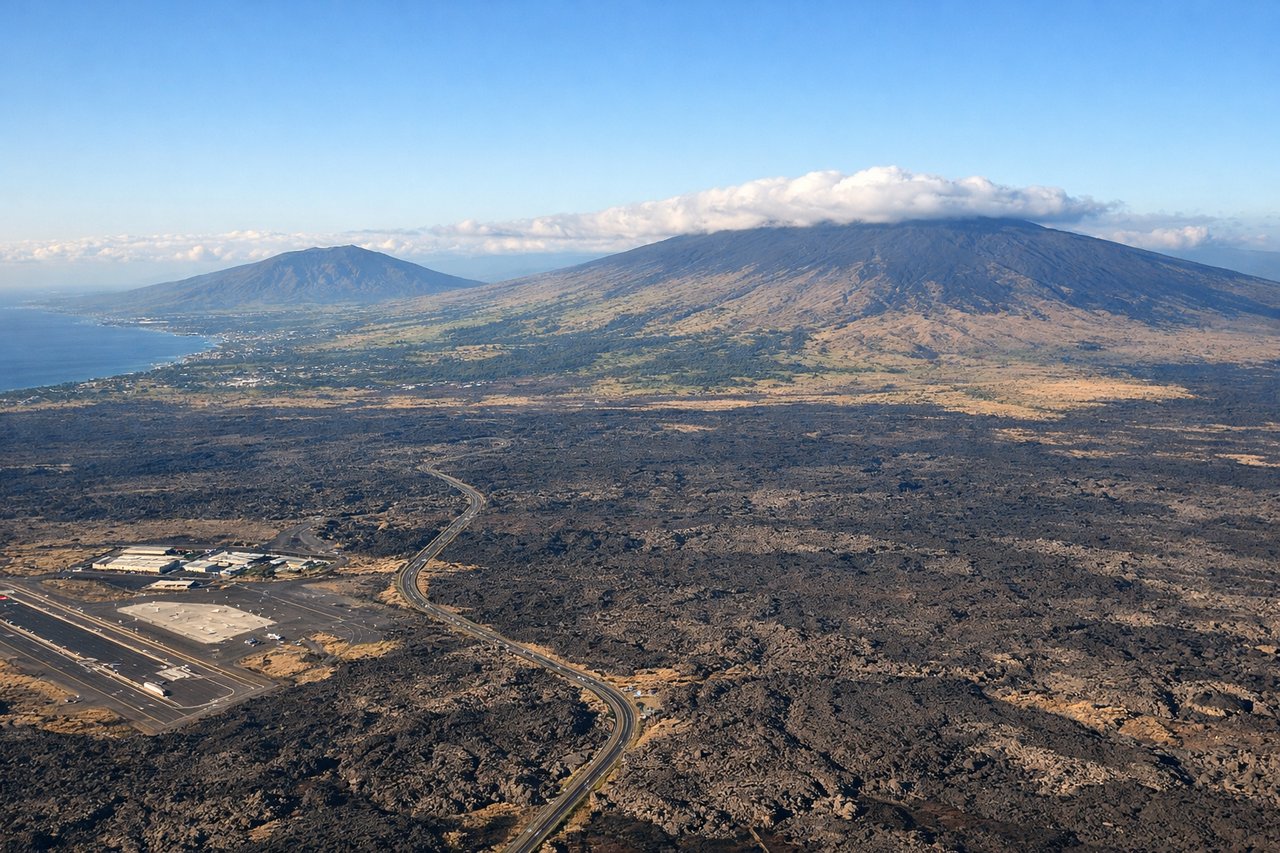
Landing at KOA
RIGHTRight side provides the best view during the final approach to Kona. You'll see the Big Island's western coast, the Kona volcanic landscape, and the descent path over the Pacific before touching down.
Landmarks on this routeAll landmarks →
Will your flight be in sunlight?
See exactly which side of the plane gets sun and shade at your departure time.
About This Route
Which side of the plane should I sit on flying from Chicago Midway International (MDW) to Kona International At Keahole (KOA)?
Sit on the Right side of the plane for the best views on flights from Chicago to Kona. Right side captures the most dramatic scenery on both legs: Lake Michigan and Chicago's urban core during departure, then the volcanic landscape and Pacific approach during landing. The westbound routing over the continental interior offers less distinctive ground features, making the coastal views on the right side the clear winner.
What can I see during takeoff from Chicago Midway International in Chicago?
During takeoff from Chicago Midway International (MDW), sit on the Left side for the best views. Left side offers views of Lake Michigan and the Chicago shoreline as the aircraft climbs westbound. You'll see the downtown skyline recede and the lake's eastern edge clearly defined against the landmass. Notable sights include: Lake Michigan, Chicago downtown skyline, Indiana shoreline to the south, Des Plaines River valley.
What can I see when landing at Kona International At Keahole in Kona?
When landing at Kona International At Keahole (KOA), sit on the Right side for the best views. Right side provides the best view during the final approach to Kona. You'll see the Big Island's western coast, the Kona volcanic landscape, and the descent path over the Pacific before touching down. Notable sights include: Pacific Ocean, Big Island's lava fields and volcanic terrain, Kona coast, Hualalai volcano slopes.
How long is the flight from Chicago to Kona?
The flight from Chicago Midway International (MDW) to Kona International At Keahole (KOA) takes 5h 15m.
What does the Chicago to Kona flight path pass over?
The flight path crosses the Great Plains and Rocky Mountain region. Notable features include the Mississippi River valley (visible around 1.5 hours out), the Missouri River system, the Rocky Mountains (particularly visible in Colorado and Wyoming airspace around 2.5-3 hours), and the Great Basin terrain of Nevada and Utah. The transition from green agricultural lands to high desert and mountain terrain is gradual but distinct. By the time you reach the Pacific coast near California, you're over open ocean for the final 2+ hours with no significant landmarks until the Hawaiian Islands appear.