Pacific Ocean and Kona coastline, black lava fields from Hualalai's flows, coastal resort areas near Keauhou
🛬 Landing at Kona (KOA)
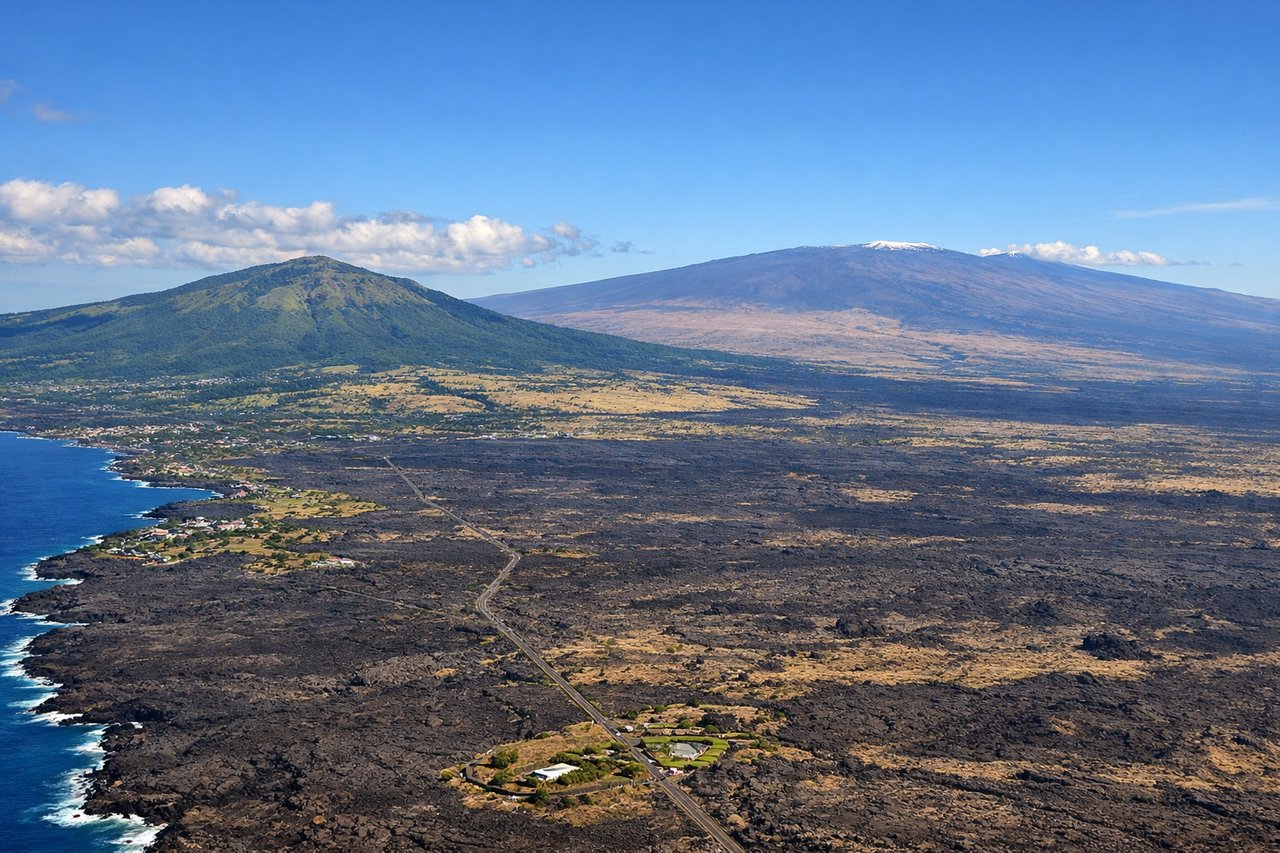 Left Side
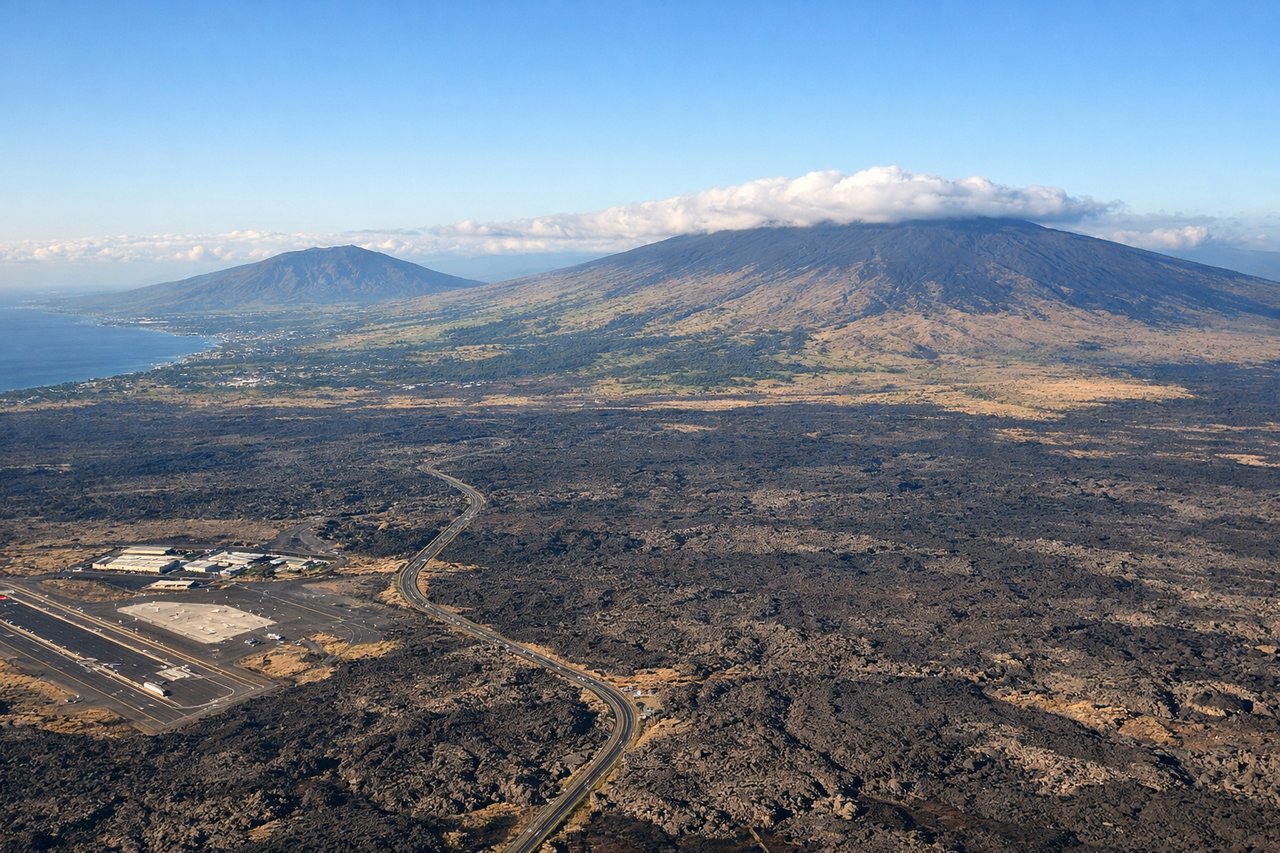 Right Side
KOA is an open-air airport built on a lava field, with thatched-roof, walk-outside terminals that give arriving passengers an immediate taste of Hawaii's climate rather than enclosed jet bridges. It has a single runway and handles a mix of interisland, mainland, and international flights.
Landmarks on routes to KonaAll landmarks →
Connecting at KOA?
Find out if your layover is long enough at Kona International At Keahole.
Check layover times →Popular Routes to Kona International At Keahole (KOA)
About This Airport
Which side of the plane has the best views landing at Kona International At Keahole (KOA)?
When landing at Kona International At Keahole (KOA), sit on the Right side for the best views. On the typical runway 17 approach, you're flying south along the Kona coast with the Pacific Ocean on the right side. You'll get great views of the black lava fields meeting turquoise water, plus the coastal resorts and bays south of the airport. Notable sights include: Pacific Ocean and Kona coastline, black lava fields from Hualalai's flows, coastal resort areas near Keauhou, Kealakekua Bay in the distance to the south.
What can I see when arriving at Kona?
Arriving at Kona International At Keahole in Kona, passengers on the Right side enjoy views of Pacific Ocean and Kona coastline, black lava fields from Hualalai's flows, coastal resort areas near Keauhou, Kealakekua Bay in the distance to the south. On the typical runway 17 approach, you're flying south along the Kona coast with the Pacific Ocean on the right side. You'll get great views of the black lava fields meeting turquoise water, plus the coastal resorts and bays south of the airport.
What factors affect the best window seat landing at Kona International At Keahole?
The best window seat landing at Kona International At Keahole (KOA) depends on several factors: the approach path and runway in use, geographic features around Kona (mountains, coastlines, city skylines), weather conditions, and time of day. Morning and evening arrivals often offer the best lighting.