The left side wins on both ends of the flight: Mount Rainier dominates the departure view and Hualalai/Mauna Loa dominate the arrival view, while the right side offers only the Olympic Mountains and open ocean coastline, both less dramatic than the volcanic and alpine scenery on the left.
Flight Path
The route crosses roughly 2,300 miles of open Pacific Ocean with no islands or landmasses visible until the Hawaiian chain comes into view near the Big Island.
Great circle distance and headings ›

Phase by phase
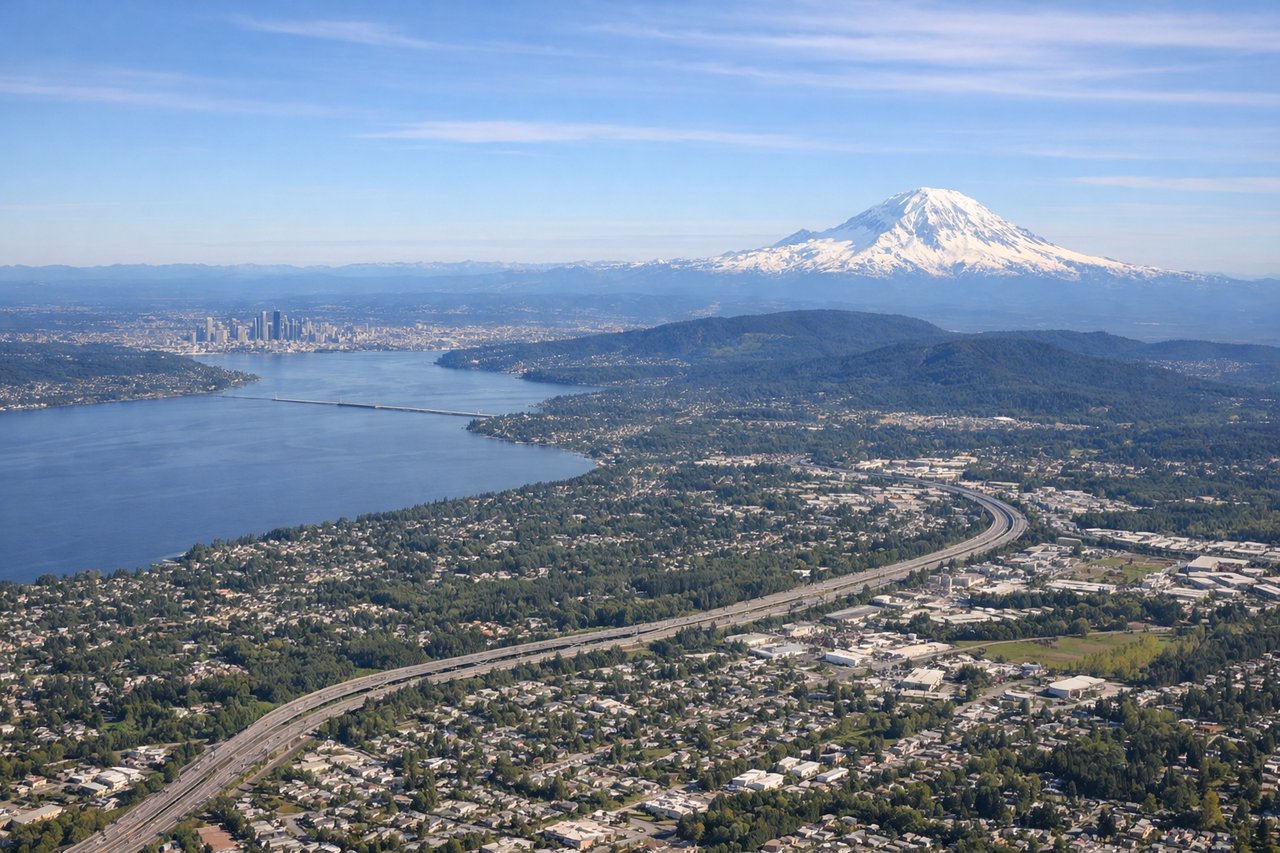
Takeoff from SEA
LEFTDeparting SEA to the south, the left side gives a clear view over Puget Sound toward Mount Rainier's massive snow-capped cone, with the Cascade foothills rolling behind it. The right side only shows the Sound and Olympic Mountains, which are scenic but less dramatic.
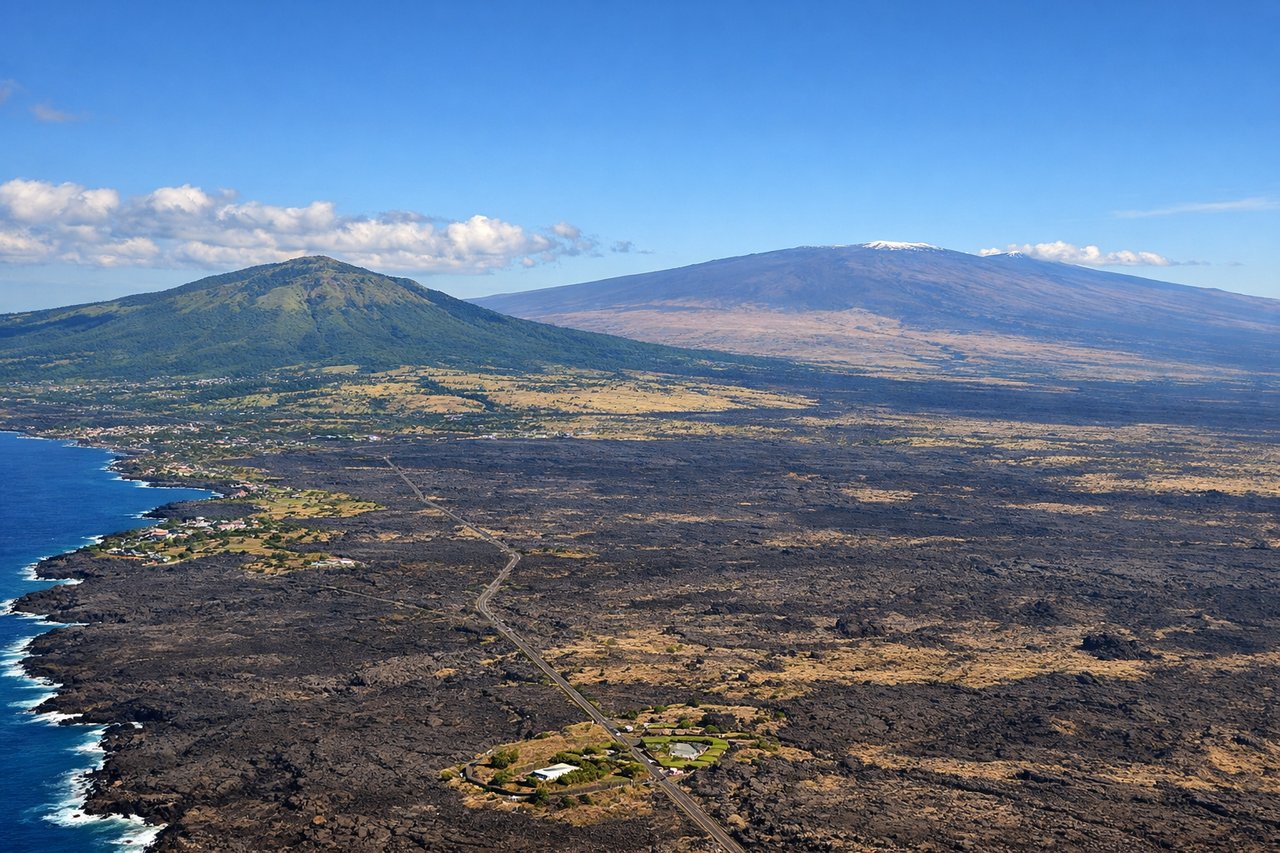
Landing at KOA
LEFTOn the southbound approach into KOA, the left side faces inland toward Hualalai volcano's dark lava-covered slopes with Mauna Loa's enormous shield looming behind it. The right side mostly shows open ocean and the coastline, which is pleasant but far less striking than the volcanic terrain.
Landmarks on this routeAll landmarks →
Will your flight be in sunlight?
See exactly which side of the plane gets sun and shade at your departure time.
About This Route
Which side of the plane should I sit on flying from Seattle Tacoma International (SEA) to Kona International At Keahole (KOA)?
Sit on the Left side of the plane for the best views on flights from Seattle to Kona. The left side wins on both ends of the flight: Mount Rainier dominates the departure view and Hualalai/Mauna Loa dominate the arrival view, while the right side offers only the Olympic Mountains and open ocean coastline, both less dramatic than the volcanic and alpine scenery on the left.
What can I see during takeoff from Seattle Tacoma International in Seattle?
During takeoff from Seattle Tacoma International (SEA), sit on the Left side for the best views. Departing SEA to the south, the left side gives a clear view over Puget Sound toward Mount Rainier's massive snow-capped cone, with the Cascade foothills rolling behind it. The right side only shows the Sound and Olympic Mountains, which are scenic but less dramatic. Notable sights include: Mount Rainier, Cascade Range foothills, Puget Sound islands, Lake Washington.
What can I see when landing at Kona International At Keahole in Kona?
When landing at Kona International At Keahole (KOA), sit on the Left side for the best views. On the southbound approach into KOA, the left side faces inland toward Hualalai volcano's dark lava-covered slopes with Mauna Loa's enormous shield looming behind it. The right side mostly shows open ocean and the coastline, which is pleasant but far less striking than the volcanic terrain. Notable sights include: Hualalai Volcano, Mauna Loa summit dome, Kona lava fields, Kailua-Kona coastline.
How long is the flight from Seattle to Kona?
The flight from Seattle Tacoma International (SEA) to Kona International At Keahole (KOA) takes 5h 50m.
What does the Seattle to Kona flight path pass over?
The route crosses roughly 2,300 miles of open Pacific Ocean with no islands or landmasses visible until the Hawaiian chain comes into view near the Big Island.