Right-side seats capture the dramatic Mauna Kea departure from Hilo, which is the most visually striking segment. While left seats excel during Kona landing, the takeoff view of Hawaii's tallest mountain and the volcanic landscape is more memorable and geographically significant for this short inter-island flight.
Flown ITO to KOA? Did we get it right?
Flight Path
Hilo to Kona is 65 miles (105 km), a flight of about 35 minutes.
The flight crosses the Kona coast's leeward side at roughly 10,000-12,000 feet. Passengers will see the transition from Hilo's windward green slopes to the drier leeward terrain, with Mauna Loa's broad profile visible to the south and the North Kona lava fields becoming increasingly prominent as the aircraft descends toward Keahole.
Great circle distance and headings ›

Phase by phase
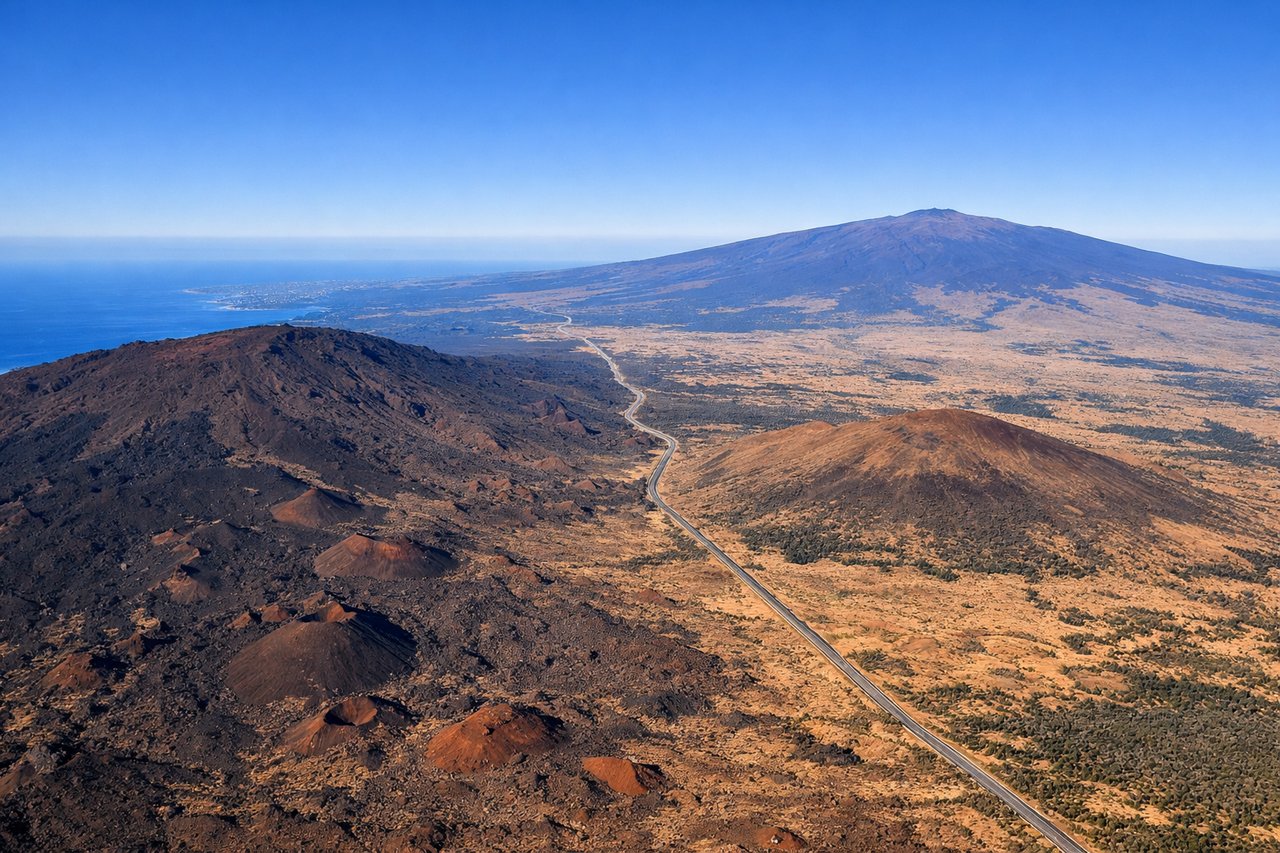
Takeoff from ITO
RIGHTHilo typically departs runway 08 (eastbound) or 26 (westbound). Right-side seats offer the best view of Mauna Kea's snow-capped summit during climb-out on either runway, as the mountain dominates the western skyline from Hilo. Left seats face the Pacific or inland terrain with less dramatic features.
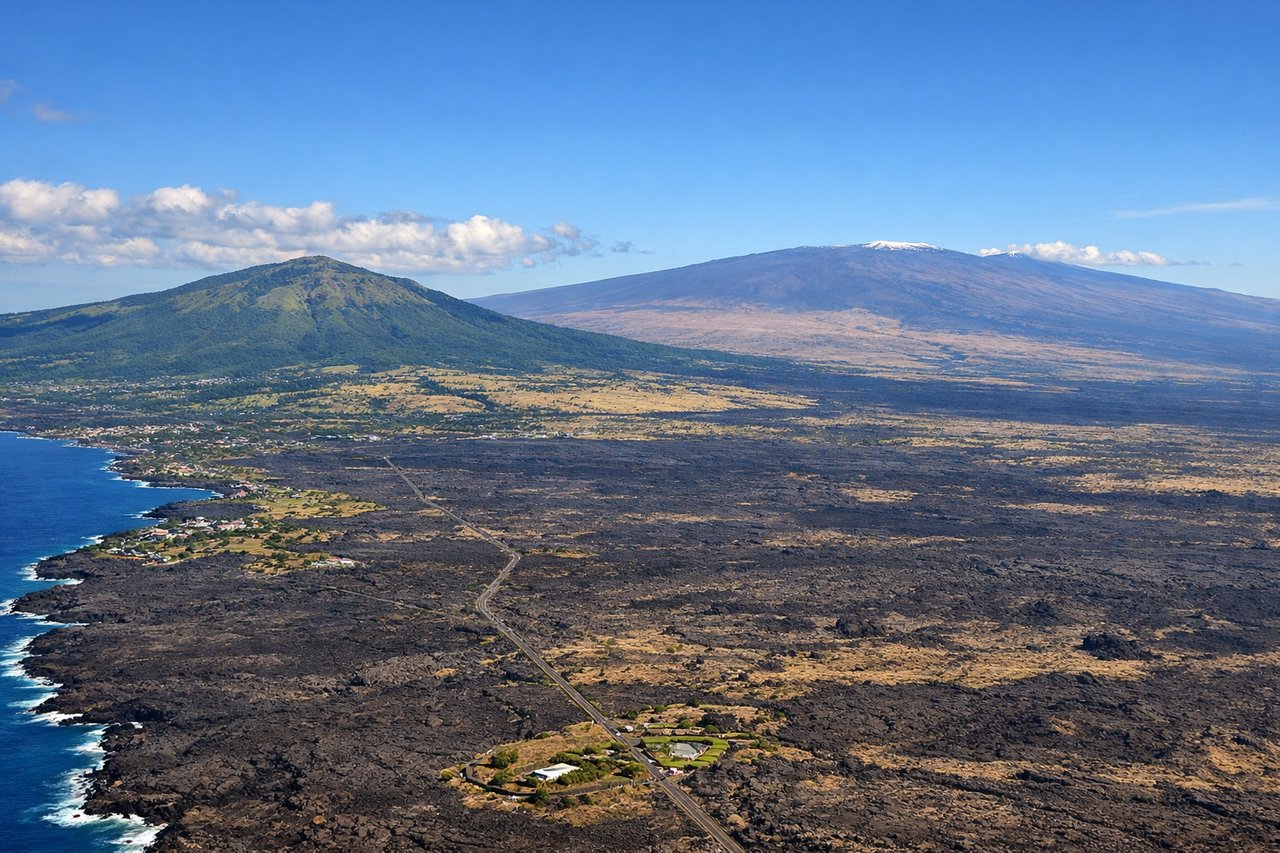
Landing at KOA
LEFTApproaching Kona on typical runway 17 (southbound) or 35 (northbound) descent, left-side seats provide excellent views of the Kona coast, Kailua-Kona town, and the dramatic lava fields that define this side of the island. Right seats face the open ocean with minimal visual interest.
Will your flight be in sunlight?
Pick a date and time in the Sun Map to watch the sun move across your whole flight.
About This Route
Which side of the plane should I sit on flying from Hilo International (ITO) to Kona International At Keahole (KOA)?
Sit on the Right side of the plane for the best views on flights from Hilo to Kona. Right-side seats capture the dramatic Mauna Kea departure from Hilo, which is the most visually striking segment. While left seats excel during Kona landing, the takeoff view of Hawaii's tallest mountain and the volcanic landscape is more memorable and geographically significant for this short inter-island flight.
What can I see during takeoff from Hilo International in Hilo?
During takeoff from Hilo International (ITO), sit on the Right side for the best views. Hilo typically departs runway 08 (eastbound) or 26 (westbound). Right-side seats offer the best view of Mauna Kea's snow-capped summit during climb-out on either runway, as the mountain dominates the western skyline from Hilo. Left seats face the Pacific or inland terrain with less dramatic features. Notable sights include: Mauna Kea (13,796 ft, visible snow cap), Hilo Bay and waterfront, Saddle Road corridor between Mauna Kea and Mauna Loa, Kohala Mountain range (northern horizon).
What can I see when landing at Kona International At Keahole in Kona?
When landing at Kona International At Keahole (KOA), sit on the Left side for the best views. Approaching Kona on typical runway 17 (southbound) or 35 (northbound) descent, left-side seats provide excellent views of the Kona coast, Kailua-Kona town, and the dramatic lava fields that define this side of the island. Right seats face the open ocean with minimal visual interest. Notable sights include: Kailua-Kona town and harbor, Hualalai volcano (5,480 ft, dark lava flows), Kona lava fields (black volcanic rock), Keahole Point and airport runway.
How long is the flight from Hilo to Kona?
The flight from Hilo International (ITO) to Kona International At Keahole (KOA) takes about 35 minutes. The shortest flight path between them is 65 miles (105 km); winds and air traffic control usually add a few percent.
What does the Hilo to Kona flight path pass over?
The flight crosses the Kona coast's leeward side at roughly 10,000-12,000 feet. Passengers will see the transition from Hilo's windward green slopes to the drier leeward terrain, with Mauna Loa's broad profile visible to the south and the North Kona lava fields becoming increasingly prominent as the aircraft descends toward Keahole.