While the Big Island departure offers a dramatic volcanic backdrop, the Oahu arrival delivers a longer, richer sequence of recognizable landmarks — Diamond Head, Waikiki, downtown Honolulu, and Pearl Harbor — making the right side the stronger choice for this short interisland hop.
Flight Path
The route crosses the Alenuihaha Channel between the Big Island and Maui, then passes south of Maui's Haleakala volcano before threading between Kahoolawe, Lanai, and Molokai en route to Oahu.
Great circle distance and headings ›

.jpg?width=600)

Phase by phase

Takeoff from ITO
LEFTDeparting ITO on Runway 08, the aircraft climbs out over Hilo Bay and then banks left to head toward Oahu, putting the Big Island's volcanic interior right in view on that side. Passengers get a close look at Mauna Kea's summit and the broad shield of Mauna Loa rising above Hilo town.
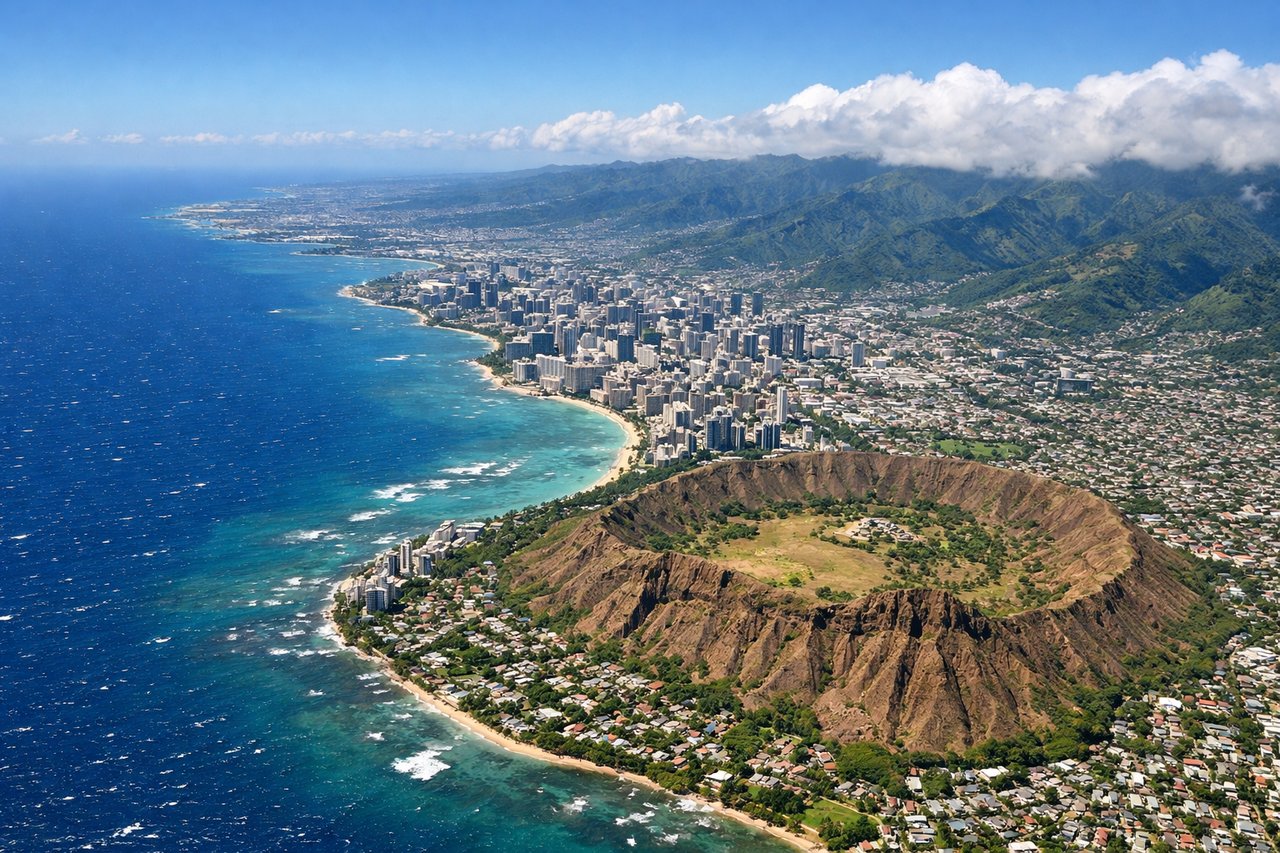
Landing at HNL
RIGHTArrivals into HNL from the Big Island typically track along Oahu's south shore before lining up on the parallel runway, so the right side gets a long look at Honolulu's coastline. Diamond Head, Waikiki's beachfront towers, downtown Honolulu, and Pearl Harbor all pass by in sequence.
Landmarks on this routeAll landmarks →
Will your flight be in sunlight?
See exactly which side of the plane gets sun and shade at your departure time.
About This Route
Which side of the plane should I sit on flying from Hilo International (ITO) to Honolulu International (HNL)?
Sit on the Right side of the plane for the best views on flights from Hilo to Honolulu. While the Big Island departure offers a dramatic volcanic backdrop, the Oahu arrival delivers a longer, richer sequence of recognizable landmarks — Diamond Head, Waikiki, downtown Honolulu, and Pearl Harbor — making the right side the stronger choice for this short interisland hop.
What can I see during takeoff from Hilo International in Hilo?
During takeoff from Hilo International (ITO), sit on the Left side for the best views. Departing ITO on Runway 08, the aircraft climbs out over Hilo Bay and then banks left to head toward Oahu, putting the Big Island's volcanic interior right in view on that side. Passengers get a close look at Mauna Kea's summit and the broad shield of Mauna Loa rising above Hilo town. Notable sights include: Mauna Kea summit (observatories), Mauna Loa shield volcano, Hilo Bay, Wailuku River.
What can I see when landing at Honolulu International in Honolulu?
When landing at Honolulu International (HNL), sit on the Right side for the best views. Arrivals into HNL from the Big Island typically track along Oahu's south shore before lining up on the parallel runway, so the right side gets a long look at Honolulu's coastline. Diamond Head, Waikiki's beachfront towers, downtown Honolulu, and Pearl Harbor all pass by in sequence. Notable sights include: Diamond Head crater, Waikiki Beach, downtown Honolulu skyline, Pearl Harbor.
How long is the flight from Hilo to Honolulu?
The flight from Hilo International (ITO) to Honolulu International (HNL) takes 0h 45m.
What does the Hilo to Honolulu flight path pass over?
The route crosses the Alenuihaha Channel between the Big Island and Maui, then passes south of Maui's Haleakala volcano before threading between Kahoolawe, Lanai, and Molokai en route to Oahu.