While the right side offers a brief but genuine highlight of Waikiki and Diamond Head during takeoff, the left side delivers scenery for a longer stretch of the flight: distant views of Molokai, Lanai, and Maui's Haleakala volcano during cruise, followed by a dramatic close-up of Hualalai volcano and the Kona lava fields on approach.
Flight Path
Open ocean channel south of Maui and Kahoolawe, with Haleakala's summit visible to the north and the Kohala Mountains of Big Island emerging ahead near the end of cruise
Great circle distance and headings ›


Phase by phase
Takeoff from HNL
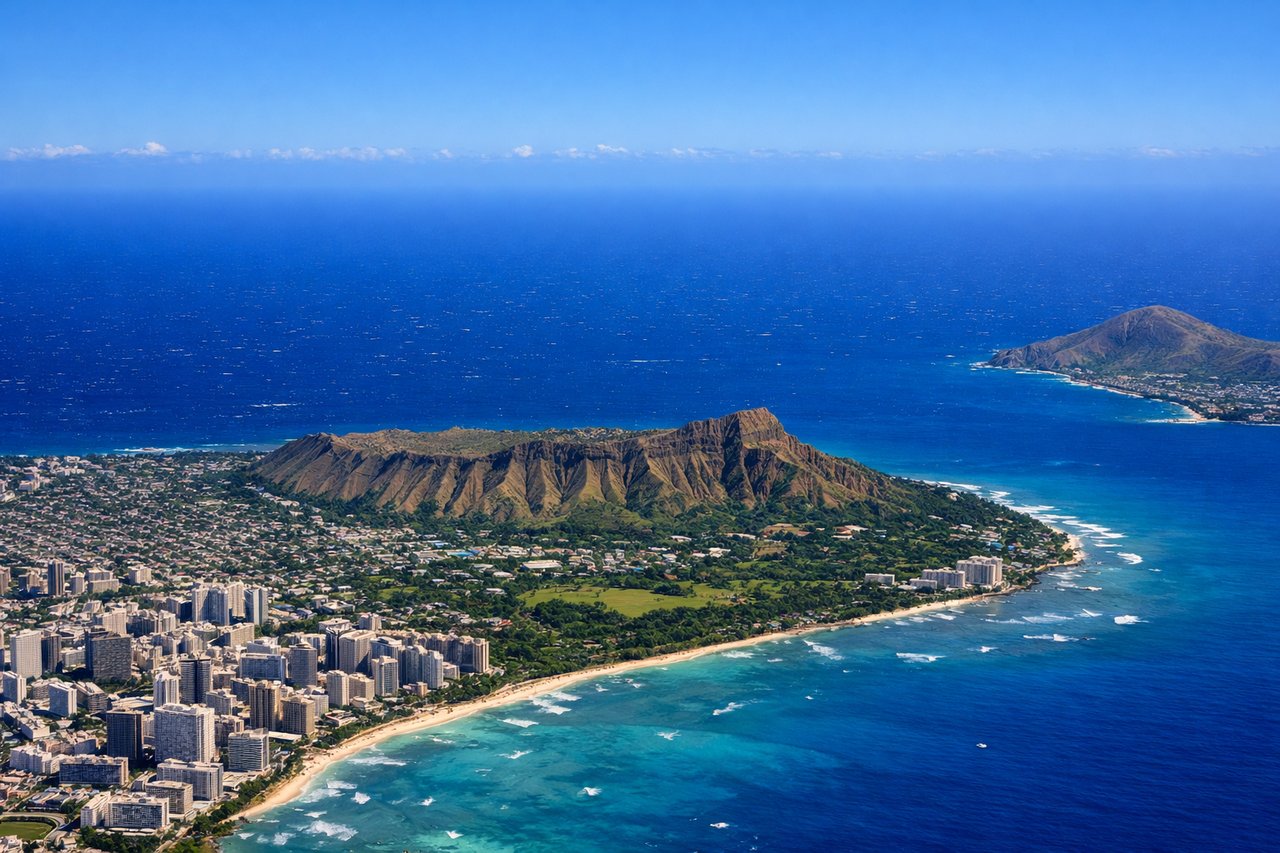
RIGHTAs the aircraft lifts off HNL's reef runway and banks south to align for Kona, Waikiki's skyline, Diamond Head crater, and Koko Head crater line up on the right side of the cabin. This is the classic 'postcard' view of Oahu's south shore that most interisland departures reveal briefly during the turn.
Landing at KOA
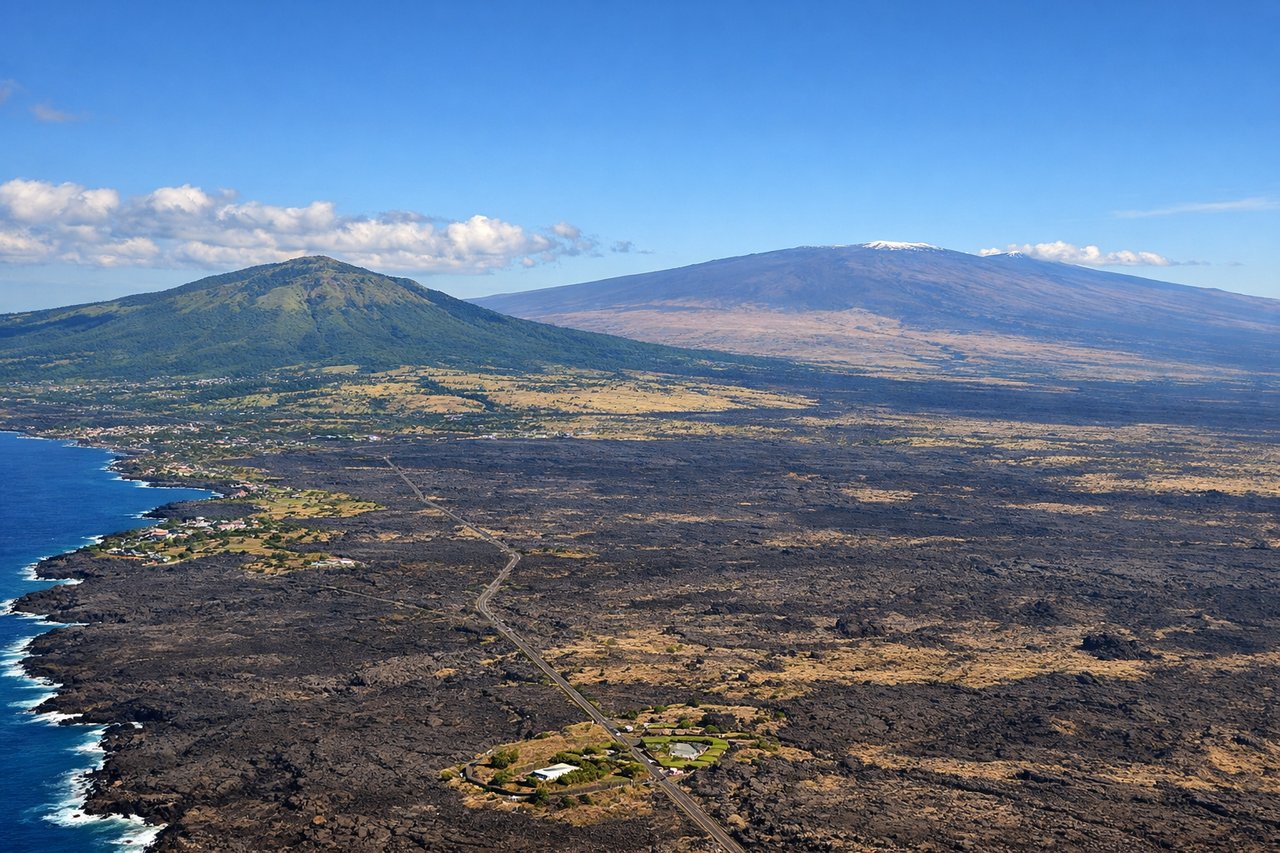
LEFTOn the standard trade-wind approach to Kona's runway 17, the aircraft descends southbound along the coast with Hualalai volcano's dark lava-flow slopes rising directly on the left side of the plane. Passengers get a close, dramatic view of the barren black lava fields and the volcano's summit before touchdown.
Landmarks on this routeAll landmarks →
Will your flight be in sunlight?
See exactly which side of the plane gets sun and shade at your departure time.
About This Route
Which side of the plane should I sit on flying from Honolulu International (HNL) to Kona International At Keahole (KOA)?
Sit on the Left side of the plane for the best views on flights from Honolulu to Kona. While the right side offers a brief but genuine highlight of Waikiki and Diamond Head during takeoff, the left side delivers scenery for a longer stretch of the flight: distant views of Molokai, Lanai, and Maui's Haleakala volcano during cruise, followed by a dramatic close-up of Hualalai volcano and the Kona lava fields on approach.
What can I see during takeoff from Honolulu International in Honolulu?
During takeoff from Honolulu International (HNL), sit on the Right side for the best views. As the aircraft lifts off HNL's reef runway and banks south to align for Kona, Waikiki's skyline, Diamond Head crater, and Koko Head crater line up on the right side of the cabin. This is the classic 'postcard' view of Oahu's south shore that most interisland departures reveal briefly during the turn. Notable sights include: Diamond Head crater, Waikiki high-rise skyline, Koko Head crater, Mamala Bay reef waters.
What can I see when landing at Kona International At Keahole in Kona?
When landing at Kona International At Keahole (KOA), sit on the Left side for the best views. On the standard trade-wind approach to Kona's runway 17, the aircraft descends southbound along the coast with Hualalai volcano's dark lava-flow slopes rising directly on the left side of the plane. Passengers get a close, dramatic view of the barren black lava fields and the volcano's summit before touchdown. Notable sights include: Hualalai volcano, Kona lava fields, Kailua-Kona coastline, Keauhou Bay.
How long is the flight from Honolulu to Kona?
The flight from Honolulu International (HNL) to Kona International At Keahole (KOA) takes 0h 40m.
What does the Honolulu to Kona flight path pass over?
Open ocean channel south of Maui and Kahoolawe, with Haleakala's summit visible to the north and the Kohala Mountains of Big Island emerging ahead near the end of cruise