Right side wins both ends of the flight. The volcanic drama of Popocatépetl and Iztaccíhuatl at departure is exceptional, and the right side also captures the Las Vegas valley and Strip on approach. During the cruise, the right side also tends to face east, giving views over the Sierra Madre Occidental, the Sonoran Desert, and the Colorado River drainage as the route tracks northwest.
Flown MEX to LAS? Did we get it right?
Flight Path
Mexico City to Las Vegas is 1,509 miles (2,428 km), a flight of about 3 hours 45 minutes.
The route crosses the Sierra Madre Occidental ranges of Durango and Chihuahua states, the Sonoran Desert basin and range terrain of northern Mexico and southern Arizona, the Colorado River and its canyon systems in northwestern Arizona, and the Mojave Desert approaching Las Vegas. The Grand Canyon is typically visible to the right side of the aircraft roughly 45-60 minutes before landing if routing takes the aircraft over northern Arizona.
Great circle distance and headings ›


Phase by phase
Takeoff from MEX
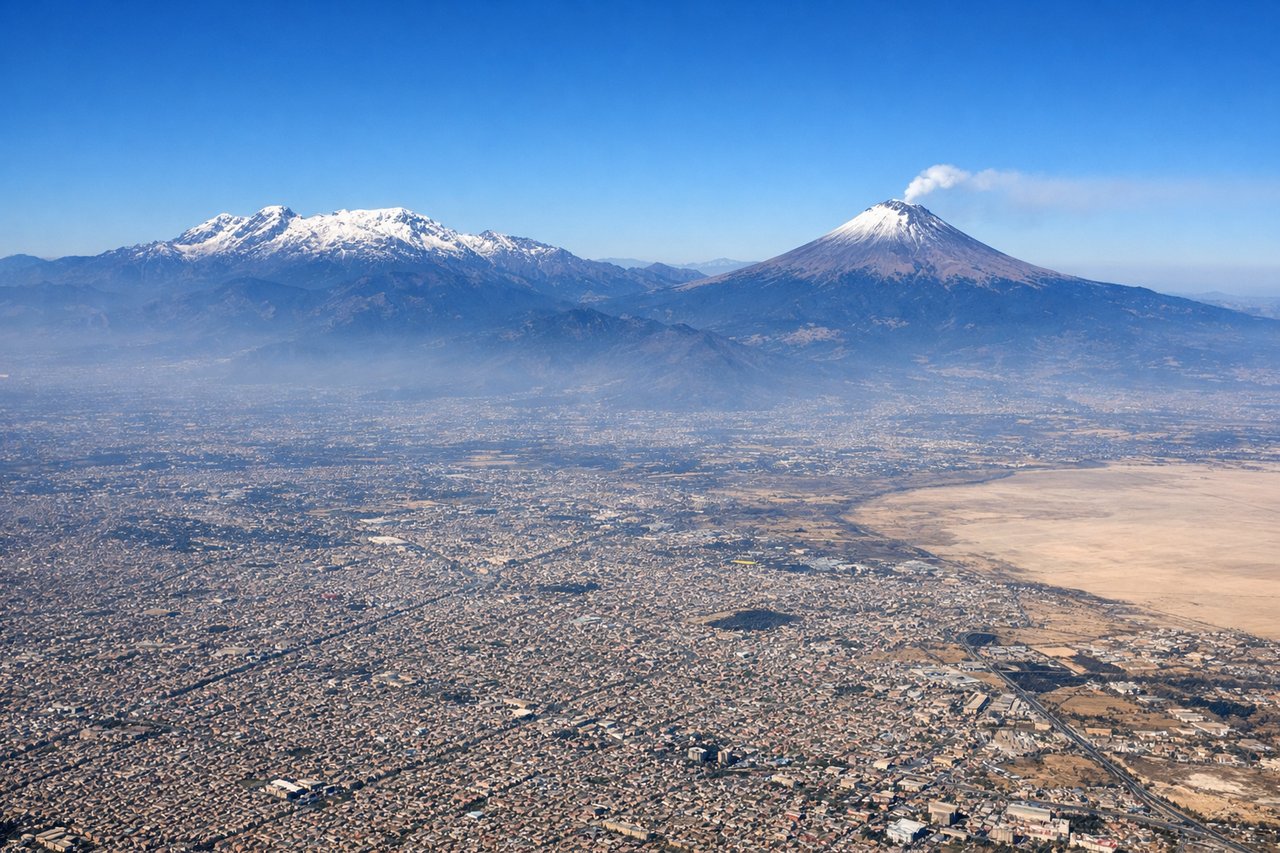
RIGHTMexico City's runways 05L/05R mean a northeast departure, putting the volcanic giants Popocatépetl and Iztaccíhuatl on the right (south/southeast) side as the aircraft climbs out. These are among the most dramatic peaks in North America and dominate the skyline east of the city.
Landing at LAS
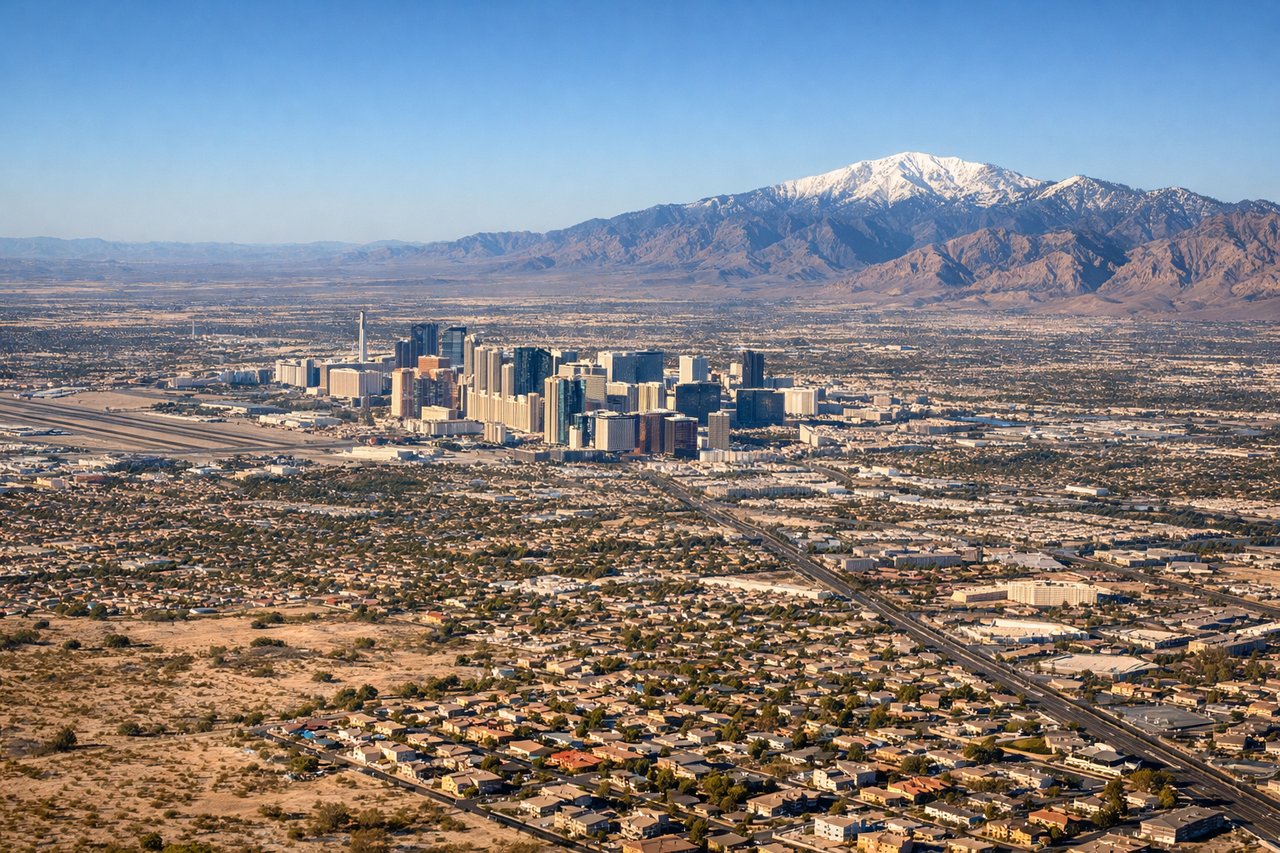
RIGHTLas Vegas typically lands on runways 26L/26R or 19L/19R depending on winds. On the common westward approach (runway 26), the right side faces north and gives a clear view over the Las Vegas Strip and downtown, while the left side looks toward the largely featureless desert south of the city. On a southward approach (runway 19), the right side still captures the Strip on the west side of the valley.
Will your flight be in sunlight?
Pick a date and time in the Sun Map to watch the sun move across your whole flight.
About This Route
Which side of the plane should I sit on flying from Licenciado Benito Juarez International (MEX) to Mc Carran International (LAS)?
Sit on the Right side of the plane for the best views on flights from Mexico City to Las Vegas. Right side wins both ends of the flight. The volcanic drama of Popocatépetl and Iztaccíhuatl at departure is exceptional, and the right side also captures the Las Vegas valley and Strip on approach. During the cruise, the right side also tends to face east, giving views over the Sierra Madre Occidental, the Sonoran Desert, and the Colorado River drainage as the route tracks northwest.
What can I see during takeoff from Licenciado Benito Juarez International in Mexico City?
During takeoff from Licenciado Benito Juarez International (MEX), sit on the Right side for the best views. Mexico City's runways 05L/05R mean a northeast departure, putting the volcanic giants Popocatépetl and Iztaccíhuatl on the right (south/southeast) side as the aircraft climbs out. These are among the most dramatic peaks in North America and dominate the skyline east of the city. Notable sights include: Popocatépetl (active volcano, 17,802 ft), Iztaccíhuatl (dormant volcano, 17,159 ft), the urban sprawl of Mexico City's eastern districts, Lake Texcoco remnant basin.
What can I see when landing at Mc Carran International in Las Vegas?
When landing at Mc Carran International (LAS), sit on the Right side for the best views. Las Vegas typically lands on runways 26L/26R or 19L/19R depending on winds. On the common westward approach (runway 26), the right side faces north and gives a clear view over the Las Vegas Strip and downtown, while the left side looks toward the largely featureless desert south of the city. On a southward approach (runway 19), the right side still captures the Strip on the west side of the valley. Notable sights include: Las Vegas Strip (visible as a dense cluster of large resort rooftops), Sunrise Mountain and Frenchman Mountain to the east, Lake Mead on the distant horizon northeast, Spring Mountains/Charleston Peak to the west.
How long is the flight from Mexico City to Las Vegas?
The flight from Licenciado Benito Juarez International (MEX) to Mc Carran International (LAS) takes about 3 hours 45 minutes. The shortest flight path between them is 1,509 miles (2,428 km); winds and air traffic control usually add a few percent.
What does the Mexico City to Las Vegas flight path pass over?
The route crosses the Sierra Madre Occidental ranges of Durango and Chihuahua states, the Sonoran Desert basin and range terrain of northern Mexico and southern Arizona, the Colorado River and its canyon systems in northwestern Arizona, and the Mojave Desert approaching Las Vegas. The Grand Canyon is typically visible to the right side of the aircraft roughly 45-60 minutes before landing if routing takes the aircraft over northern Arizona.