Miami to Willemstad is 1,195 miles (1,923 km), a flight of about 3 hours 15 minutes.
The right seat wins overall for the spectacular Miami Beach and Biscayne Bay departure view, and while the left seat has the edge on landing into Willemstad, the right side still gets decent views of Curaçao's coastline on approach. The takeoff scenery is the highlight of this route.
Flight Path
After the Florida Keys, the route crosses the deep blue of the Caribbean Sea over the Windward Passage between Cuba and Haiti, then passes south of Hispaniola and Puerto Rico. The Lesser Antilles chain becomes visible in the distance before Curaçao appears as a low, arid island on the southern Caribbean horizon. Open ocean dominates most of the cruise phase with occasional glimpses of the Venezuelan coast to the south near descent.
Great circle distance and headings ›Phase by phase
Takeoff from MIA
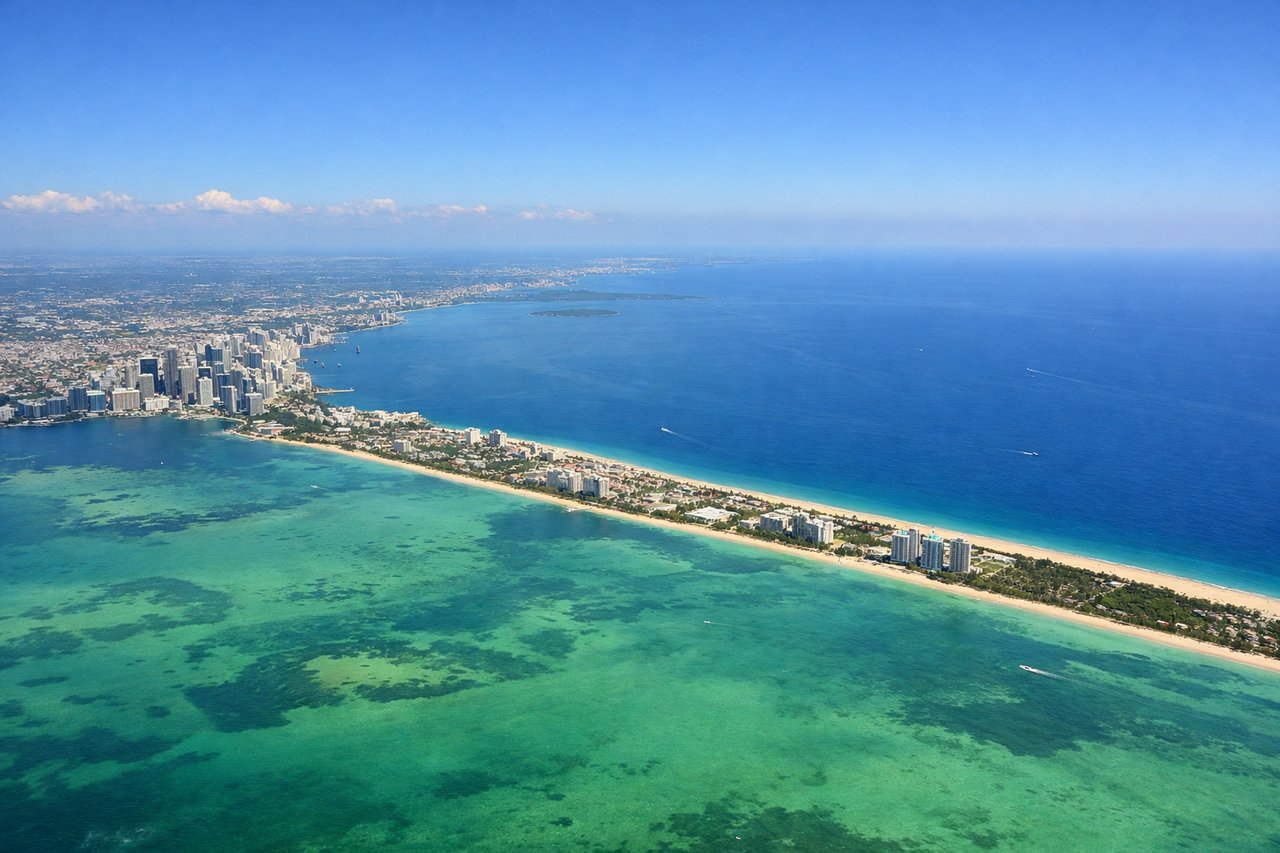
RIGHTMIA typically departs east on runway 08R/09, then turns south over Biscayne Bay and the Florida Keys chain. The right side gives you the Atlantic coastline, Miami Beach's barrier island, and the turquoise shallows of Biscayne Bay as you climb out.
Landing at CUR
LEFTHato Airport at Curaçao typically lands from the east on runway 11, meaning the aircraft approaches from the Caribbean Sea to the west. The left side gives you Willemstad's Sint Annabaai harbor entrance, the iconic Queen Emma pontoon bridge, and the colorful Dutch colonial waterfront of the Punda and Otrobanda districts just before touchdown.
Landmarks on this routeAll landmarks →
Will your flight be in sunlight?
Pick a date and time in the Sun Map to watch the sun move across your whole flight.
About This Route
Which side of the plane should I sit on flying from Miami International (MIA) to Hato (CUR)?
Sit on the Right side of the plane for the best views on flights from Miami to Willemstad. The right seat wins overall for the spectacular Miami Beach and Biscayne Bay departure view, and while the left seat has the edge on landing into Willemstad, the right side still gets decent views of Curaçao's coastline on approach. The takeoff scenery is the highlight of this route.
What can I see during takeoff from Miami International in Miami?
During takeoff from Miami International (MIA), sit on the Right side for the best views. MIA typically departs east on runway 08R/09, then turns south over Biscayne Bay and the Florida Keys chain. The right side gives you the Atlantic coastline, Miami Beach's barrier island, and the turquoise shallows of Biscayne Bay as you climb out. Notable sights include: Miami Beach barrier island, Biscayne Bay, the Florida Keys chain stretching southwest, Port of Miami cruise terminals.
What can I see when landing at Hato in Willemstad?
When landing at Hato (CUR), sit on the Left side for the best views. Hato Airport at Curaçao typically lands from the east on runway 11, meaning the aircraft approaches from the Caribbean Sea to the west. The left side gives you Willemstad's Sint Annabaai harbor entrance, the iconic Queen Emma pontoon bridge, and the colorful Dutch colonial waterfront of the Punda and Otrobanda districts just before touchdown. Notable sights include: Willemstad harbor and Sint Annabaai channel, Queen Emma pontoon bridge, Punda and Otrobanda colonial waterfront, the rugged dry interior of Curaçao.
How long is the flight from Miami to Willemstad?
The flight from Miami International (MIA) to Hato (CUR) takes about 3 hours 15 minutes. The shortest flight path between them is 1,195 miles (1,923 km); winds and air traffic control usually add a few percent.
What does the Miami to Willemstad flight path pass over?
After the Florida Keys, the route crosses the deep blue of the Caribbean Sea over the Windward Passage between Cuba and Haiti, then passes south of Hispaniola and Puerto Rico. The Lesser Antilles chain becomes visible in the distance before Curaçao appears as a low, arid island on the southern Caribbean horizon. Open ocean dominates most of the cruise phase with occasional glimpses of the Venezuelan coast to the south near descent.