Right side wins both ends of the flight. The Miami departure delivers the coastline and Biscayne Bay, and the Las Vegas arrival gives you the Strip and the Spring Mountains. The left side has the Gulf of Mexico for much of the cruise, which is featureless open water.
Flight Path
The route tracks northwest over the Gulf of Mexico initially, then crosses the Louisiana and Texas Gulf Coast near New Orleans or Houston depending on routing. Over Texas you cross the Edwards Plateau and the Chihuahuan Desert. The route then passes over New Mexico's high desert and the Rio Grande valley before entering Arizona, crossing the Sonoran Desert and the Colorado River near Lake Havasu, then descending into the Mojave Desert toward Las Vegas.
Great circle distance and headings ›

.jpg?width=600)


.jpeg?width=600)


Phase by phase
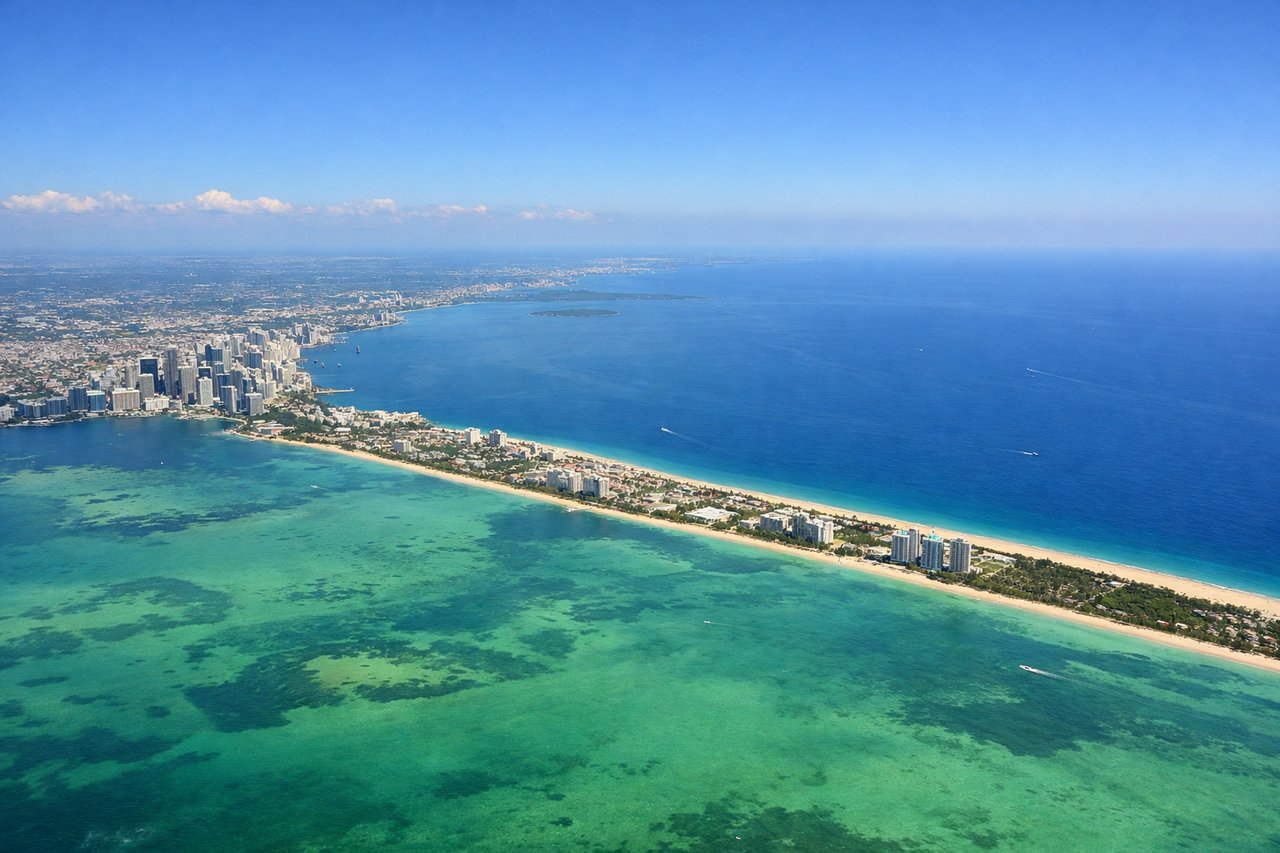
Takeoff from MIA
RIGHTMIA typically departs westbound on runway 08L/26R or northbound on 09/27. A westbound departure on 26R puts Biscayne Bay, Miami Beach, and the Atlantic coastline on the right side as the aircraft banks northwest. You get a clear look back at the Miami skyline and the barrier islands.

Landing at LAS
RIGHTLas Vegas McCarran typically lands from the east on runway 26L/26R, meaning the aircraft approaches from the desert east of the city and descends over the Las Vegas Valley. The right side gives you the Las Vegas Strip running north-south below, with the Spring Mountains and Red Rock Canyon visible to the west beyond the city.
Landmarks on this routeAll landmarks →
Will your flight be in sunlight?
See exactly which side of the plane gets sun and shade at your departure time.
About This Route
Which side of the plane should I sit on flying from Miami International (MIA) to Mc Carran International (LAS)?
Sit on the Right side of the plane for the best views on flights from Miami to Las Vegas. Right side wins both ends of the flight. The Miami departure delivers the coastline and Biscayne Bay, and the Las Vegas arrival gives you the Strip and the Spring Mountains. The left side has the Gulf of Mexico for much of the cruise, which is featureless open water.
What can I see during takeoff from Miami International in Miami?
During takeoff from Miami International (MIA), sit on the Right side for the best views. MIA typically departs westbound on runway 08L/26R or northbound on 09/27. A westbound departure on 26R puts Biscayne Bay, Miami Beach, and the Atlantic coastline on the right side as the aircraft banks northwest. You get a clear look back at the Miami skyline and the barrier islands. Notable sights include: Biscayne Bay, Miami Beach barrier island, Port of Miami cruise terminals, Miami downtown skyline.
What can I see when landing at Mc Carran International in Las Vegas?
When landing at Mc Carran International (LAS), sit on the Right side for the best views. Las Vegas McCarran typically lands from the east on runway 26L/26R, meaning the aircraft approaches from the desert east of the city and descends over the Las Vegas Valley. The right side gives you the Las Vegas Strip running north-south below, with the Spring Mountains and Red Rock Canyon visible to the west beyond the city. Notable sights include: Las Vegas Strip, Spring Mountains (Charleston Peak), Red Rock Canyon escarpment, Lake Mead on the distant eastern horizon during approach.
How long is the flight from Miami to Las Vegas?
The flight from Miami International (MIA) to Mc Carran International (LAS) takes Approximately 4 hours 30 minutes.
What does the Miami to Las Vegas flight path pass over?
The route tracks northwest over the Gulf of Mexico initially, then crosses the Louisiana and Texas Gulf Coast near New Orleans or Houston depending on routing. Over Texas you cross the Edwards Plateau and the Chihuahuan Desert. The route then passes over New Mexico's high desert and the Rio Grande valley before entering Arizona, crossing the Sonoran Desert and the Colorado River near Lake Havasu, then descending into the Mojave Desert toward Las Vegas.