Miami to Buffalo Narrows is 2,508 miles (4,036 km), a flight of about 4 hours 15 minutes.
Right-side seats capture the more dramatic scenery: the Atlantic coastal views during departure from Miami are visually superior to the relatively uniform boreal forest on approach to Buffalo Narrows. The takeoff views of Biscayne Bay and the Florida coastline offer more visual variety and distinctive landmarks.
Flight Path
The flight path crosses the southeastern United States, passing over Georgia and the Appalachian foothills, then continues northwest over Tennessee, Kentucky, and into the Ohio Valley before heading into the Great Lakes region and across the northern US-Canada border into the Canadian Shield. Notable features include the Mississippi River valley in the lower midwest, the transition from deciduous to boreal forest around the Great Lakes, and the Canadian Shield's characteristic rocky terrain and lake systems as you approach Saskatchewan.
Great circle distance and headings ›.jpeg?width=600)

Phase by phase
Takeoff from MIA
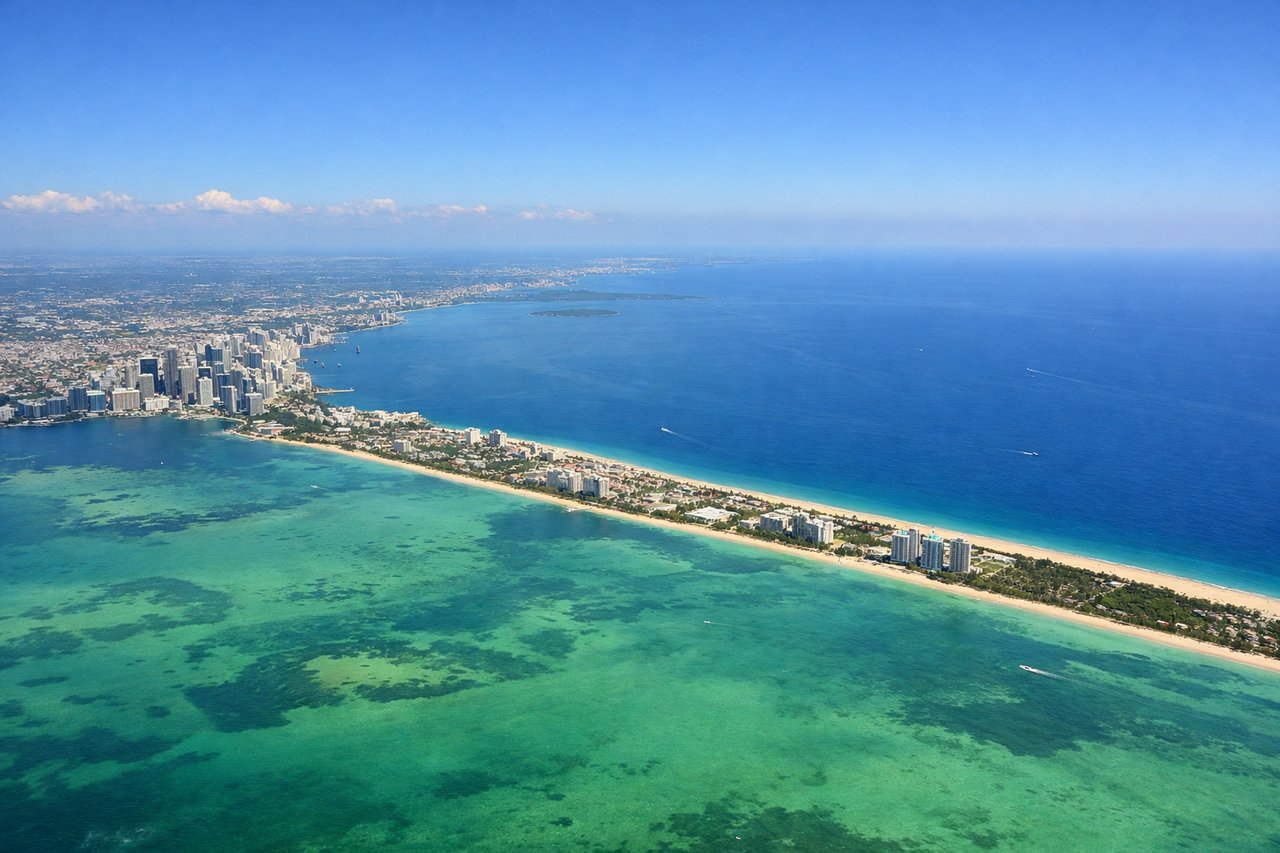
RIGHTRight-side seats offer views of Biscayne Bay and the Atlantic coastline as the aircraft climbs northwestward out of Miami. You'll see the barrier islands, shallow turquoise waters, and the Miami urban sprawl receding below.
Landing at YVT
LEFTLeft-side seats provide views during the descent approach into Buffalo Narrows. You'll see the boreal forest landscape, the Beaver River valley, and the transition from prairie to northern forest as you descend into Saskatchewan.
Landmarks on this routeAll landmarks →
Will your flight be in sunlight?
Pick a date and time in the Sun Map to watch the sun move across your whole flight.
About This Route
Which side of the plane should I sit on flying from Miami International (MIA) to Buffalo Narrows (YVT)?
Sit on the Right side of the plane for the best views on flights from Miami to Buffalo Narrows. Right-side seats capture the more dramatic scenery: the Atlantic coastal views during departure from Miami are visually superior to the relatively uniform boreal forest on approach to Buffalo Narrows. The takeoff views of Biscayne Bay and the Florida coastline offer more visual variety and distinctive landmarks.
What can I see during takeoff from Miami International in Miami?
During takeoff from Miami International (MIA), sit on the Right side for the best views. Right-side seats offer views of Biscayne Bay and the Atlantic coastline as the aircraft climbs northwestward out of Miami. You'll see the barrier islands, shallow turquoise waters, and the Miami urban sprawl receding below. Notable sights include: Biscayne Bay, Atlantic Ocean, Miami Beach barrier islands, Port of Miami container terminals.
What can I see when landing at Buffalo Narrows in Buffalo Narrows?
When landing at Buffalo Narrows (YVT), sit on the Left side for the best views. Left-side seats provide views during the descent approach into Buffalo Narrows. You'll see the boreal forest landscape, the Beaver River valley, and the transition from prairie to northern forest as you descend into Saskatchewan. Notable sights include: Beaver River, boreal forest canopy, Buffalo Narrows settlement, northern Saskatchewan lakes and muskeg.
How long is the flight from Miami to Buffalo Narrows?
The flight from Miami International (MIA) to Buffalo Narrows (YVT) takes about 4 hours 15 minutes. The shortest flight path between them is 2,508 miles (4,036 km); winds and air traffic control usually add a few percent.
What does the Miami to Buffalo Narrows flight path pass over?
The flight path crosses the southeastern United States, passing over Georgia and the Appalachian foothills, then continues northwest over Tennessee, Kentucky, and into the Ohio Valley before heading into the Great Lakes region and across the northern US-Canada border into the Canadian Shield. Notable features include the Mississippi River valley in the lower midwest, the transition from deciduous to boreal forest around the Great Lakes, and the Canadian Shield's characteristic rocky terrain and lake systems as you approach Saskatchewan.