While the left offers good departure views of Mauritius, the right side provides superior scenery for the majority of the flight. The approach into Jeddah over the Red Sea and Hijaz Mountains is more visually dramatic and sustained than the brief northern Mauritius departure views.
Flight Path
The flight path crosses the Indian Ocean for approximately 3 hours, passing south of the Maldives and Chagos Archipelago (not directly visible but in the general track). The aircraft then transitions over the Arabian Sea toward the Horn of Africa region and the Red Sea entrance. The Socotra Island region lies south of the typical flight corridor. As the aircraft approaches the Red Sea proper, the Eritrean and Saudi coasts become visible. The Red Sea narrows significantly as you approach Jeddah, with the Hijaz Mountains becoming increasingly prominent on the right side during descent.
Great circle distance and headings ›.jpg?width=600)
.jpg?width=600)
Phase by phase
Takeoff from MRU
LEFTLeft side offers views of Mauritius's northern coastline and the Indian Ocean immediately after departure. The aircraft climbs northwestward, so the left wing reveals the island's irregular northern shore, reef systems, and open ocean stretching toward Africa.
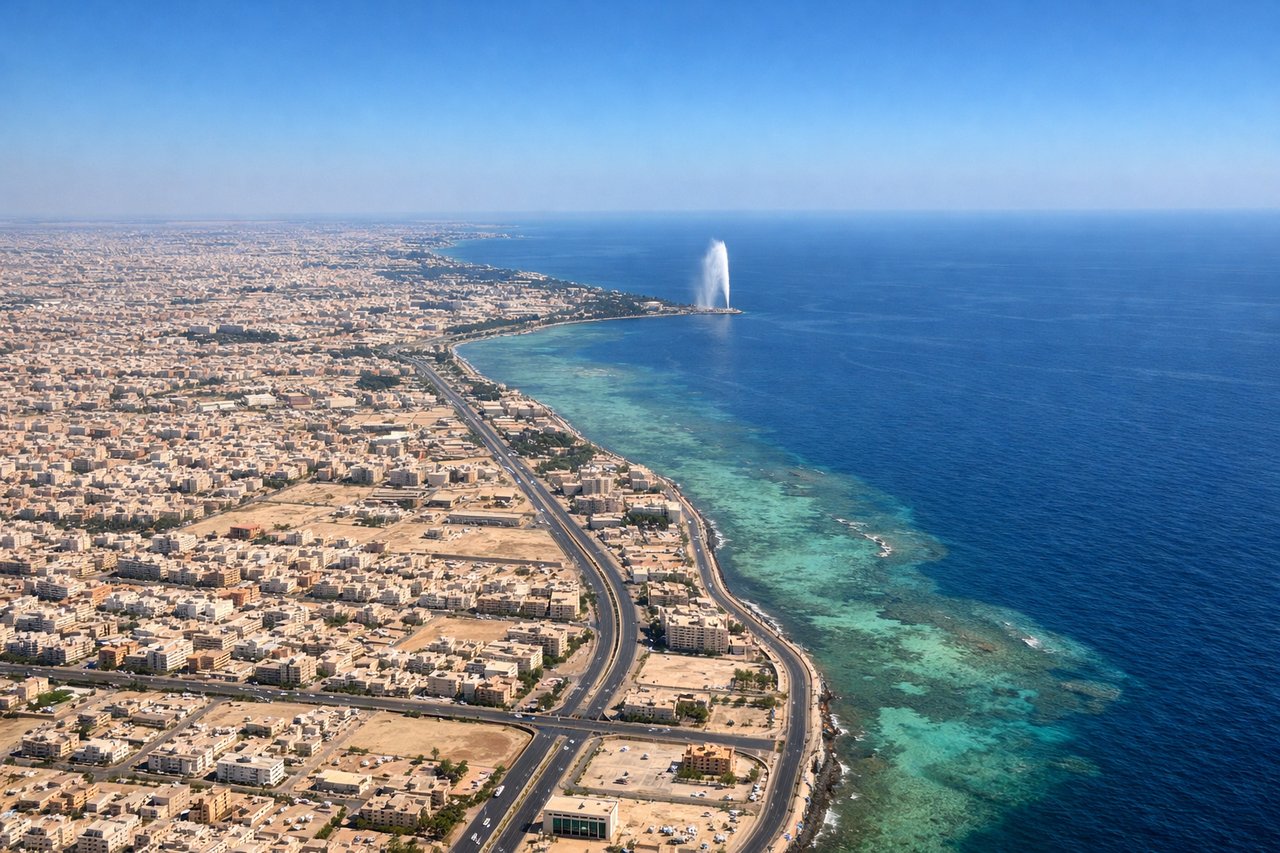
Landing at JED
RIGHTRight side captures the approach to Jeddah over the Red Sea and the dramatic Saudi Arabian coastline. The aircraft descends from the northwest, so the right wing reveals the Red Sea's deep blue waters, the Hijaz Mountains inland, and the coastal development around Jeddah.
Landmarks on this routeAll landmarks →
Will your flight be in sunlight?
See exactly which side of the plane gets sun and shade at your departure time.
About This Route
Which side of the plane should I sit on flying from Sir Seewoosagur Ramgoolam International (MRU) to King Abdulaziz International (JED)?
Sit on the Right side of the plane for the best views on flights from Plaisance to Jeddah. While the left offers good departure views of Mauritius, the right side provides superior scenery for the majority of the flight. The approach into Jeddah over the Red Sea and Hijaz Mountains is more visually dramatic and sustained than the brief northern Mauritius departure views.
What can I see during takeoff from Sir Seewoosagur Ramgoolam International in Plaisance?
During takeoff from Sir Seewoosagur Ramgoolam International (MRU), sit on the Left side for the best views. Left side offers views of Mauritius's northern coastline and the Indian Ocean immediately after departure. The aircraft climbs northwestward, so the left wing reveals the island's irregular northern shore, reef systems, and open ocean stretching toward Africa. Notable sights include: Northern Mauritius coastline with Port Louis harbor area, coral reef systems along the north coast, Indian Ocean extending toward Madagascar, Black River Gorges escarpment inland.
What can I see when landing at King Abdulaziz International in Jeddah?
When landing at King Abdulaziz International (JED), sit on the Right side for the best views. Right side captures the approach to Jeddah over the Red Sea and the dramatic Saudi Arabian coastline. The aircraft descends from the northwest, so the right wing reveals the Red Sea's deep blue waters, the Hijaz Mountains inland, and the coastal development around Jeddah. Notable sights include: Red Sea with its distinctive deep blue color, Hijaz Mountains rising inland from the coast, Jeddah's coastal urban development, Saudi Arabian desert plateau.
How long is the flight from Plaisance to Jeddah?
The flight from Sir Seewoosagur Ramgoolam International (MRU) to King Abdulaziz International (JED) takes 5h 50m.
What does the Plaisance to Jeddah flight path pass over?
The flight path crosses the Indian Ocean for approximately 3 hours, passing south of the Maldives and Chagos Archipelago (not directly visible but in the general track). The aircraft then transitions over the Arabian Sea toward the Horn of Africa region and the Red Sea entrance. The Socotra Island region lies south of the typical flight corridor. As the aircraft approaches the Red Sea proper, the Eritrean and Saudi coasts become visible. The Red Sea narrows significantly as you approach Jeddah, with the Hijaz Mountains becoming increasingly prominent on the right side during descent.