Monterrey to Madrid is 5,403 miles (8,696 km), a flight of about 10 hours 45 minutes.
Right-side seats provide superior scenery on both legs: dramatic Sierra Madre Oriental peaks during departure and the Atlantic coastline and Iberian Peninsula geography during the transatlantic crossing. Left side offers Madrid's approach but misses the more visually striking mountain and coastal features.
Flight Path
The flight path crosses the Atlantic Ocean for roughly 7–8 hours. Notable geographic features along the route include: the Gulf of Mexico and Yucatan Peninsula (visible during initial climb-out if heading northeast); the Atlantic coastline of the eastern United States or Canada depending on routing; the Mid-Atlantic Ridge (not visible but the aircraft passes over deep ocean); the Azores archipelago (if the southern routing is used, visible as small islands); the Iberian Peninsula's western coastline (Portugal and Spain) during descent into Madrid; and the transition from Atlantic waters to the European continental shelf. The flight typically follows a great-circle route, passing over or near Newfoundland, the North Atlantic, and approaching Europe from the west-northwest.
Great circle distance and headings ›
.jpeg?width=600)
Phase by phase
Takeoff from MTY
RIGHTRight-side seats capture the Sierra Madre Oriental mountain range immediately after departure, with the dramatic escarpment rising directly east of Monterrey. The terrain transitions from urban sprawl to rugged peaks within minutes of climb-out.
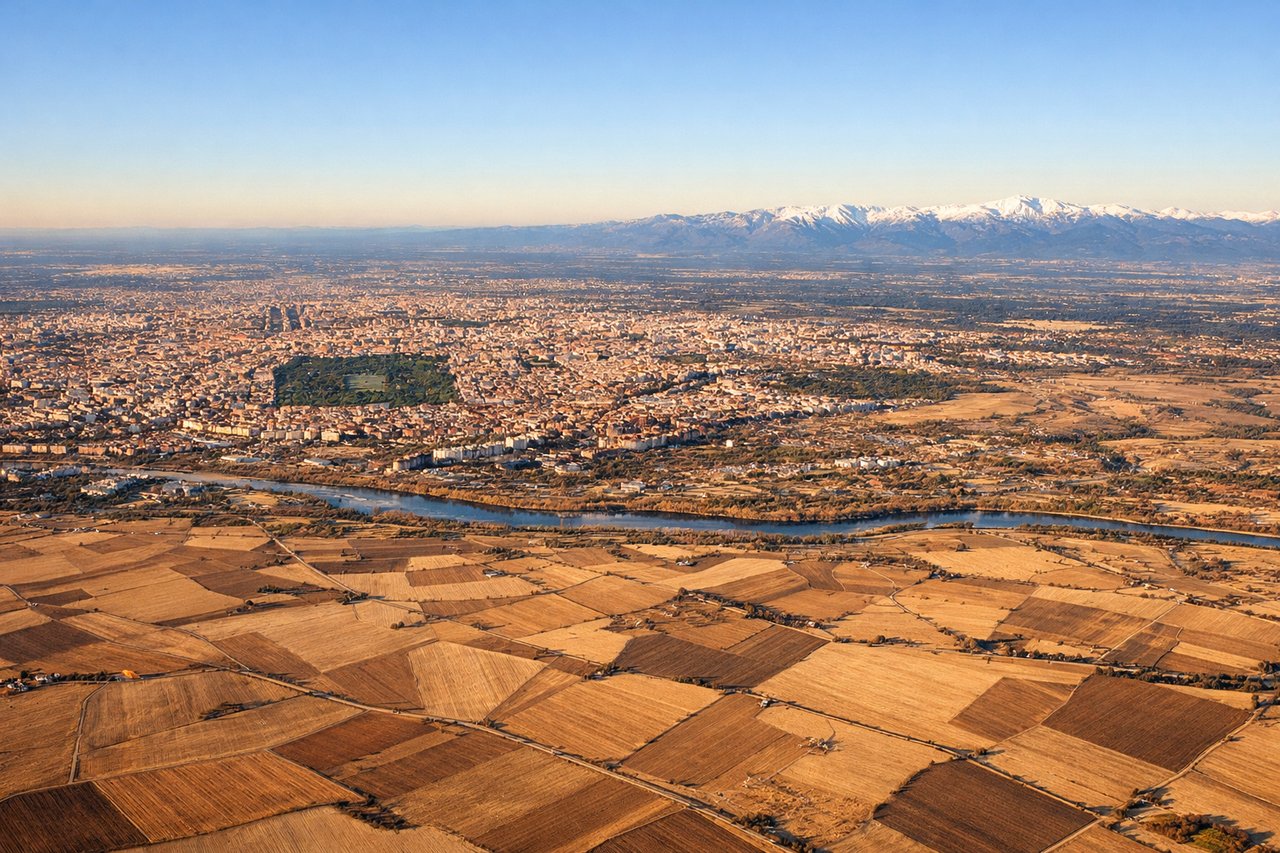
Landing at MAD
LEFTLeft-side seats on approach to Madrid offer views of the Meseta Central plateau and the Sierra de Guadarrama to the north. The high plains surrounding Madrid and the distant mountain backdrop create a distinctive landscape as the aircraft descends into the approach corridor.
Landmarks on this routeAll landmarks →
Will your flight be in sunlight?
Pick a date and time in the Sun Map to watch the sun move across your whole flight.
About This Route
Which side of the plane should I sit on flying from General Mariano Escobedo International (MTY) to Barajas (MAD)?
Sit on the Right side of the plane for the best views on flights from Monterrey to Madrid. Right-side seats provide superior scenery on both legs: dramatic Sierra Madre Oriental peaks during departure and the Atlantic coastline and Iberian Peninsula geography during the transatlantic crossing. Left side offers Madrid's approach but misses the more visually striking mountain and coastal features.
What can I see during takeoff from General Mariano Escobedo International in Monterrey?
During takeoff from General Mariano Escobedo International (MTY), sit on the Right side for the best views. Right-side seats capture the Sierra Madre Oriental mountain range immediately after departure, with the dramatic escarpment rising directly east of Monterrey. The terrain transitions from urban sprawl to rugged peaks within minutes of climb-out. Notable sights include: Sierra Madre Oriental (eastern face), Barrio Antiguo district of Monterrey below, Cerro de la Silla (iconic saddle-shaped peak to the southeast), Río Santa Catarina valley.
What can I see when landing at Barajas in Madrid?
When landing at Barajas (MAD), sit on the Left side for the best views. Left-side seats on approach to Madrid offer views of the Meseta Central plateau and the Sierra de Guadarrama to the north. The high plains surrounding Madrid and the distant mountain backdrop create a distinctive landscape as the aircraft descends into the approach corridor. Notable sights include: Sierra de Guadarrama (northern horizon), Meseta Central plateau (vast flat terrain), Madrid urban sprawl (visible as a large metropolitan area), Henares River valley (linear feature cutting through the plain).
How long is the flight from Monterrey to Madrid?
The flight from General Mariano Escobedo International (MTY) to Barajas (MAD) takes about 10 hours 45 minutes. The shortest flight path between them is 5,403 miles (8,696 km); winds and air traffic control usually add a few percent.
What does the Monterrey to Madrid flight path pass over?
The flight path crosses the Atlantic Ocean for roughly 7–8 hours. Notable geographic features along the route include: the Gulf of Mexico and Yucatan Peninsula (visible during initial climb-out if heading northeast); the Atlantic coastline of the eastern United States or Canada depending on routing; the Mid-Atlantic Ridge (not visible but the aircraft passes over deep ocean); the Azores archipelago (if the southern routing is used, visible as small islands); the Iberian Peninsula's western coastline (Portugal and Spain) during descent into Madrid; and the transition from Atlantic waters to the European continental shelf. The flight typically follows a great-circle route, passing over or near Newfoundland, the North Atlantic, and approaching Europe from the west-northwest.