While Monterrey's departure offers immediate mountain scenery, Miami's arrival over Biscayne Bay and the Florida Keys provides more sustained visual interest and distinctive coastal geography. The turquoise waters and island chain create a more memorable finale than the Everglades approach from the left. The cruise phase over the Gulf of Mexico and Caribbean waters is relatively featureless on both sides, but the landing sequence tips the balance to the right side.
Flown MTY to MIA? Did we get it right?
Flight Path
Monterrey to Miami is 1,232 miles (1,982 km), a flight of about 3 hours 15 minutes.
Gulf of Mexico open water (dominant feature for 2+ hours), Yucatan Peninsula visible as distant landmass on southern horizon during cruise, occasional cloud formations over warm Gulf waters, no significant terrain features during cruise phase
Great circle distance and headings ›Phase by phase
Takeoff from MTY
LEFTMonterrey's urban sprawl and surrounding foothills are visible on the left (north/northwest) side during initial climb. The city sits in a valley with the Sierra Madre Oriental to the north and west, creating immediate terrain contrast. Right side shows flat plains extending toward the Gulf.
Landing at MIA
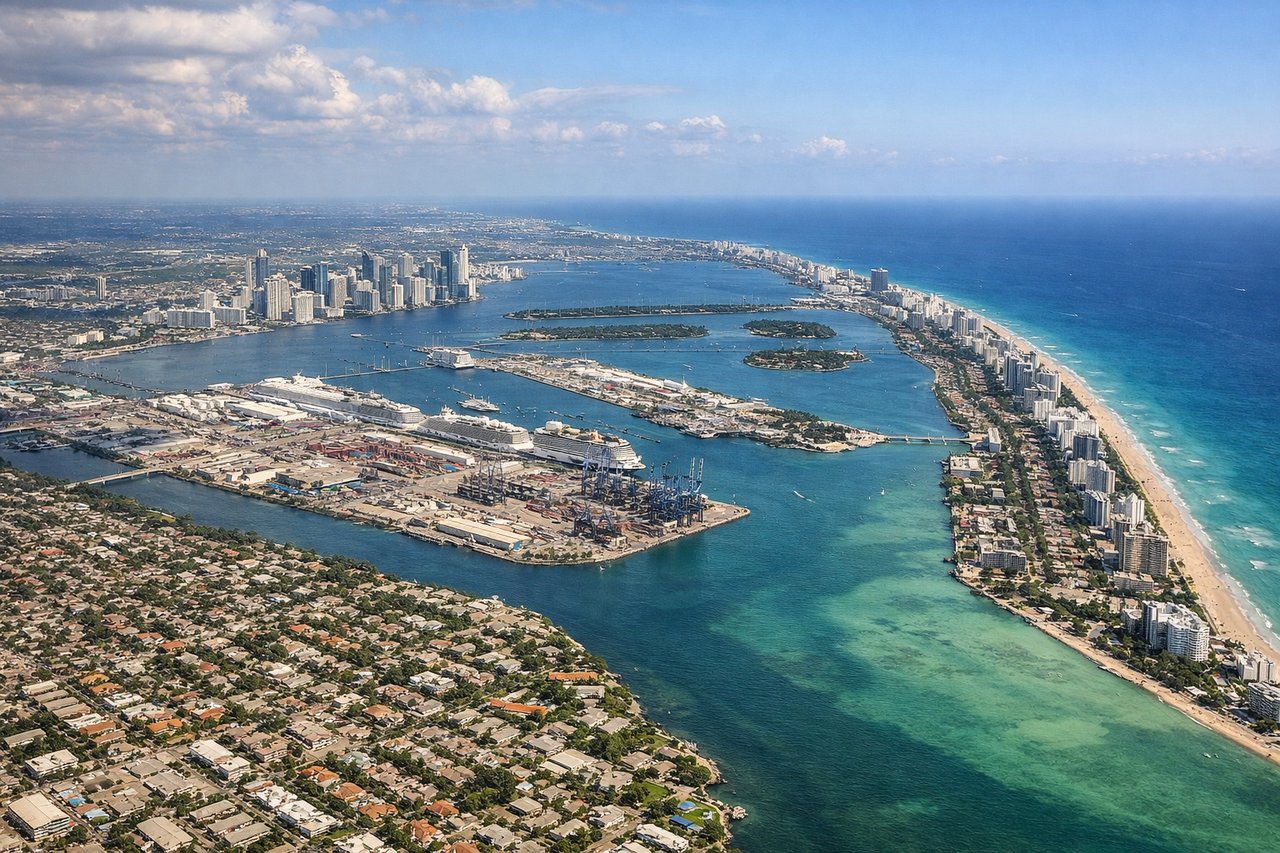
RIGHTThe approach to Miami from the west brings the right side into view of Biscayne Bay, the Florida Keys chain, and the Atlantic coastline. Passengers see the distinctive turquoise shallow waters, barrier islands, and the Miami metropolitan area sprawl along the coast. The left side shows the Everglades wetlands and inland Florida, which are less visually dramatic.
Will your flight be in sunlight?
Pick a date and time in the Sun Map to watch the sun move across your whole flight.
About This Route
Which side of the plane should I sit on flying from General Mariano Escobedo International (MTY) to Miami International (MIA)?
Sit on the Right side of the plane for the best views on flights from Monterrey to Miami. While Monterrey's departure offers immediate mountain scenery, Miami's arrival over Biscayne Bay and the Florida Keys provides more sustained visual interest and distinctive coastal geography. The turquoise waters and island chain create a more memorable finale than the Everglades approach from the left. The cruise phase over the Gulf of Mexico and Caribbean waters is relatively featureless on both sides, but the landing sequence tips the balance to the right side.
What can I see during takeoff from General Mariano Escobedo International in Monterrey?
During takeoff from General Mariano Escobedo International (MTY), sit on the Left side for the best views. Monterrey's urban sprawl and surrounding foothills are visible on the left (north/northwest) side during initial climb. The city sits in a valley with the Sierra Madre Oriental to the north and west, creating immediate terrain contrast. Right side shows flat plains extending toward the Gulf. Notable sights include: Sierra Madre Oriental foothills, Monterrey metropolitan area, Barrio Antiguo district, Cerro de la Silla (iconic saddle-shaped peak visible from certain angles).
What can I see when landing at Miami International in Miami?
When landing at Miami International (MIA), sit on the Right side for the best views. The approach to Miami from the west brings the right side into view of Biscayne Bay, the Florida Keys chain, and the Atlantic coastline. Passengers see the distinctive turquoise shallow waters, barrier islands, and the Miami metropolitan area sprawl along the coast. The left side shows the Everglades wetlands and inland Florida, which are less visually dramatic. Notable sights include: Biscayne Bay with turquoise shallow waters, Miami Beach barrier islands, Key Biscayne, Atlantic coastline and reef systems.
How long is the flight from Monterrey to Miami?
The flight from General Mariano Escobedo International (MTY) to Miami International (MIA) takes about 3 hours 15 minutes. The shortest flight path between them is 1,232 miles (1,982 km); winds and air traffic control usually add a few percent.
What does the Monterrey to Miami flight path pass over?
Gulf of Mexico open water (dominant feature for 2+ hours), Yucatan Peninsula visible as distant landmass on southern horizon during cruise, occasional cloud formations over warm Gulf waters, no significant terrain features during cruise phase