While left offers better Munich departure views, right seats dominate the longer flight segment. The route crosses the North Sea and approaches Iceland from the south, making right-side seats optimal for viewing the Norwegian coast (if visible), the transition to open ocean, and the dramatic Icelandic fjord approach.
Flown MUC to AEY? Did we get it right?
Flight Path
Munich to Akureyri is 1,610 miles (2,592 km), a flight of about 4 hours 15 minutes.
The flight path crosses the North Sea heading northwest. Notable features include the Norwegian coastline (if altitude permits visibility around 2-3 hours into flight), the transition to open Atlantic waters, and the approach to Iceland's northern coast where glacial rivers, volcanic terrain, and the distinctive fjord systems become visible in the final descent phase.
Great circle distance and headings ›


Phase by phase
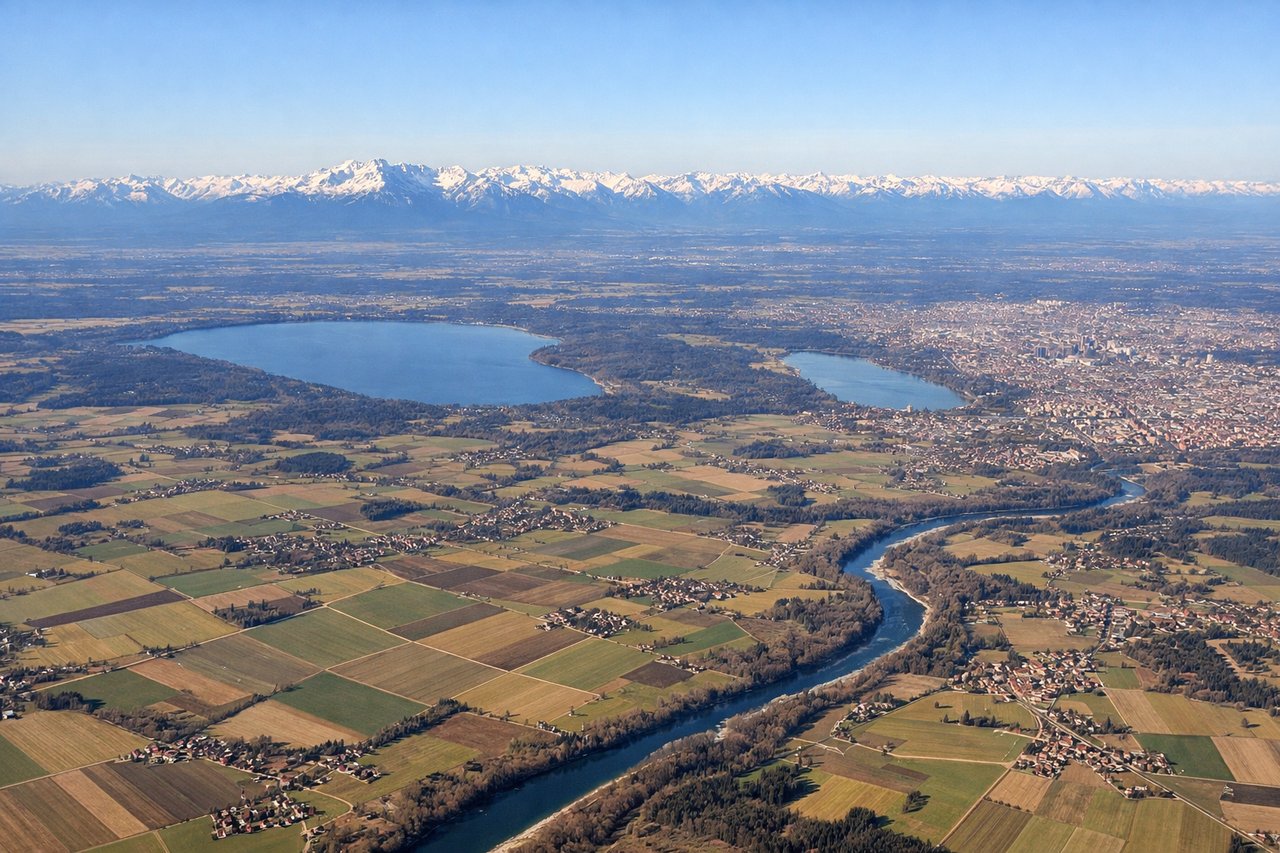
Takeoff from MUC
LEFTMunich typically departs runways 26L/26R heading northwest. Left seats face toward the Alps on the southern horizon during climb-out, offering the best early views of Bavaria's mountain backdrop.
Landing at AEY
RIGHTAkureyri approaches from the south over Húnaflói Bay and Skagaströnd area. Right seats provide views of Iceland's rugged northern coastline, glacial rivers, and the approach over Eyjafjörður fjord before landing.
Will your flight be in sunlight?
Pick a date and time in the Sun Map to watch the sun move across your whole flight.
About This Route
Which side of the plane should I sit on flying from Munich (MUC) to Akureyri (AEY)?
Sit on the Right side of the plane for the best views on flights from Munich to Akureyri. While left offers better Munich departure views, right seats dominate the longer flight segment. The route crosses the North Sea and approaches Iceland from the south, making right-side seats optimal for viewing the Norwegian coast (if visible), the transition to open ocean, and the dramatic Icelandic fjord approach.
What can I see during takeoff from Munich in Munich?
During takeoff from Munich (MUC), sit on the Left side for the best views. Munich typically departs runways 26L/26R heading northwest. Left seats face toward the Alps on the southern horizon during climb-out, offering the best early views of Bavaria's mountain backdrop. Notable sights include: Bavarian Alps (south), Isar River valley (immediate vicinity), Munich city sprawl (beneath), Ammersee lake (west).
What can I see when landing at Akureyri in Akureyri?
When landing at Akureyri (AEY), sit on the Right side for the best views. Akureyri approaches from the south over Húnaflói Bay and Skagaströnd area. Right seats provide views of Iceland's rugged northern coastline, glacial rivers, and the approach over Eyjafjörður fjord before landing. Notable sights include: Eyjafjörður fjord (primary approach corridor), Húnaflói Bay (to the west), Tröllaskagi peninsula (eastern side of fjord), Akureyri town nestled at fjord head.
How long is the flight from Munich to Akureyri?
The flight from Munich (MUC) to Akureyri (AEY) takes about 4 hours 15 minutes. The shortest flight path between them is 1,610 miles (2,592 km); winds and air traffic control usually add a few percent.
What does the Munich to Akureyri flight path pass over?
The flight path crosses the North Sea heading northwest. Notable features include the Norwegian coastline (if altitude permits visibility around 2-3 hours into flight), the transition to open Atlantic waters, and the approach to Iceland's northern coast where glacial rivers, volcanic terrain, and the distinctive fjord systems become visible in the final descent phase.