The left side scores higher due to the dramatic Bavarian Alps during takeoff and the sustained alpine scenery throughout the northern climb. While the landing approach on the right offers excellent fjord and coastal views, the left side's combination of immediate alpine drama from Munich and the continuous mountain scenery across Bavaria and into Austria during the cruise phase provides greater visual variety and landmark density. The Alps are more visually dominant and recognizable than the approach to Bodø.
Flown MUC to BOO? Did we get it right?
Flight Path
Munich to Bodoe is 1,310 miles (2,108 km), a flight of about 3 hours 15 minutes.
Austrian Alps (Ötztal, Zillertal valleys visible from cruise altitude), Inn River valley, transition from Alpine foothills to Bavarian plateau, then gradual descent into German-Czech border region before turning north toward Scandinavia. The route crosses into Austrian airspace over the Berchtesgaden Alps, then proceeds northeastward across the Czech Republic and into Polish airspace before turning north toward the Scandinavian Peninsula. The North Sea coast becomes visible during the final descent phase, with the Norwegian coastline and fjord systems appearing as the aircraft approaches Bodø from the south.
Great circle distance and headings ›

Phase by phase
Takeoff from MUC
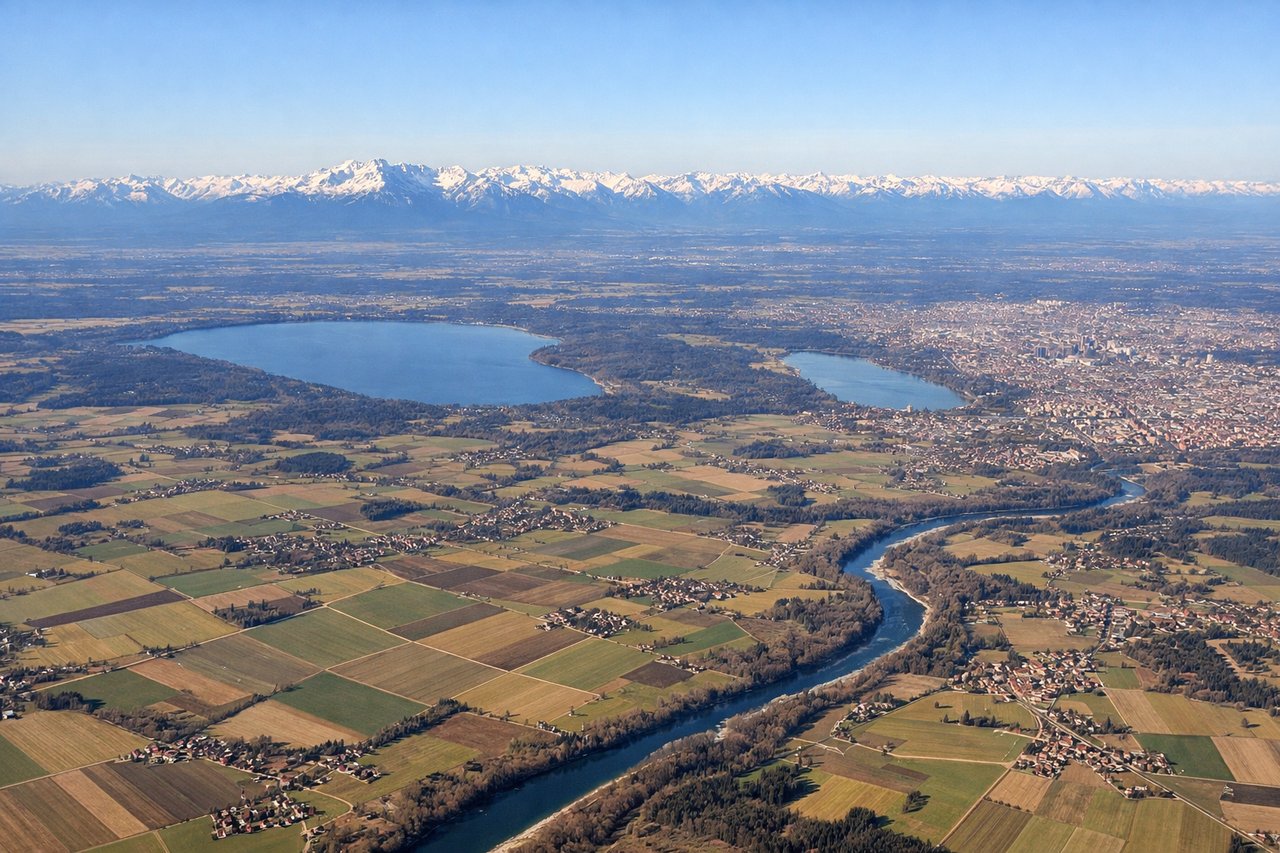
LEFTMunich's southern departure offers immediate views of the Bavarian Alps rising dramatically from the city's edge. The Alps dominate the left side during climb-out, with snow-capped peaks visible within 20 minutes of takeoff.
Landing at BOO
RIGHTThe approach to Bodø from the south reveals the dramatic Norwegian fjord landscape and Arctic coastline. The right side captures the Vestfjorden, surrounding mountains, and the distinctive geography of the Bodø region as the aircraft descends toward the airport.
Will your flight be in sunlight?
Pick a date and time in the Sun Map to watch the sun move across your whole flight.
About This Route
Which side of the plane should I sit on flying from Munich (MUC) to Bodo (BOO)?
Sit on the Left side of the plane for the best views on flights from Munich to Bodoe. The left side scores higher due to the dramatic Bavarian Alps during takeoff and the sustained alpine scenery throughout the northern climb. While the landing approach on the right offers excellent fjord and coastal views, the left side's combination of immediate alpine drama from Munich and the continuous mountain scenery across Bavaria and into Austria during the cruise phase provides greater visual variety and landmark density. The Alps are more visually dominant and recognizable than the approach to Bodø.
What can I see during takeoff from Munich in Munich?
During takeoff from Munich (MUC), sit on the Left side for the best views. Munich's southern departure offers immediate views of the Bavarian Alps rising dramatically from the city's edge. The Alps dominate the left side during climb-out, with snow-capped peaks visible within 20 minutes of takeoff. Notable sights include: Bavarian Alps (Zugspitze region), Starnberger See, Munich city sprawl and Marienplatz district.
What can I see when landing at Bodo in Bodoe?
When landing at Bodo (BOO), sit on the Right side for the best views. The approach to Bodø from the south reveals the dramatic Norwegian fjord landscape and Arctic coastline. The right side captures the Vestfjorden, surrounding mountains, and the distinctive geography of the Bodø region as the aircraft descends toward the airport. Notable sights include: Vestfjorden, Bodø city and harbor, surrounding Arctic mountains, Lofoten Islands (distant).
How long is the flight from Munich to Bodoe?
The flight from Munich (MUC) to Bodo (BOO) takes about 3 hours 15 minutes. The shortest flight path between them is 1,310 miles (2,108 km); winds and air traffic control usually add a few percent.
What does the Munich to Bodoe flight path pass over?
Austrian Alps (Ötztal, Zillertal valleys visible from cruise altitude), Inn River valley, transition from Alpine foothills to Bavarian plateau, then gradual descent into German-Czech border region before turning north toward Scandinavia. The route crosses into Austrian airspace over the Berchtesgaden Alps, then proceeds northeastward across the Czech Republic and into Polish airspace before turning north toward the Scandinavian Peninsula. The North Sea coast becomes visible during the final descent phase, with the Norwegian coastline and fjord systems appearing as the aircraft approaches Bodø from the south.