The left side delivers the most dramatic single moment of the flight — the panoramic view of the Bavarian Alps and Zugspitze on departure from Munich. During the cruise over France the left side also tracks closer to the Massif Central highlands. The right side has a strong arrival view of the Guadarrama, but the Alpine departure view on the left is the highlight of the route.
Flown MUC to MAD? Did we get it right?
Flight Path
Munich to Madrid is 930 miles (1,496 km), a flight of about 2 hours 45 minutes.
The route crosses the Swiss Plateau and Jura mountains shortly after departure, then tracks over the Rhône Valley and Lyon area in central France. The Massif Central highlands are visible to the left in the mid-flight portion. The flight then crosses the Pyrenees — visible from both sides but particularly dramatic — before descending over the Ebro basin and the Castilian meseta into Madrid.
Great circle distance and headings ›


Phase by phase
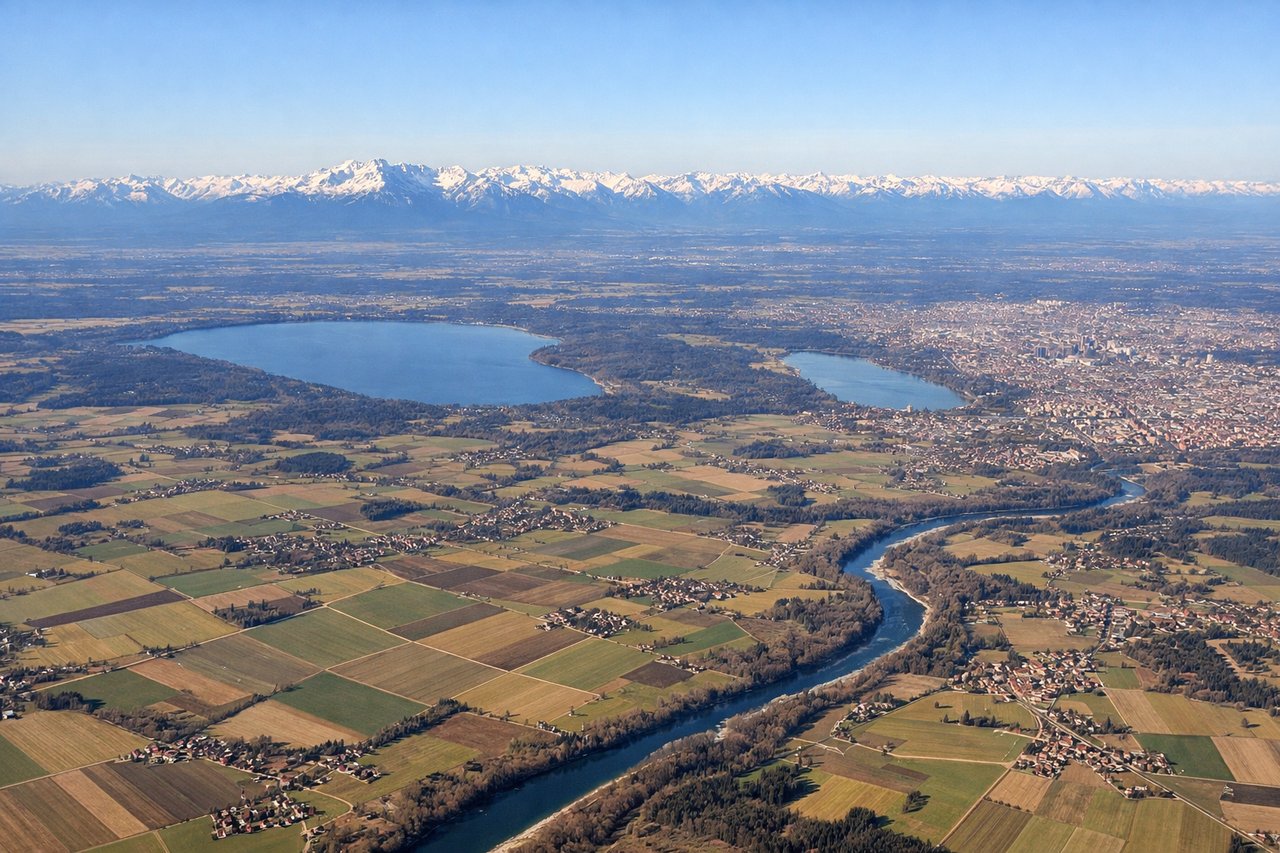
Takeoff from MUC
LEFTMunich departures on runway 08R/26L heading west-southwest give left-side passengers a clear view south toward the Bavarian Alps, including the prominent Zugspitze massif and the Inn Valley. The foothills and lakes of Upper Bavaria are also visible on the left as the aircraft climbs out.
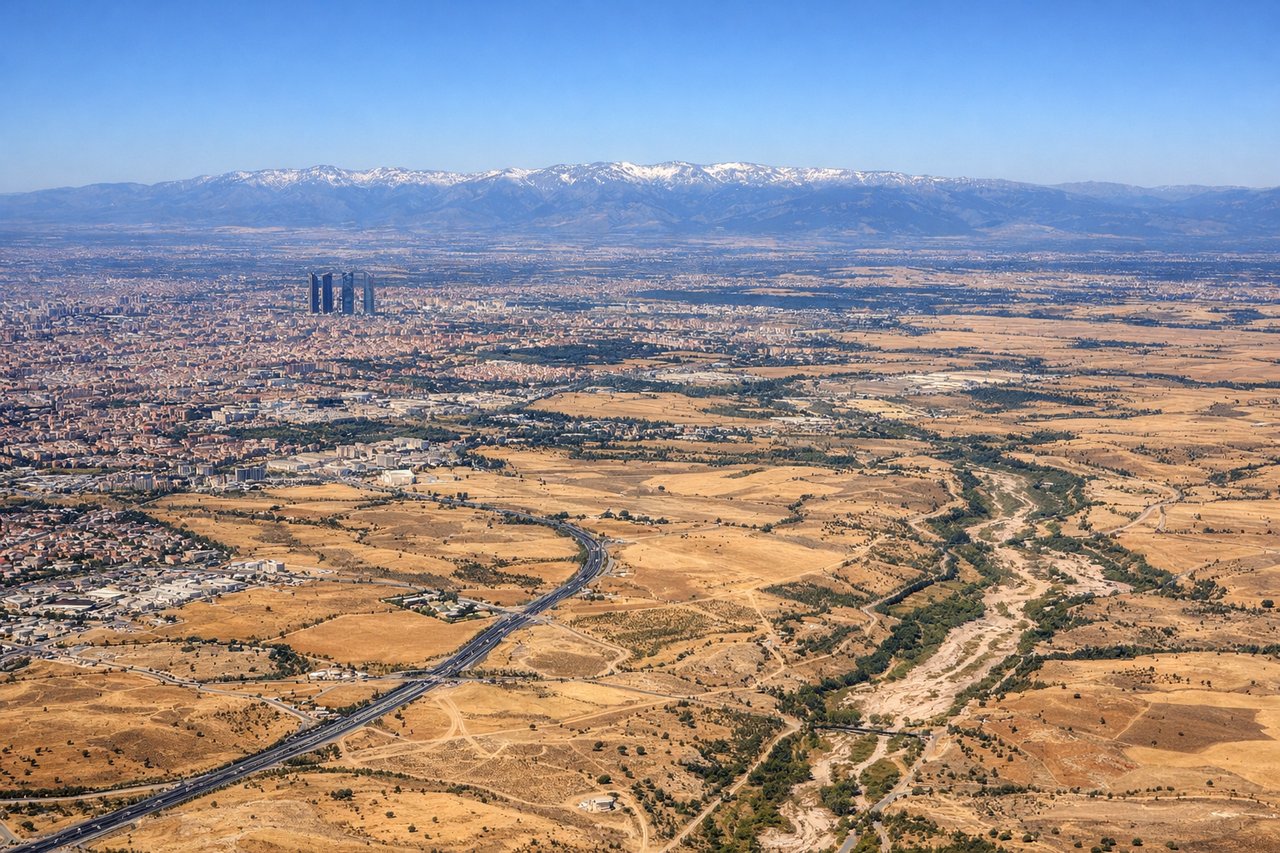
Landing at MAD
RIGHTMadrid Barajas typically uses runways 32L/32R for arrivals from the northeast, meaning the aircraft approaches from the northeast heading southwest. Right-side passengers get a view over the Sierra de Guadarrama range to the northwest, with the snow-capped peaks of Peñalara and the Navacerrada pass clearly visible. The city of Madrid spreads across the left and ahead, but the mountain scenery is the standout view on the right.
Will your flight be in sunlight?
Pick a date and time in the Sun Map to watch the sun move across your whole flight.
About This Route
Which side of the plane should I sit on flying from Munich (MUC) to Barajas (MAD)?
Sit on the Left side of the plane for the best views on flights from Munich to Madrid. The left side delivers the most dramatic single moment of the flight — the panoramic view of the Bavarian Alps and Zugspitze on departure from Munich. During the cruise over France the left side also tracks closer to the Massif Central highlands. The right side has a strong arrival view of the Guadarrama, but the Alpine departure view on the left is the highlight of the route.
What can I see during takeoff from Munich in Munich?
During takeoff from Munich (MUC), sit on the Left side for the best views. Munich departures on runway 08R/26L heading west-southwest give left-side passengers a clear view south toward the Bavarian Alps, including the prominent Zugspitze massif and the Inn Valley. The foothills and lakes of Upper Bavaria are also visible on the left as the aircraft climbs out. Notable sights include: Zugspitze massif, Ammersee lake, Starnberger See, Bavarian foothills.
What can I see when landing at Barajas in Madrid?
When landing at Barajas (MAD), sit on the Right side for the best views. Madrid Barajas typically uses runways 32L/32R for arrivals from the northeast, meaning the aircraft approaches from the northeast heading southwest. Right-side passengers get a view over the Sierra de Guadarrama range to the northwest, with the snow-capped peaks of Peñalara and the Navacerrada pass clearly visible. The city of Madrid spreads across the left and ahead, but the mountain scenery is the standout view on the right. Notable sights include: Sierra de Guadarrama, Peñalara peak, El Pardo forest, Madrid urban grid.
How long is the flight from Munich to Madrid?
The flight from Munich (MUC) to Barajas (MAD) takes about 2 hours 45 minutes. The shortest flight path between them is 930 miles (1,496 km); winds and air traffic control usually add a few percent.
What does the Munich to Madrid flight path pass over?
The route crosses the Swiss Plateau and Jura mountains shortly after departure, then tracks over the Rhône Valley and Lyon area in central France. The Massif Central highlands are visible to the left in the mid-flight portion. The flight then crosses the Pyrenees — visible from both sides but particularly dramatic — before descending over the Ebro basin and the Castilian meseta into Madrid.