The right side wins for the full journey: Alpine peaks during climb-out, a probable Alps crossing with distant snow-capped ridgelines during cruise, and a dramatic Mediterranean coastal approach into Nice, versus the flatter, less distinctive views on the left.
Flight Path
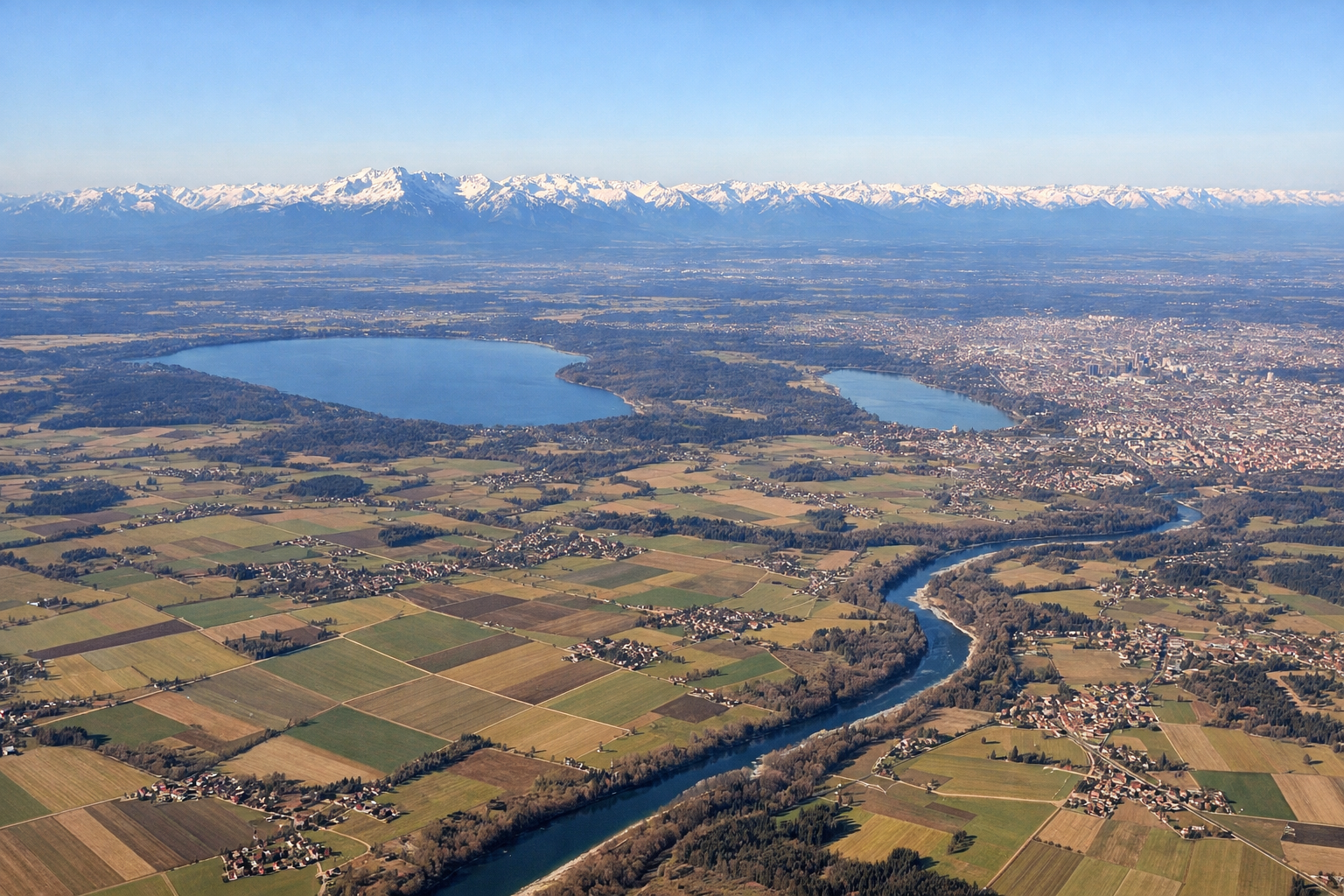
Central Alps ridgelines including peaks near the Swiss-Italian border, alpine valleys and glacial ridges, transitioning to the Ligurian coastline near the France-Italy border as the aircraft descends toward Nice
Great circle distance and headings ›

.jpg?width=600)
Phase by phase
Takeoff from MUC
RIGHTDeparting MUC to the west before turning south toward Nice, the right side faces the Bavarian Alps foothills, giving passengers a view of the Zugspitze massif rising on the horizon as the aircraft climbs. The left side mostly shows the flat Bavarian plain and Munich's northern suburbs.
Landing at NCE
RIGHTArriving into NCE from the north, aircraft typically loop out over the Mediterranean before turning onto final approach for runway 04, putting the French Riviera coastline — Nice's harbor, the Baie des Anges, and the hills of Cap Ferrat — on the right side of the aircraft during descent.
Landmarks on this routeAll landmarks →
Will your flight be in sunlight?
See exactly which side of the plane gets sun and shade at your departure time.
About This Route
Which side of the plane should I sit on flying from Munich (MUC) to Cote D Azur (NCE)?
Sit on the Right side of the plane for the best views on flights from Munich to Nice. The right side wins for the full journey: Alpine peaks during climb-out, a probable Alps crossing with distant snow-capped ridgelines during cruise, and a dramatic Mediterranean coastal approach into Nice, versus the flatter, less distinctive views on the left.
What can I see during takeoff from Munich in Munich?
During takeoff from Munich (MUC), sit on the Right side for the best views. Departing MUC to the west before turning south toward Nice, the right side faces the Bavarian Alps foothills, giving passengers a view of the Zugspitze massif rising on the horizon as the aircraft climbs. The left side mostly shows the flat Bavarian plain and Munich's northern suburbs. Notable sights include: Zugspitze massif, Bavarian Alps foothills, Isar river valley, Munich suburban sprawl.
What can I see when landing at Cote D Azur in Nice?
When landing at Cote D Azur (NCE), sit on the Right side for the best views. Arriving into NCE from the north, aircraft typically loop out over the Mediterranean before turning onto final approach for runway 04, putting the French Riviera coastline — Nice's harbor, the Baie des Anges, and the hills of Cap Ferrat — on the right side of the aircraft during descent. Notable sights include: Baie des Anges, Nice harbor and Promenade des Anglais, Cap Ferrat peninsula, Mediterranean Sea.
How long is the flight from Munich to Nice?
The flight from Munich (MUC) to Cote D Azur (NCE) takes 1h 35m.
What does the Munich to Nice flight path pass over?
Central Alps ridgelines including peaks near the Swiss-Italian border, alpine valleys and glacial ridges, transitioning to the Ligurian coastline near the France-Italy border as the aircraft descends toward Nice