Left side scores higher due to the dramatic Bavarian Alps visible during takeoff and the sustained scenic variety of the Alpine foothills during the initial climb phase. While Seville's arrival is more visually interesting on the right, the takeoff experience and the extended Alpine scenery during the first 30 minutes of flight outweigh the landing advantage. The Alps provide genuine terrain drama that the flat Andalusian plains cannot match, and the full-flight experience favors the left side.
Flown MUC to SVQ? Did we get it right?
Flight Path
Munich to Sevilla is 1,166 miles (1,877 km), a flight of about 2 hours 15 minutes.
The flight crosses the Pyrenees Mountains (visible as a north-south trending ridge approximately 90 minutes into flight), the Aquitaine Basin and Garonne River valley in southwestern France, the Spanish Meseta plateau, and the Guadalquivir River basin approaching Seville. The Pyrenees represent the most dramatic midpoint feature, with peaks reaching 11,000 feet visible from cruise altitude on clear days.
Great circle distance and headings ›


Phase by phase
Takeoff from MUC
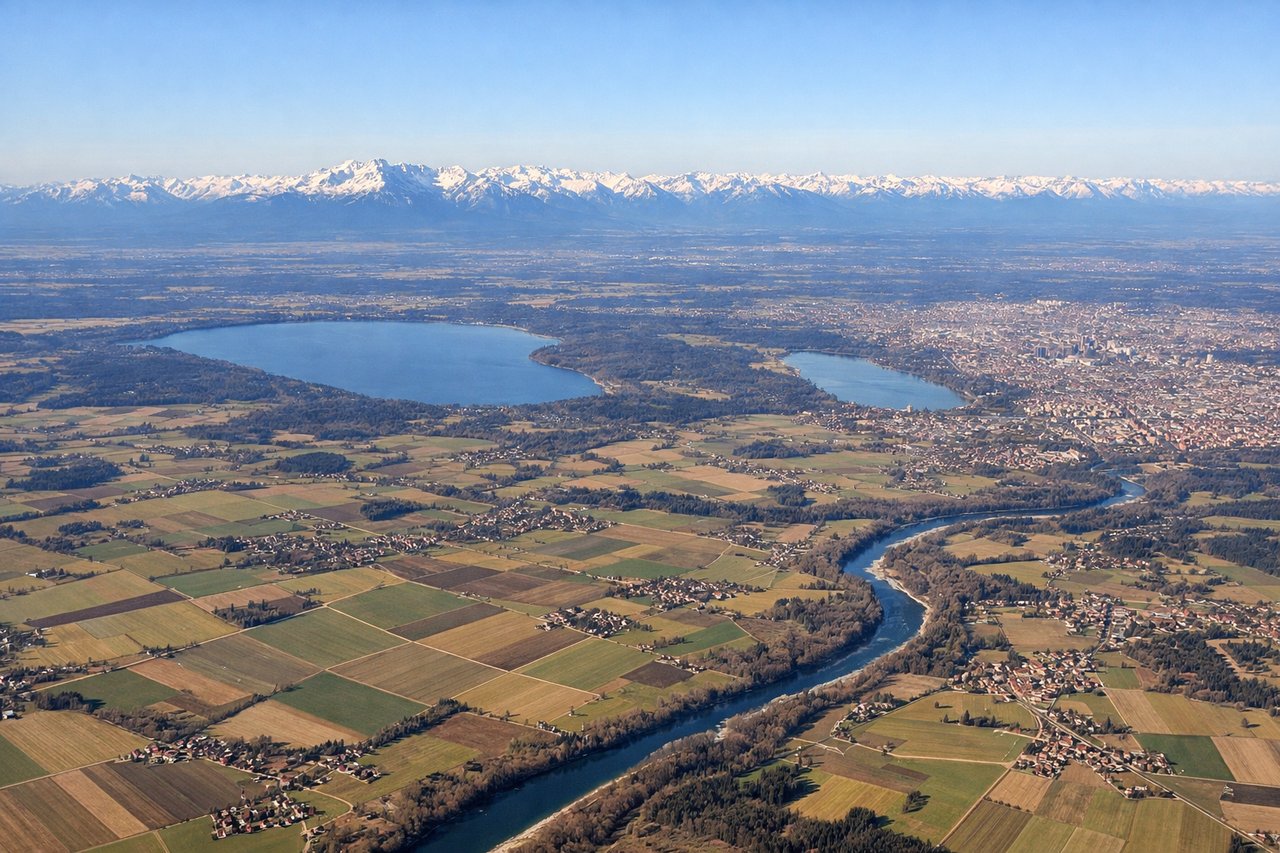
LEFTLeft side captures Munich's urban sprawl and the northern foothills of the Bavarian Alps during westbound departure. The Alps form a dramatic backdrop even from 15,000 feet, with snow-capped peaks visible on clear days. Right side shows only flat Bavarian plains extending toward France.
Landing at SVQ
RIGHTRight side offers the superior arrival experience into Seville. The Guadalquivir River is prominently visible during the final approach, and the city's historic center with the Cathedral and Alcázar are distinguishable. Left side shows only the flat Andalusian plains and agricultural land with no distinctive urban or natural features.
Will your flight be in sunlight?
Pick a date and time in the Sun Map to watch the sun move across your whole flight.
About This Route
Which side of the plane should I sit on flying from Munich (MUC) to Sevilla (SVQ)?
Sit on the Left side of the plane for the best views on flights from Munich to Sevilla. Left side scores higher due to the dramatic Bavarian Alps visible during takeoff and the sustained scenic variety of the Alpine foothills during the initial climb phase. While Seville's arrival is more visually interesting on the right, the takeoff experience and the extended Alpine scenery during the first 30 minutes of flight outweigh the landing advantage. The Alps provide genuine terrain drama that the flat Andalusian plains cannot match, and the full-flight experience favors the left side.
What can I see during takeoff from Munich in Munich?
During takeoff from Munich (MUC), sit on the Left side for the best views. Left side captures Munich's urban sprawl and the northern foothills of the Bavarian Alps during westbound departure. The Alps form a dramatic backdrop even from 15,000 feet, with snow-capped peaks visible on clear days. Right side shows only flat Bavarian plains extending toward France. Notable sights include: Bavarian Alps (southern horizon), Munich city center and Marienplatz district, Isar River valley, Dachau region to the northwest.
What can I see when landing at Sevilla in Sevilla?
When landing at Sevilla (SVQ), sit on the Right side for the best views. Right side offers the superior arrival experience into Seville. The Guadalquivir River is prominently visible during the final approach, and the city's historic center with the Cathedral and Alcázar are distinguishable. Left side shows only the flat Andalusian plains and agricultural land with no distinctive urban or natural features. Notable sights include: Guadalquivir River (distinctive meander pattern), Seville Cathedral and Giralda tower, Alcázar palace complex, Triana district across the river.
How long is the flight from Munich to Sevilla?
The flight from Munich (MUC) to Sevilla (SVQ) takes about 2 hours 15 minutes. The shortest flight path between them is 1,166 miles (1,877 km); winds and air traffic control usually add a few percent.
What does the Munich to Sevilla flight path pass over?
The flight crosses the Pyrenees Mountains (visible as a north-south trending ridge approximately 90 minutes into flight), the Aquitaine Basin and Garonne River valley in southwestern France, the Spanish Meseta plateau, and the Guadalquivir River basin approaching Seville. The Pyrenees represent the most dramatic midpoint feature, with peaks reaching 11,000 feet visible from cruise altitude on clear days.