Left side scores higher due to the dramatic Alpine scenery during departure and the full visual arc of the Bavarian landscape. While the landing favors the right side (Mediterranean coast), the takeoff experience—with Munich's urban setting and Alpine foothills—provides greater scenic variety and landmark density across the full flight. The cruise phase over Austria and the Balkans offers moderate terrain interest on both sides, but the departure sequence tips the balance leftward.
Flown MUC to TLV? Did we get it right?
Flight Path
Munich to Tel Aviv is 1,650 miles (2,655 km), a flight of about 4 hours 15 minutes.
Austrian Alps and Danube valley during climb; Carpathian Mountains and Romanian highlands in cruise; Balkans (Serbian and Bulgarian mountains) in descent phase; Aegean Sea approaches to Israel
Great circle distance and headings ›

Phase by phase
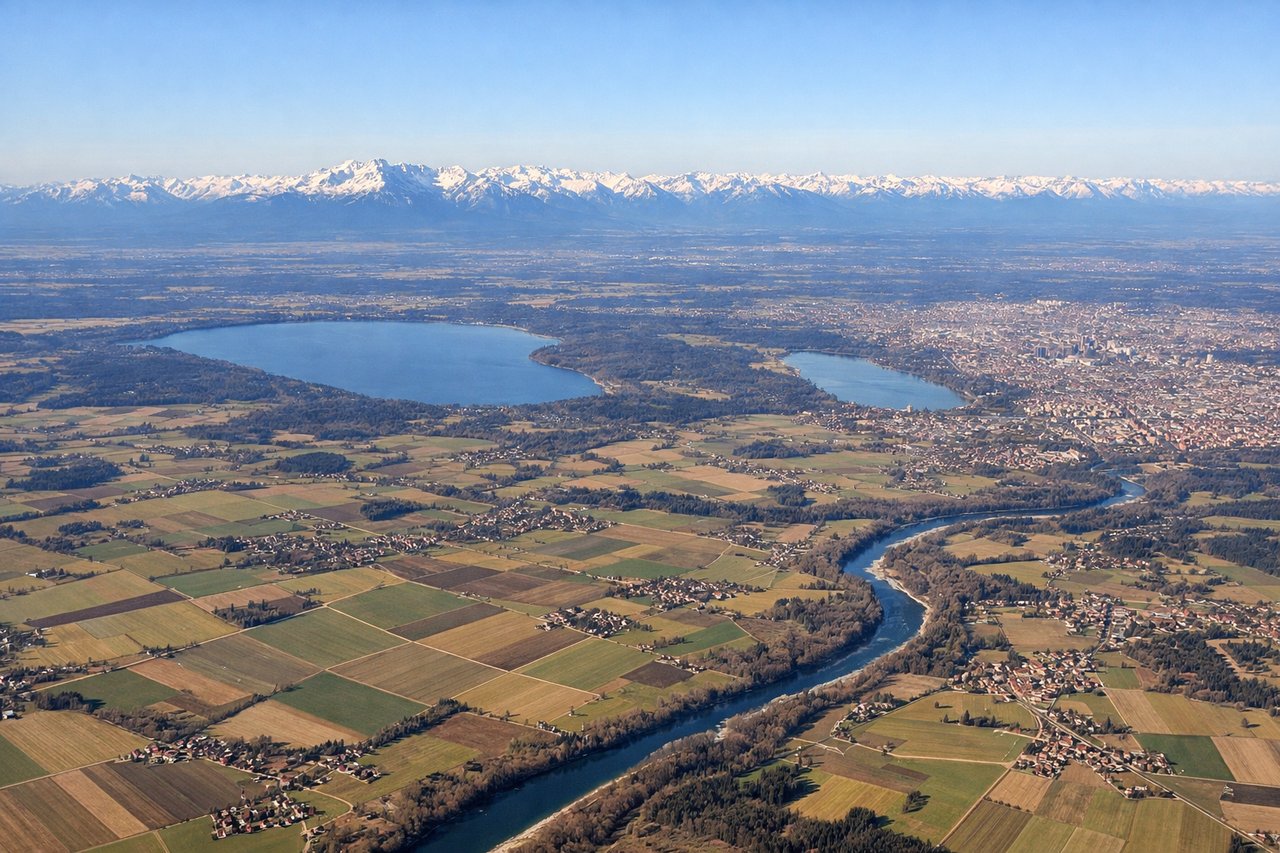
Takeoff from MUC
LEFTLeft side captures Munich's urban sprawl and the northern Alpine foothills during westbound departure. Prevailing westerly winds typically trigger runway 26R/26L departures, banking left (south) toward the Alps. Right side faces open plains northward with minimal terrain drama.
Landing at TLV
RIGHTRight side (north-facing) captures the Mediterranean coast, Tel Aviv's waterfront, and the approach to Ben Gurion. Westerly sea breezes typically favor runway 26 landings, requiring a northbound descent and right-bank turn toward the airport. Left side sees inland desert and urban sprawl without coastal drama.
Will your flight be in sunlight?
Pick a date and time in the Sun Map to watch the sun move across your whole flight.
About This Route
Which side of the plane should I sit on flying from Munich (MUC) to Ben Gurion (TLV)?
Sit on the Left side of the plane for the best views on flights from Munich to Tel Aviv. Left side scores higher due to the dramatic Alpine scenery during departure and the full visual arc of the Bavarian landscape. While the landing favors the right side (Mediterranean coast), the takeoff experience—with Munich's urban setting and Alpine foothills—provides greater scenic variety and landmark density across the full flight. The cruise phase over Austria and the Balkans offers moderate terrain interest on both sides, but the departure sequence tips the balance leftward.
What can I see during takeoff from Munich in Munich?
During takeoff from Munich (MUC), sit on the Left side for the best views. Left side captures Munich's urban sprawl and the northern Alpine foothills during westbound departure. Prevailing westerly winds typically trigger runway 26R/26L departures, banking left (south) toward the Alps. Right side faces open plains northward with minimal terrain drama. Notable sights include: Munich city center and suburbs, Isar River valley, northern foothills of the Bavarian Alps, Ammersee lake.
What can I see when landing at Ben Gurion in Tel Aviv?
When landing at Ben Gurion (TLV), sit on the Right side for the best views. Right side (north-facing) captures the Mediterranean coast, Tel Aviv's waterfront, and the approach to Ben Gurion. Westerly sea breezes typically favor runway 26 landings, requiring a northbound descent and right-bank turn toward the airport. Left side sees inland desert and urban sprawl without coastal drama. Notable sights include: Mediterranean Sea and Tel Aviv coastline, Tel Aviv harbor and beachfront, Jaffa's historic port district, Ben Gurion Airport runways and taxiways.
How long is the flight from Munich to Tel Aviv?
The flight from Munich (MUC) to Ben Gurion (TLV) takes about 4 hours 15 minutes. The shortest flight path between them is 1,650 miles (2,655 km); winds and air traffic control usually add a few percent.
What does the Munich to Tel Aviv flight path pass over?
Austrian Alps and Danube valley during climb; Carpathian Mountains and Romanian highlands in cruise; Balkans (Serbian and Bulgarian mountains) in descent phase; Aegean Sea approaches to Israel