The left side delivers the Alpine panorama on departure, which is one of the most dramatic views in European aviation. The right side wins on landing, but the Alps at takeoff are the standout moment of the flight. If forced to choose one side for the whole flight, left gives you the better departure spectacle, and over the Atlantic both sides are equivalent.
Flight Path
The route tracks northwest over Bavaria, crosses the Rhine Valley and southern Germany, then over the English Channel or Ireland depending on the North Atlantic Track system routing. The bulk of the flight crosses the North Atlantic with Greenland's ice sheet potentially visible to the north on some routings. Descent brings the aircraft over the US East Coast — possibly the Carolinas or Florida's northern coast — before the final approach over central Florida.
Great circle distance and headings ›Phase by phase

Takeoff from MUC
LEFTMunich's main departure runway 08R/26L typically sends westbound transatlantic flights departing toward the northwest, putting the Bavarian Alps on the left (south) side. You get a clear view of the Alps including the Zugspitze and the Inn Valley as the aircraft climbs and turns westward.
Landing at TPA
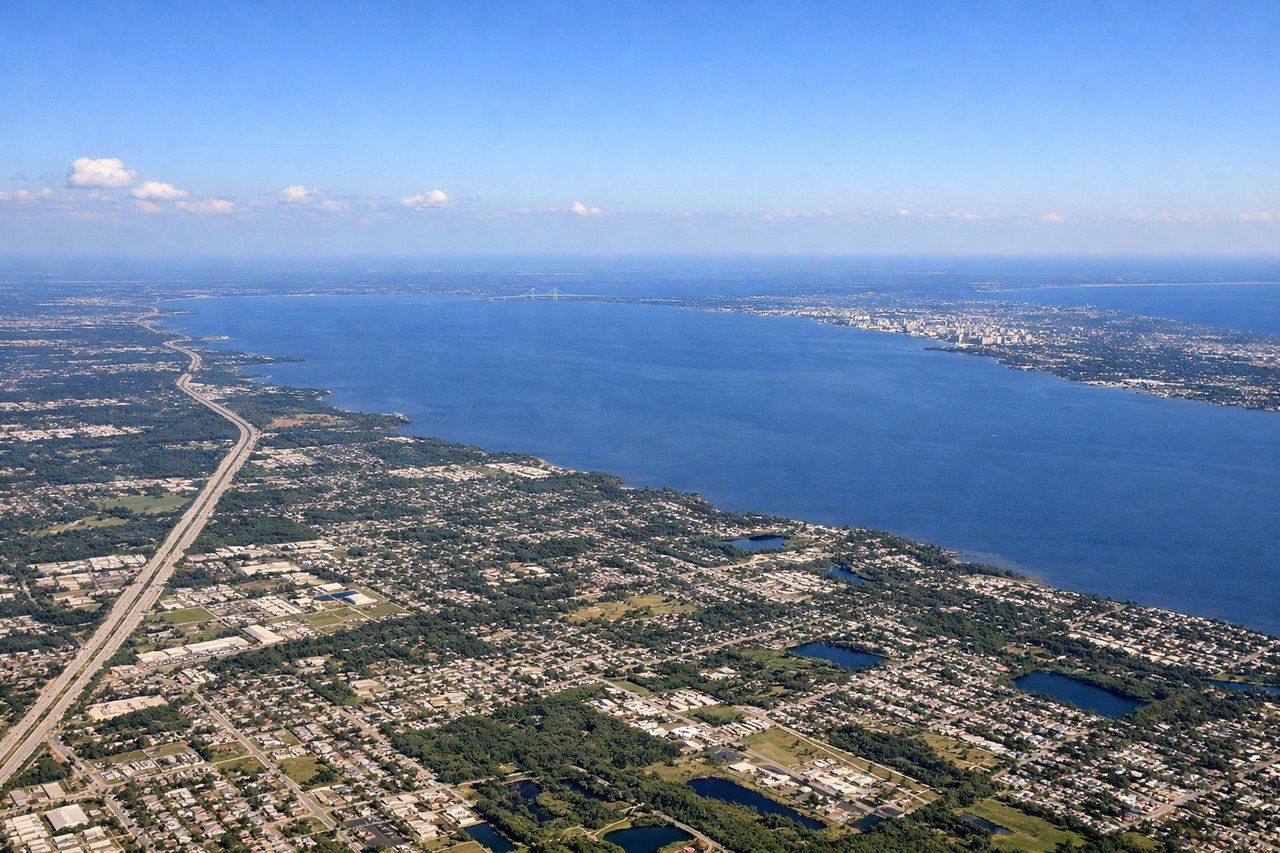
RIGHTTampa International sits on the west side of Tampa Bay, and aircraft typically approach from the east on runway 19R/01L or from the north. A right-side seat gives you the view over Tampa Bay, the Sunshine Skyway Bridge, and the St. Petersburg peninsula as you descend over the water.
Landmarks on this routeAll landmarks →
Will your flight be in sunlight?
See exactly which side of the plane gets sun and shade at your departure time.
About This Route
Which side of the plane should I sit on flying from Munich (MUC) to Tampa International (TPA)?
Sit on the Left side of the plane for the best views on flights from Munich to Tampa. The left side delivers the Alpine panorama on departure, which is one of the most dramatic views in European aviation. The right side wins on landing, but the Alps at takeoff are the standout moment of the flight. If forced to choose one side for the whole flight, left gives you the better departure spectacle, and over the Atlantic both sides are equivalent.
What can I see during takeoff from Munich in Munich?
During takeoff from Munich (MUC), sit on the Left side for the best views. Munich's main departure runway 08R/26L typically sends westbound transatlantic flights departing toward the northwest, putting the Bavarian Alps on the left (south) side. You get a clear view of the Alps including the Zugspitze and the Inn Valley as the aircraft climbs and turns westward. Notable sights include: Zugspitze (Germany's highest peak), Inn Valley, Ammersee lake, Munich city center to the northeast.
What can I see when landing at Tampa International in Tampa?
When landing at Tampa International (TPA), sit on the Right side for the best views. Tampa International sits on the west side of Tampa Bay, and aircraft typically approach from the east on runway 19R/01L or from the north. A right-side seat gives you the view over Tampa Bay, the Sunshine Skyway Bridge, and the St. Petersburg peninsula as you descend over the water. Notable sights include: Tampa Bay, Sunshine Skyway Bridge, St. Petersburg peninsula, Clearwater Beach barrier islands.
How long is the flight from Munich to Tampa?
The flight from Munich (MUC) to Tampa International (TPA) takes Approximately 10 to 11 hours.
What does the Munich to Tampa flight path pass over?
The route tracks northwest over Bavaria, crosses the Rhine Valley and southern Germany, then over the English Channel or Ireland depending on the North Atlantic Track system routing. The bulk of the flight crosses the North Atlantic with Greenland's ice sheet potentially visible to the north on some routings. Descent brings the aircraft over the US East Coast — possibly the Carolinas or Florida's northern coast — before the final approach over central Florida.