Left side wins at both ends of this short flight. During the crossing of the Alps — the most dramatic part of the route — the left side faces east and gives views of the main Alpine chain including the Brenner Pass corridor and the Dolomite foothills. At landing, Lake Garda and Verona are on the left.
Flight Path
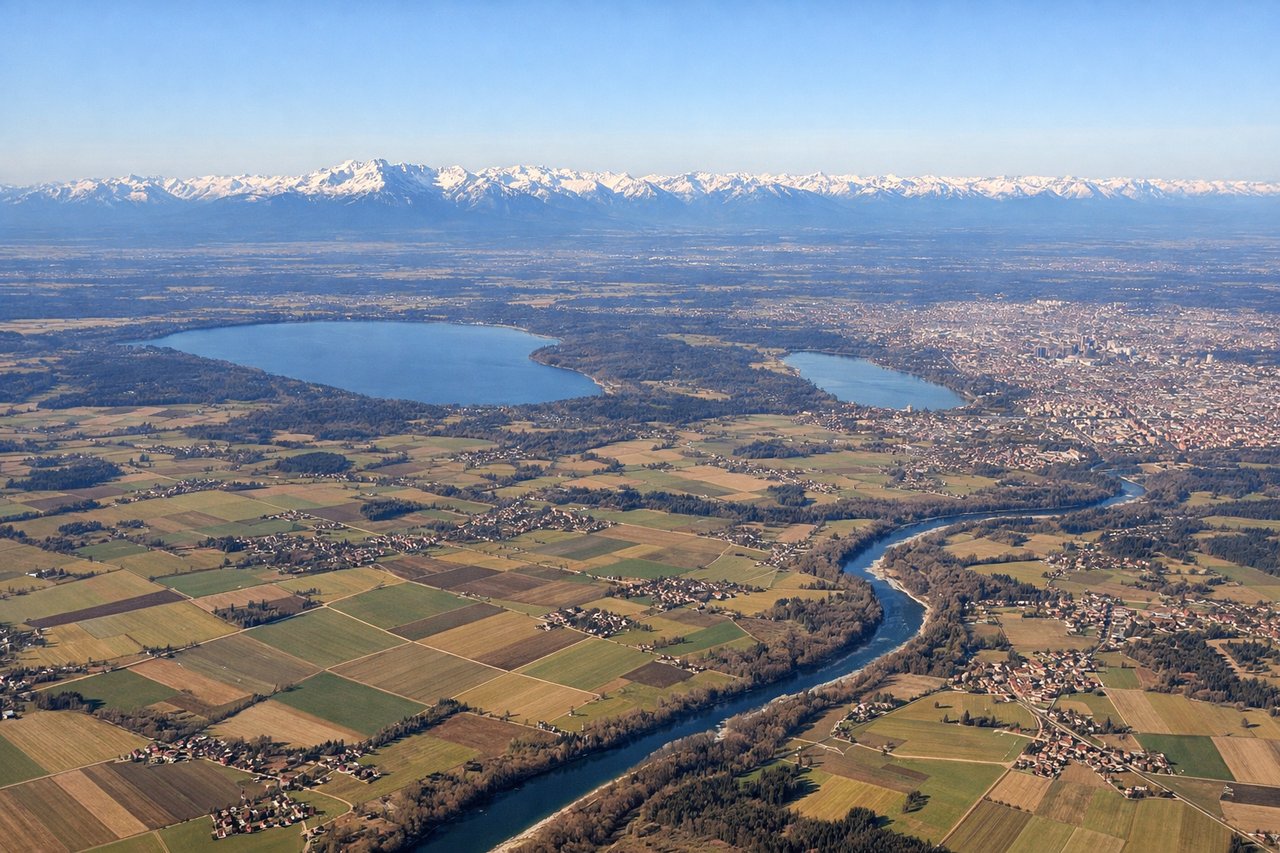
The flight crosses directly over the Austrian Alps near the Brenner Pass corridor (the lowest crossing point of the main Alpine chain at around 4,500 ft, though the aircraft flies well above at cruise). The Isarco and Adige river valleys are visible cutting through the mountains below. The transition from the steep northern Alpine face to the gentler southern slopes and then the sudden flatness of the Po Plain is the defining visual moment of this route.
Great circle distance and headings ›


Phase by phase
Takeoff from MUC
LEFTMunich airport sits northeast of the city. Departing south toward Italy, the left (east) side gives you a clear look back at the Bavarian foothills and the first ridges of the Alps rising ahead. The right side faces west toward Munich city center but quickly loses interest as you climb into the Alps.
Landing at VRN
LEFTVerona's airport (Villafranca) lies southwest of the city. Approaching from the north, the left side faces east toward Lake Garda, the Adige River valley, and the city of Verona itself. The right side looks west toward flat Po Plain with little of interest.
Landmarks on this routeAll landmarks →
Will your flight be in sunlight?
See exactly which side of the plane gets sun and shade at your departure time.
About This Route
Which side of the plane should I sit on flying from Munich (MUC) to Villafranca (VRN)?
Sit on the Left side of the plane for the best views on flights from Munich to Villafranca. Left side wins at both ends of this short flight. During the crossing of the Alps — the most dramatic part of the route — the left side faces east and gives views of the main Alpine chain including the Brenner Pass corridor and the Dolomite foothills. At landing, Lake Garda and Verona are on the left.
What can I see during takeoff from Munich in Munich?
During takeoff from Munich (MUC), sit on the Left side for the best views. Munich airport sits northeast of the city. Departing south toward Italy, the left (east) side gives you a clear look back at the Bavarian foothills and the first ridges of the Alps rising ahead. The right side faces west toward Munich city center but quickly loses interest as you climb into the Alps. Notable sights include: Bavarian foothills (Voralpenland), Inn River valley, Chiemsee lake visible to the southeast, northern Alpine ridges.
What can I see when landing at Villafranca in Villafranca?
When landing at Villafranca (VRN), sit on the Left side for the best views. Verona's airport (Villafranca) lies southwest of the city. Approaching from the north, the left side faces east toward Lake Garda, the Adige River valley, and the city of Verona itself. The right side looks west toward flat Po Plain with little of interest. Notable sights include: Lake Garda, Adige River valley, Verona city and its Roman amphitheater district, Po Plain.
How long is the flight from Munich to Villafranca?
The flight from Munich (MUC) to Villafranca (VRN) takes Approximately 45-55 minutes.
What does the Munich to Villafranca flight path pass over?
The flight crosses directly over the Austrian Alps near the Brenner Pass corridor (the lowest crossing point of the main Alpine chain at around 4,500 ft, though the aircraft flies well above at cruise). The Isarco and Adige river valleys are visible cutting through the mountains below. The transition from the steep northern Alpine face to the gentler southern slopes and then the sudden flatness of the Po Plain is the defining visual moment of this route.