Munich to Wroclaw is 296 miles (477 km), a flight of about 1 hour 10 minutes.
Left side wins both takeoff and landing. During the cruise phase heading northeast, the left side also faces generally northwest toward the Sudeten Mountains on the distant horizon as you cross into Czech and Polish territory, offering more geographic interest than the right side's open plains.
Flight Path
The flight crosses the Czech Republic, passing over the Bohemian-Moravian Highlands and then the Sudeten mountain range (Sudety) along the Czech-Polish border — visible as a low ridge on the horizon. The route then descends over the flat Silesian lowlands and the Upper Silesian industrial region before reaching Wroclaw.
Great circle distance and headings ›Phase by phase
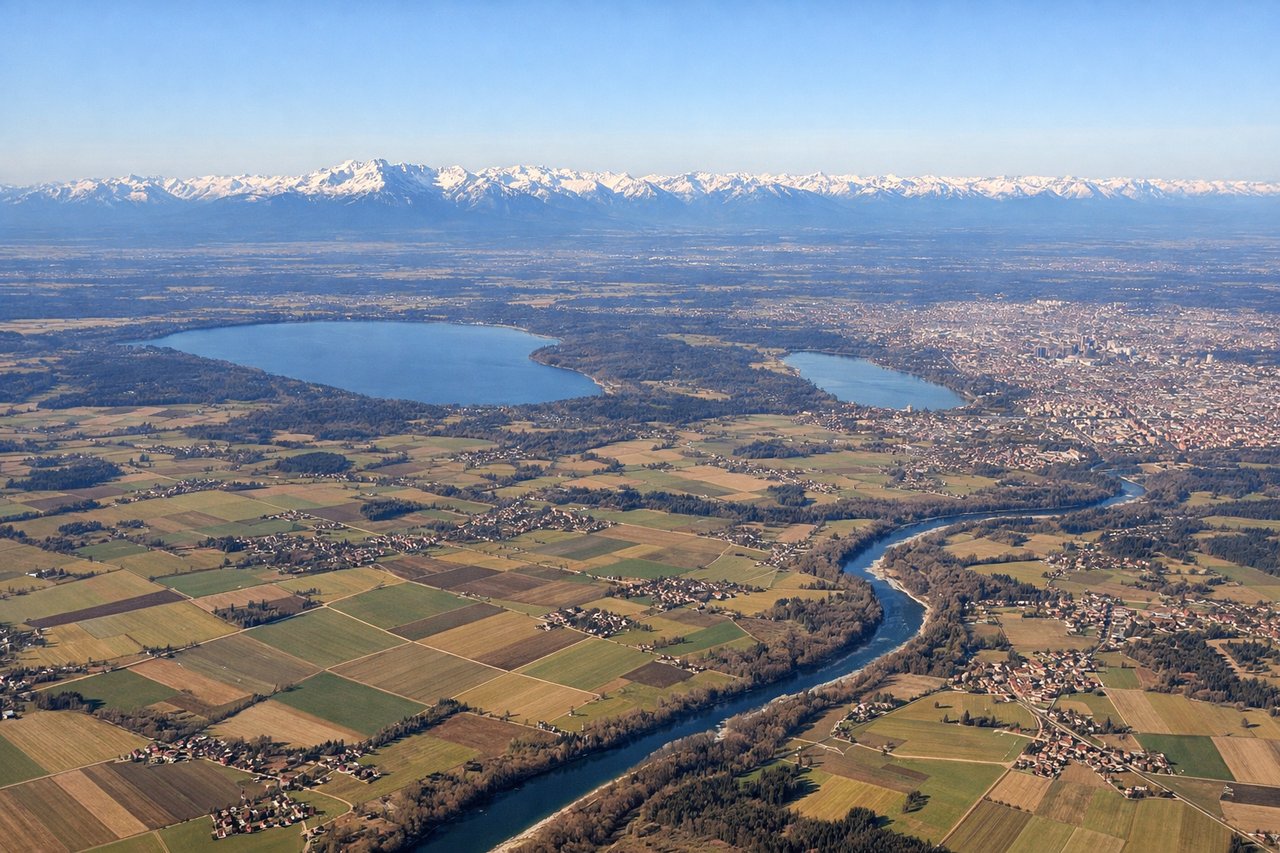
Takeoff from MUC
LEFTMunich typically departs on runway 26L/26R heading west, then turns north toward Wroclaw. A left-side seat captures the city of Munich and the Bavarian countryside as the aircraft banks northward. You may also catch a glimpse of the Isar River valley and the southern Munich suburbs spreading out below.
Landing at WRO
LEFTWroclaw's runway 11/29 means arrivals from the west typically come in on runway 11 heading east, placing the city of Wroclaw and the Odra River on the left side during final approach. The historic Old Town and the distinctive island district of Ostrow Tumski sit clearly left of the approach path.
Landmarks on this routeAll landmarks →
Will your flight be in sunlight?
Pick a date and time in the Sun Map to watch the sun move across your whole flight.
About This Route
Which side of the plane should I sit on flying from Munich (MUC) to Strachowice (WRO)?
Sit on the Left side of the plane for the best views on flights from Munich to Wroclaw. Left side wins both takeoff and landing. During the cruise phase heading northeast, the left side also faces generally northwest toward the Sudeten Mountains on the distant horizon as you cross into Czech and Polish territory, offering more geographic interest than the right side's open plains.
What can I see during takeoff from Munich in Munich?
During takeoff from Munich (MUC), sit on the Left side for the best views. Munich typically departs on runway 26L/26R heading west, then turns north toward Wroclaw. A left-side seat captures the city of Munich and the Bavarian countryside as the aircraft banks northward. You may also catch a glimpse of the Isar River valley and the southern Munich suburbs spreading out below. Notable sights include: City of Munich (Marienplatz area visible as dense urban core), Isar River winding south of the city, Bavarian agricultural plains, English Garden green patch within the city.
What can I see when landing at Strachowice in Wroclaw?
When landing at Strachowice (WRO), sit on the Left side for the best views. Wroclaw's runway 11/29 means arrivals from the west typically come in on runway 11 heading east, placing the city of Wroclaw and the Odra River on the left side during final approach. The historic Old Town and the distinctive island district of Ostrow Tumski sit clearly left of the approach path. Notable sights include: Odra River and its braided channels through Wroclaw, Ostrow Tumski cathedral island, Wroclaw Old Town urban core, flat Silesian plain stretching to the horizon.
How long is the flight from Munich to Wroclaw?
The flight from Munich (MUC) to Strachowice (WRO) takes about 1 hour 10 minutes. The shortest flight path between them is 296 miles (477 km); winds and air traffic control usually add a few percent.
What does the Munich to Wroclaw flight path pass over?
The flight crosses the Czech Republic, passing over the Bohemian-Moravian Highlands and then the Sudeten mountain range (Sudety) along the Czech-Polish border — visible as a low ridge on the horizon. The route then descends over the flat Silesian lowlands and the Upper Silesian industrial region before reaching Wroclaw.