Munich to Montreal is 3,807 miles (6,127 km), a flight of about 8 hours 45 minutes.
Left side wins both ends of the flight — the Alps on departure and the St. Lawrence and Montreal on arrival. During the cruise over the North Atlantic, the left side also offers slightly better angles toward southern Greenland's ice sheet and Labrador coastline depending on the exact routing.
Flight Path
The route typically tracks northwest over southern Germany, crosses the English Channel near the Netherlands or Belgium, then heads out over the North Atlantic via southern Ireland or Scotland. Mid-flight features include the southern tip of Greenland's ice cap (visible on clear days), the Labrador Sea, and the rugged boreal forest and lake-dotted Canadian Shield of Quebec on descent.
Great circle distance and headings ›
.jpeg?width=600)
Phase by phase
Takeoff from MUC
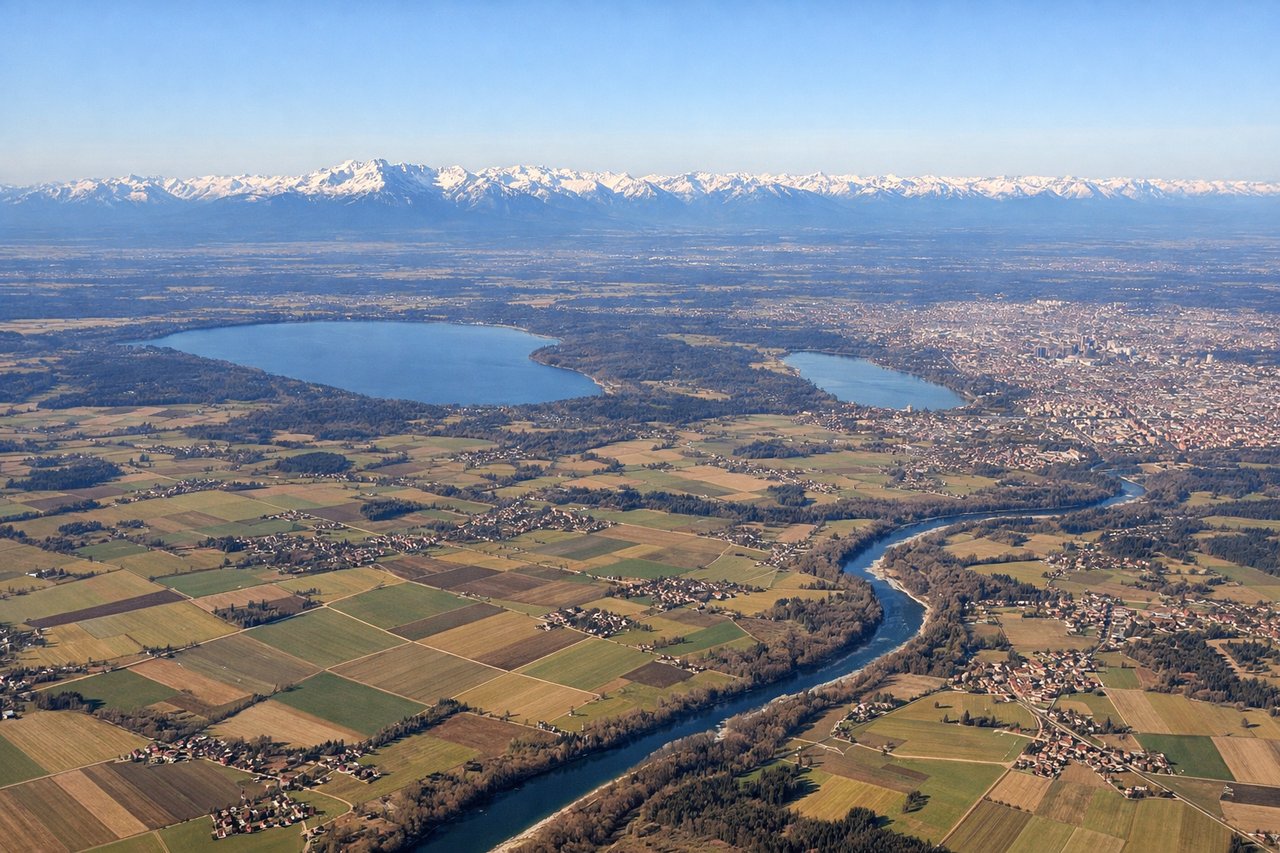
LEFTMunich departures on runway 08R/26L or 08L/26R typically head westward or northwestward toward the Atlantic routing. A left-side seat gives you a view south toward the Bavarian Alps — the Zugspitze massif and the Inn Valley are clearly visible on climb-out before the aircraft turns northwest. The city of Munich itself also passes on the left as you gain altitude.
Landing at YHU
LEFTYHU (St-Hubert) sits southeast of Montreal island. Approaches typically come in from the east or northeast. A left-side seat on approach gives you a view of the St. Lawrence River, Montreal island, and the distinctive shape of Mount Royal rising from the urban grid — all passing to the north and left as you descend toward the south shore.
Landmarks on this routeAll landmarks →
Will your flight be in sunlight?
Pick a date and time in the Sun Map to watch the sun move across your whole flight.
About This Route
Which side of the plane should I sit on flying from Munich (MUC) to St Hubert (YHU)?
Sit on the Left side of the plane for the best views on flights from Munich to Montreal. Left side wins both ends of the flight — the Alps on departure and the St. Lawrence and Montreal on arrival. During the cruise over the North Atlantic, the left side also offers slightly better angles toward southern Greenland's ice sheet and Labrador coastline depending on the exact routing.
What can I see during takeoff from Munich in Munich?
During takeoff from Munich (MUC), sit on the Left side for the best views. Munich departures on runway 08R/26L or 08L/26R typically head westward or northwestward toward the Atlantic routing. A left-side seat gives you a view south toward the Bavarian Alps — the Zugspitze massif and the Inn Valley are clearly visible on climb-out before the aircraft turns northwest. The city of Munich itself also passes on the left as you gain altitude. Notable sights include: Bavarian Alps (Zugspitze massif to the south), Munich city center and Englischer Garten, Ammersee and Starnberger See lakes southwest of the city, Inn Valley corridor.
What can I see when landing at St Hubert in Montreal?
When landing at St Hubert (YHU), sit on the Left side for the best views. YHU (St-Hubert) sits southeast of Montreal island. Approaches typically come in from the east or northeast. A left-side seat on approach gives you a view of the St. Lawrence River, Montreal island, and the distinctive shape of Mount Royal rising from the urban grid — all passing to the north and left as you descend toward the south shore. Notable sights include: St. Lawrence River and its broad channel, Montreal island urban grid, Mount Royal (Mont Royal) rising from the city, Île Sainte-Hélène and the St. Lawrence islands.
How long is the flight from Munich to Montreal?
The flight from Munich (MUC) to St Hubert (YHU) takes about 8 hours 45 minutes. The shortest flight path between them is 3,807 miles (6,127 km); winds and air traffic control usually add a few percent.
What does the Munich to Montreal flight path pass over?
The route typically tracks northwest over southern Germany, crosses the English Channel near the Netherlands or Belgium, then heads out over the North Atlantic via southern Ireland or Scotland. Mid-flight features include the southern tip of Greenland's ice cap (visible on clear days), the Labrador Sea, and the rugged boreal forest and lake-dotted Canadian Shield of Quebec on descent.