Newcastle to Paris is 454 miles (730 km), a flight of about 1 hour 35 minutes.
The left side offers a brief coastal view on departure from Newcastle and a distant Paris skyline glimpse on arrival, while the right side mostly shows flat inland English and French farmland with little variation.
Flight Path
English Midlands farmland, the Thames Estuary area near London, the English Channel, and the flat plains of northern France approaching Paris
Great circle distance and headings ›
.jpg?width=600)
Phase by phase
Takeoff from NCL
LEFTDeparting NCL on runway 07 and banking south, the left side faces the North Sea coastline near the Tyne estuary and South Shields, giving a brief but clear coastal view before the route turns inland over England.
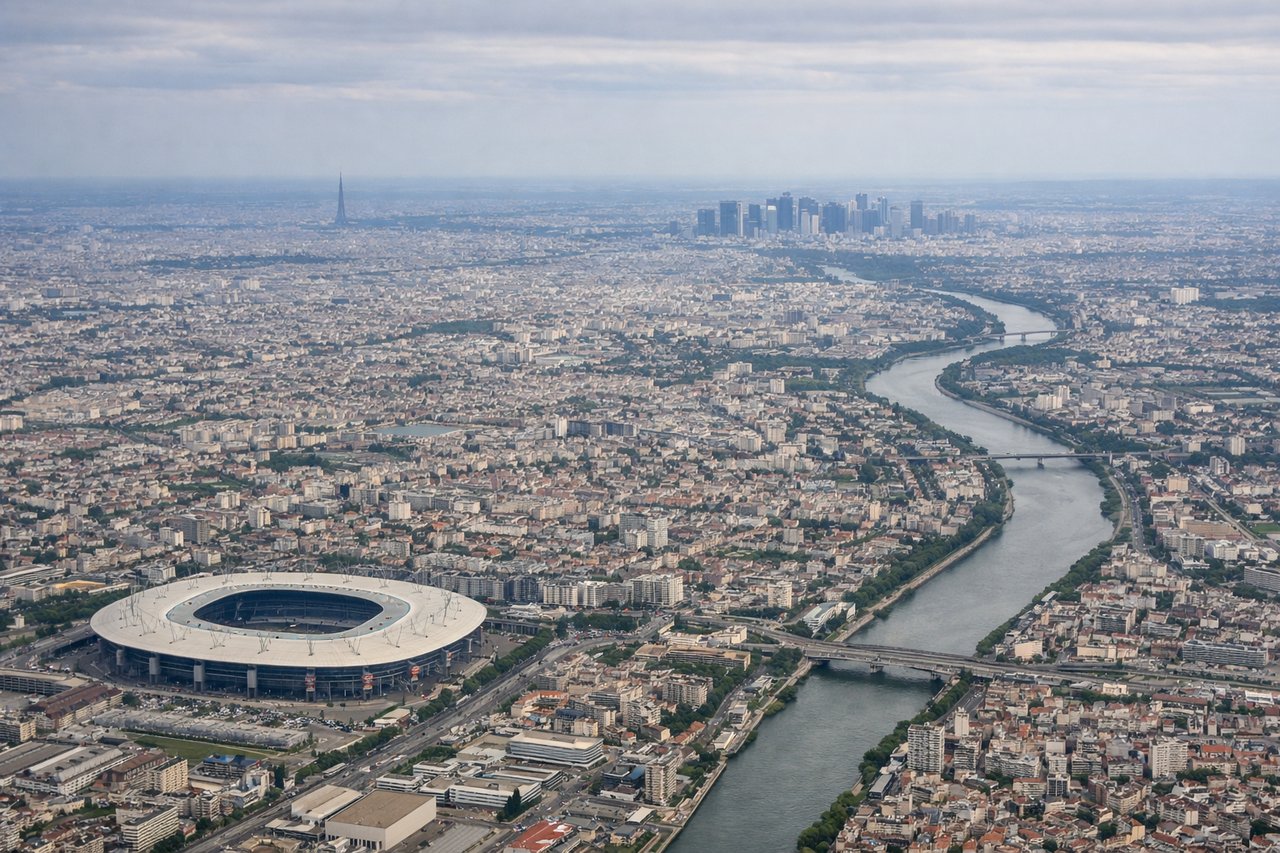
Landing at CDG
LEFTOn the descent into CDG from the north, arrivals often curve south before lining up on the westerly runways, giving left-side passengers a distant glimpse of the Paris skyline and Seine valley before touchdown.
Landmarks on this routeAll landmarks →
Will your flight be in sunlight?
Pick a date and time in the Sun Map to watch the sun move across your whole flight.
About This Route
Which side of the plane should I sit on flying from Newcastle (NCL) to Charles De Gaulle (CDG)?
Sit on the Left side of the plane for the best views on flights from Newcastle to Paris. The left side offers a brief coastal view on departure from Newcastle and a distant Paris skyline glimpse on arrival, while the right side mostly shows flat inland English and French farmland with little variation.
What can I see during takeoff from Newcastle in Newcastle?
During takeoff from Newcastle (NCL), sit on the Left side for the best views. Departing NCL on runway 07 and banking south, the left side faces the North Sea coastline near the Tyne estuary and South Shields, giving a brief but clear coastal view before the route turns inland over England. Notable sights include: Tyne Estuary, North Sea coastline, South Shields, Newcastle's coastal fringe.
What can I see when landing at Charles De Gaulle in Paris?
When landing at Charles De Gaulle (CDG), sit on the Left side for the best views. On the descent into CDG from the north, arrivals often curve south before lining up on the westerly runways, giving left-side passengers a distant glimpse of the Paris skyline and Seine valley before touchdown. Notable sights include: Paris skyline (La Défense towers), Seine River bends, northern Paris suburbs.
How long is the flight from Newcastle to Paris?
The flight from Newcastle (NCL) to Charles De Gaulle (CDG) takes about 1 hour 35 minutes. The shortest flight path between them is 454 miles (730 km); winds and air traffic control usually add a few percent.
What does the Newcastle to Paris flight path pass over?
English Midlands farmland, the Thames Estuary area near London, the English Channel, and the flat plains of northern France approaching Paris