While the west side offers a slightly better departure view of the Pennine foothills, the left side wins overall thanks to the dramatic descent over the Thames and London's skyline on final approach into Heathrow, which outweighs the modest coastal views seen earlier in the flight.
Flight Path
Yorkshire Dales and Peak District hills to the west, East Midlands farmland below, with the Wash estuary occasionally visible to the east before the route continues south toward London.
Great circle distance and headings ›Phase by phase
Takeoff from NCL
RIGHTAs the aircraft lifts off runway 07 and banks south toward London, the right-hand (west-facing) side reveals the rolling hills of Northumberland and the northern Pennines rising inland, giving some relief from the flat coastal plain. The left side mostly shows the North Sea and Tyne estuary receding quickly behind.
Landing at LHR
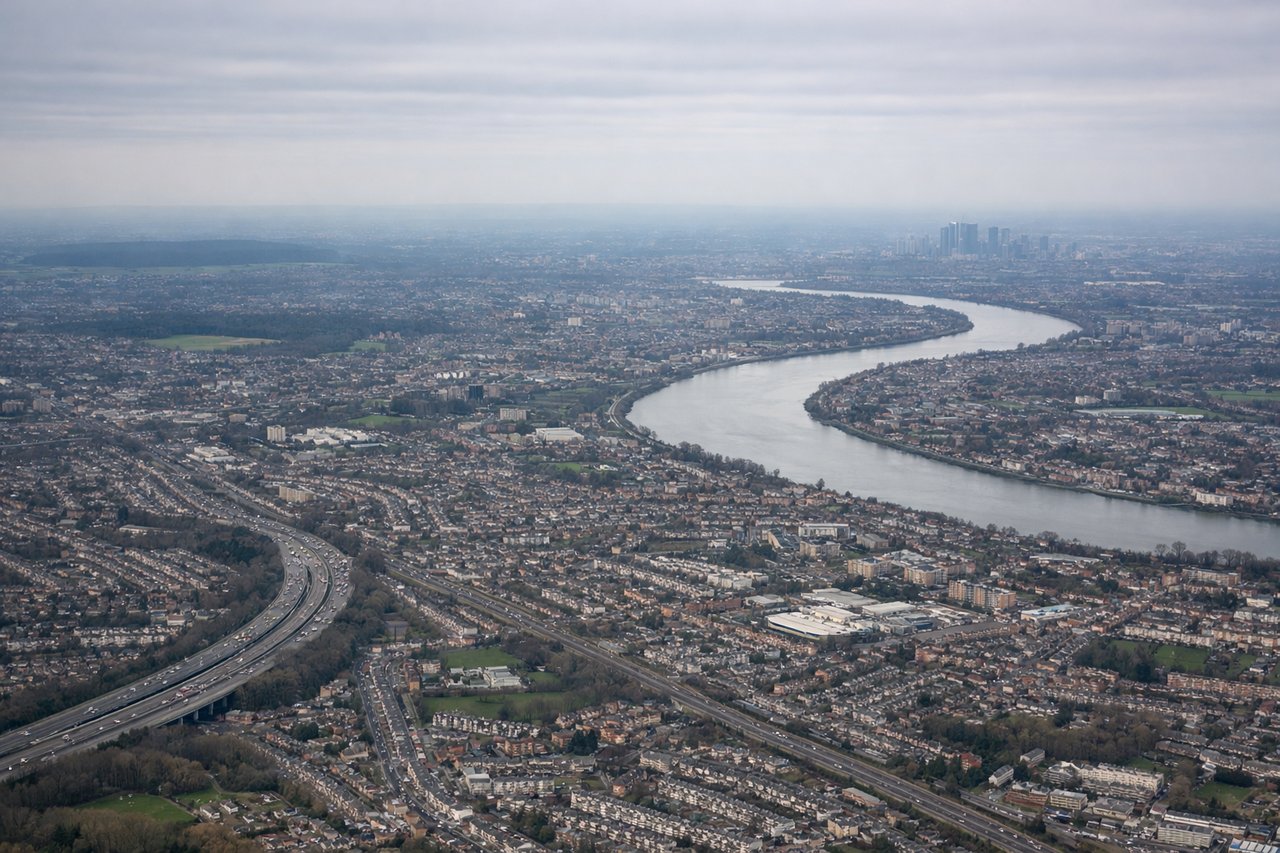
LEFTOn the typical northerly arrival into Heathrow during westerly operations, the aircraft descends south past London before turning onto final approach, giving left-side passengers a sweeping view over the Thames and the city's skyline before the turn onto the runway. The right side mostly faces the suburban sprawl west of London with fewer distinctive landmarks.
Landmarks on this routeAll landmarks →
Will your flight be in sunlight?
See exactly which side of the plane gets sun and shade at your departure time.
About This Route
Which side of the plane should I sit on flying from Newcastle (NCL) to Heathrow (LHR)?
Sit on the Left side of the plane for the best views on flights from Newcastle to London. While the west side offers a slightly better departure view of the Pennine foothills, the left side wins overall thanks to the dramatic descent over the Thames and London's skyline on final approach into Heathrow, which outweighs the modest coastal views seen earlier in the flight.
What can I see during takeoff from Newcastle in Newcastle?
During takeoff from Newcastle (NCL), sit on the Right side for the best views. As the aircraft lifts off runway 07 and banks south toward London, the right-hand (west-facing) side reveals the rolling hills of Northumberland and the northern Pennines rising inland, giving some relief from the flat coastal plain. The left side mostly shows the North Sea and Tyne estuary receding quickly behind. Notable sights include: River Tyne estuary, Cheviot Hills foothills, northern Pennines, Northumberland countryside.
What can I see when landing at Heathrow in London?
When landing at Heathrow (LHR), sit on the Left side for the best views. On the typical northerly arrival into Heathrow during westerly operations, the aircraft descends south past London before turning onto final approach, giving left-side passengers a sweeping view over the Thames and the city's skyline before the turn onto the runway. The right side mostly faces the suburban sprawl west of London with fewer distinctive landmarks. Notable sights include: River Thames, Central London skyline (Shard, Canary Wharf towers), Lea Valley reservoirs, M25 orbital motorway.
How long is the flight from Newcastle to London?
The flight from Newcastle (NCL) to Heathrow (LHR) takes 1h 05m.
What does the Newcastle to London flight path pass over?
Yorkshire Dales and Peak District hills to the west, East Midlands farmland below, with the Wash estuary occasionally visible to the east before the route continues south toward London.