The left side wins overall. The Tokyo Bay and potential Mount Fuji view on departure is one of the most dramatic urban-plus-volcano combinations in aviation. Mid-flight is largely featureless North Pacific, but as you approach the Pacific Northwest coast the left side also picks up the first views of the Alaska panhandle coastline and eventually the Cascades on descent. The right side at landing is better for Seattle specifically, so switching seats for landing is worth considering if possible.
Flown NRT to BFI? Did we get it right?
Flight Path
Tokyo to Seattle is 4,755 miles (7,652 km), a flight of about 9 hours 30 minutes.
The great circle route arcs northeast over the North Pacific, passing south of the Aleutian Islands chain and crossing the Gulf of Alaska. Passengers may see the Aleutian Islands as low dark landmasses in the distance on clear days. The route then crosses the Alaska panhandle and British Columbia coast, where the heavily glaciated St. Elias Mountains and coastal fjords become visible before descending into Washington State over the Cascade Range.
Great circle distance and headings ›

Phase by phase
Takeoff from NRT
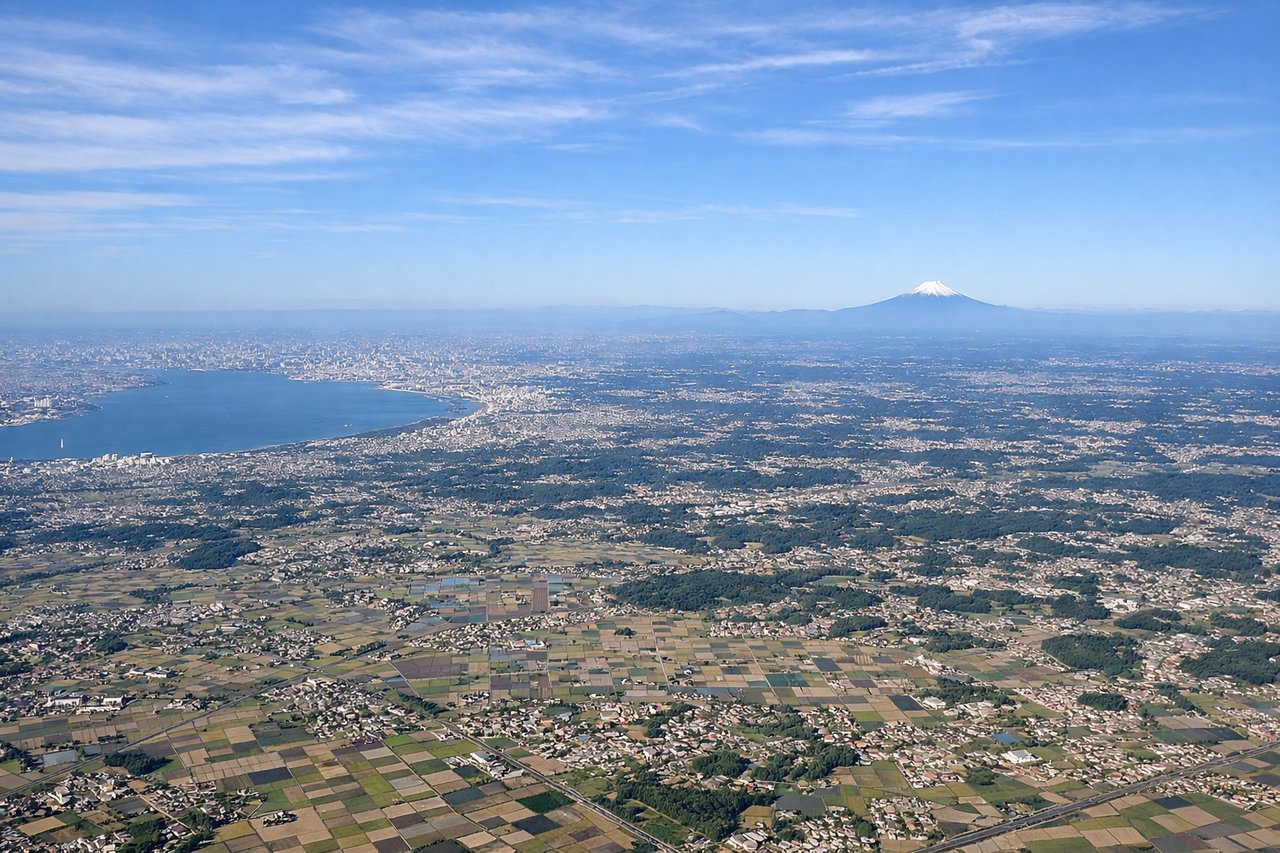
LEFTNRT typically departs on runway 16R/34L or 16L/34R. On a northbound departure toward Seattle, aircraft climb out heading roughly north then northeast. The left side gives you a clear view west toward Tokyo Bay, the urban sprawl of greater Tokyo, and on clear days Mount Fuji rising above the Kanto Plain to the southwest. The right side faces the Pacific Ocean with little to see.
Landing at BFI
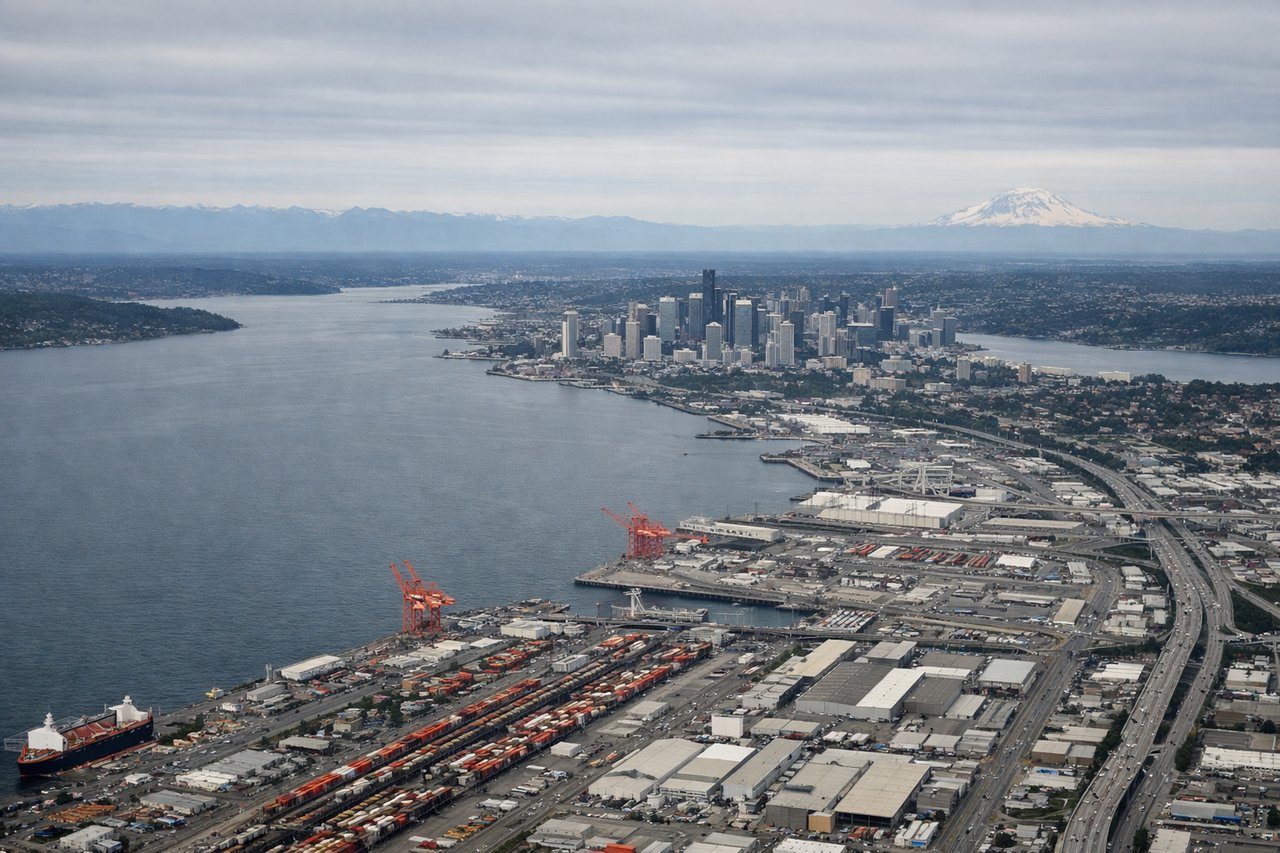
RIGHTBFI sits just south of downtown Seattle and aircraft typically approach from the south or southeast on final. A right-side seat gives you the best view of downtown Seattle, Elliott Bay, and the Olympic Mountains across Puget Sound. The left side faces east toward the Cascade Range and Lake Washington, which is also scenic but the right side delivers the iconic Seattle skyline and water combination.
Will your flight be in sunlight?
Pick a date and time in the Sun Map to watch the sun move across your whole flight.
About This Route
Which side of the plane should I sit on flying from New Tokyo International (NRT) to Boeing Fld King Co International (BFI)?
Sit on the Left side of the plane for the best views on flights from Tokyo to Seattle. The left side wins overall. The Tokyo Bay and potential Mount Fuji view on departure is one of the most dramatic urban-plus-volcano combinations in aviation. Mid-flight is largely featureless North Pacific, but as you approach the Pacific Northwest coast the left side also picks up the first views of the Alaska panhandle coastline and eventually the Cascades on descent. The right side at landing is better for Seattle specifically, so switching seats for landing is worth considering if possible.
What can I see during takeoff from New Tokyo International in Tokyo?
During takeoff from New Tokyo International (NRT), sit on the Left side for the best views. NRT typically departs on runway 16R/34L or 16L/34R. On a northbound departure toward Seattle, aircraft climb out heading roughly north then northeast. The left side gives you a clear view west toward Tokyo Bay, the urban sprawl of greater Tokyo, and on clear days Mount Fuji rising above the Kanto Plain to the southwest. The right side faces the Pacific Ocean with little to see. Notable sights include: Tokyo Bay, Mount Fuji (southwest, visible on clear days), Kanto Plain urban grid, Chiba Peninsula coastline.
What can I see when landing at Boeing Fld King Co International in Seattle?
When landing at Boeing Fld King Co International (BFI), sit on the Right side for the best views. BFI sits just south of downtown Seattle and aircraft typically approach from the south or southeast on final. A right-side seat gives you the best view of downtown Seattle, Elliott Bay, and the Olympic Mountains across Puget Sound. The left side faces east toward the Cascade Range and Lake Washington, which is also scenic but the right side delivers the iconic Seattle skyline and water combination. Notable sights include: Elliott Bay and Puget Sound, Downtown Seattle skyline, Olympic Mountains (across the sound), Lake Washington.
How long is the flight from Tokyo to Seattle?
The flight from New Tokyo International (NRT) to Boeing Fld King Co International (BFI) takes about 9 hours 30 minutes. The shortest flight path between them is 4,755 miles (7,652 km); winds and air traffic control usually add a few percent.
What does the Tokyo to Seattle flight path pass over?
The great circle route arcs northeast over the North Pacific, passing south of the Aleutian Islands chain and crossing the Gulf of Alaska. Passengers may see the Aleutian Islands as low dark landmasses in the distance on clear days. The route then crosses the Alaska panhandle and British Columbia coast, where the heavily glaciated St. Elias Mountains and coastal fjords become visible before descending into Washington State over the Cascade Range.