The Diamond Head and Waikiki approach on the right at landing is one of the most visually spectacular arrivals in commercial aviation. While the left side has a decent Tokyo Bay departure view, the right side's Honolulu arrival tips the balance. For the long transoceanic cruise, both sides see only open Pacific, so the arrival view is the deciding factor.
Flown NRT to HNL? Did we get it right?
Flight Path
Tokyo to Honolulu is 3,813 miles (6,136 km), a flight of about 8 hours.
The flight path arcs northeast over the North Pacific, passing south of the Aleutian Island chain. The midpoint is open ocean roughly 1,500 miles northwest of Hawaii. No significant landmasses are crossed — the route is entirely over the Pacific Ocean after leaving Honshu. Occasional cloud systems and the deep blue of the North Pacific gyre are the only features. The International Date Line is crossed approximately 3 to 4 hours into the flight.
Great circle distance and headings ›

Phase by phase
Takeoff from NRT
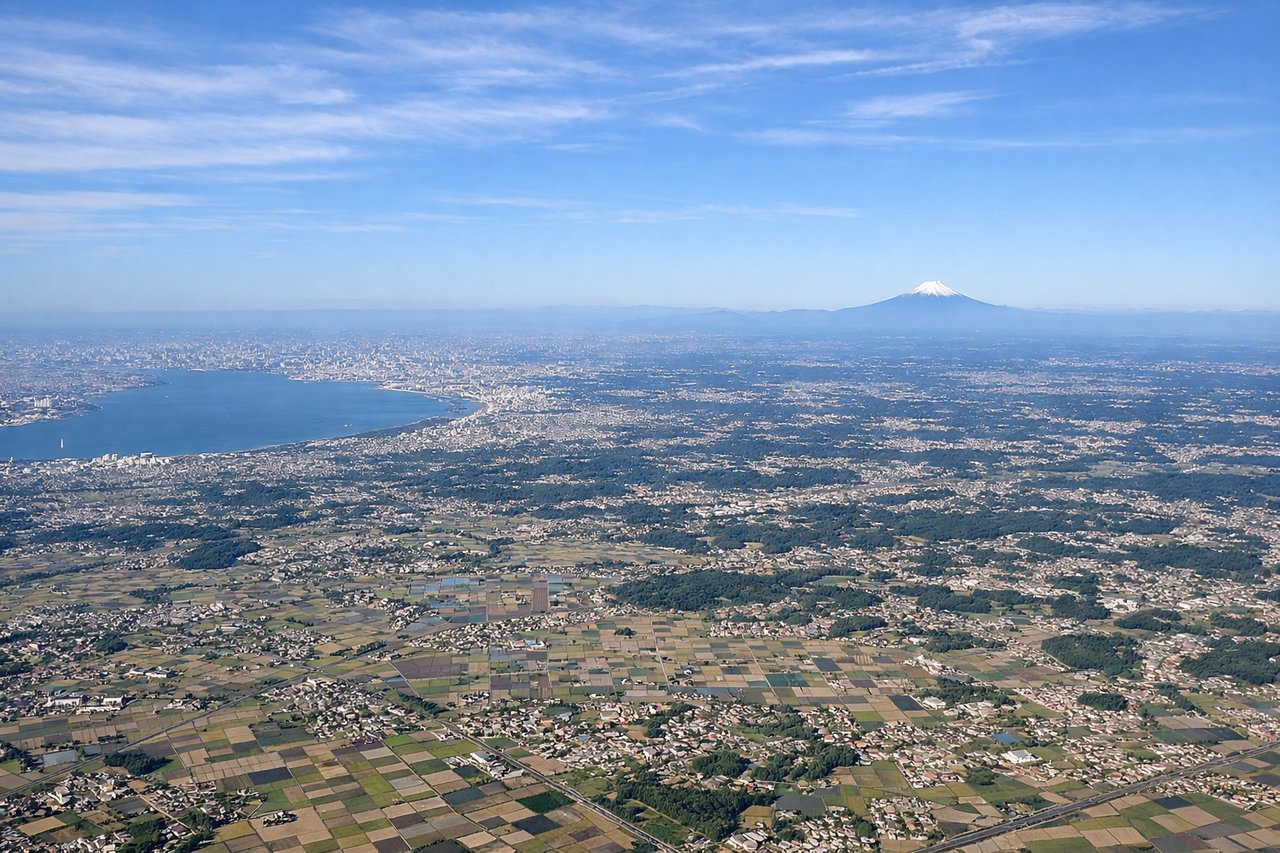
LEFTNRT typically departs on runway 34L/34R heading northwest, then turns east over the Pacific. Left side seats face south toward the Boso Peninsula and Tokyo Bay during the initial climb, giving a clear view of the bay and the dense urban sprawl of greater Tokyo. The right side faces inland toward Chiba Prefecture's flat agricultural land, which is far less interesting.

Landing at HNL
RIGHTHNL typically lands on runway 08R heading east, meaning the approach comes in from the ocean over the south shore of Oahu. Right side seats face south toward Diamond Head crater and the Waikiki coastline during the final approach, which is one of the most iconic aerial views in aviation. Left side faces north toward the Ko'olau Range interior, which is scenic but less iconic.
Will your flight be in sunlight?
Pick a date and time in the Sun Map to watch the sun move across your whole flight.
About This Route
Which side of the plane should I sit on flying from New Tokyo International (NRT) to Honolulu International (HNL)?
Sit on the Right side of the plane for the best views on flights from Tokyo to Honolulu. The Diamond Head and Waikiki approach on the right at landing is one of the most visually spectacular arrivals in commercial aviation. While the left side has a decent Tokyo Bay departure view, the right side's Honolulu arrival tips the balance. For the long transoceanic cruise, both sides see only open Pacific, so the arrival view is the deciding factor.
What can I see during takeoff from New Tokyo International in Tokyo?
During takeoff from New Tokyo International (NRT), sit on the Left side for the best views. NRT typically departs on runway 34L/34R heading northwest, then turns east over the Pacific. Left side seats face south toward the Boso Peninsula and Tokyo Bay during the initial climb, giving a clear view of the bay and the dense urban sprawl of greater Tokyo. The right side faces inland toward Chiba Prefecture's flat agricultural land, which is far less interesting. Notable sights include: Tokyo Bay, Boso Peninsula coastline, Chiba urban grid, Tokyo metropolitan area in the far distance to the west.
What can I see when landing at Honolulu International in Honolulu?
When landing at Honolulu International (HNL), sit on the Right side for the best views. HNL typically lands on runway 08R heading east, meaning the approach comes in from the ocean over the south shore of Oahu. Right side seats face south toward Diamond Head crater and the Waikiki coastline during the final approach, which is one of the most iconic aerial views in aviation. Left side faces north toward the Ko'olau Range interior, which is scenic but less iconic. Notable sights include: Diamond Head volcanic crater, Waikiki Beach strip, Honolulu downtown skyline, Pearl Harbor to the northwest.
How long is the flight from Tokyo to Honolulu?
The flight from New Tokyo International (NRT) to Honolulu International (HNL) takes about 8 hours. The shortest flight path between them is 3,813 miles (6,136 km); winds and air traffic control usually add a few percent.
What does the Tokyo to Honolulu flight path pass over?
The flight path arcs northeast over the North Pacific, passing south of the Aleutian Island chain. The midpoint is open ocean roughly 1,500 miles northwest of Hawaii. No significant landmasses are crossed — the route is entirely over the Pacific Ocean after leaving Honshu. Occasional cloud systems and the deep blue of the North Pacific gyre are the only features. The International Date Line is crossed approximately 3 to 4 hours into the flight.