While the Maui departure offers volcanic drama, the Salt Lake City landing provides superior scenic value with the Wasatch Range's jagged peaks, the Great Salt Lake, and dramatic topographic contrast. The landing experience outweighs the takeoff advantage, and the overall flight path from Hawaii to Utah favors the right side for the most visually distinctive terrain during the critical descent phase.
Flight Path
Arizona high desert plateau, Colorado River drainage systems, Grand Canyon region (distant, north of direct route), Utah Basin and Range topography with scattered mountain ranges, transition from volcanic Hawaiian landscape through southwestern desert to Rocky Mountain front
Great circle distance and headings ›.jpg?width=600)


Phase by phase
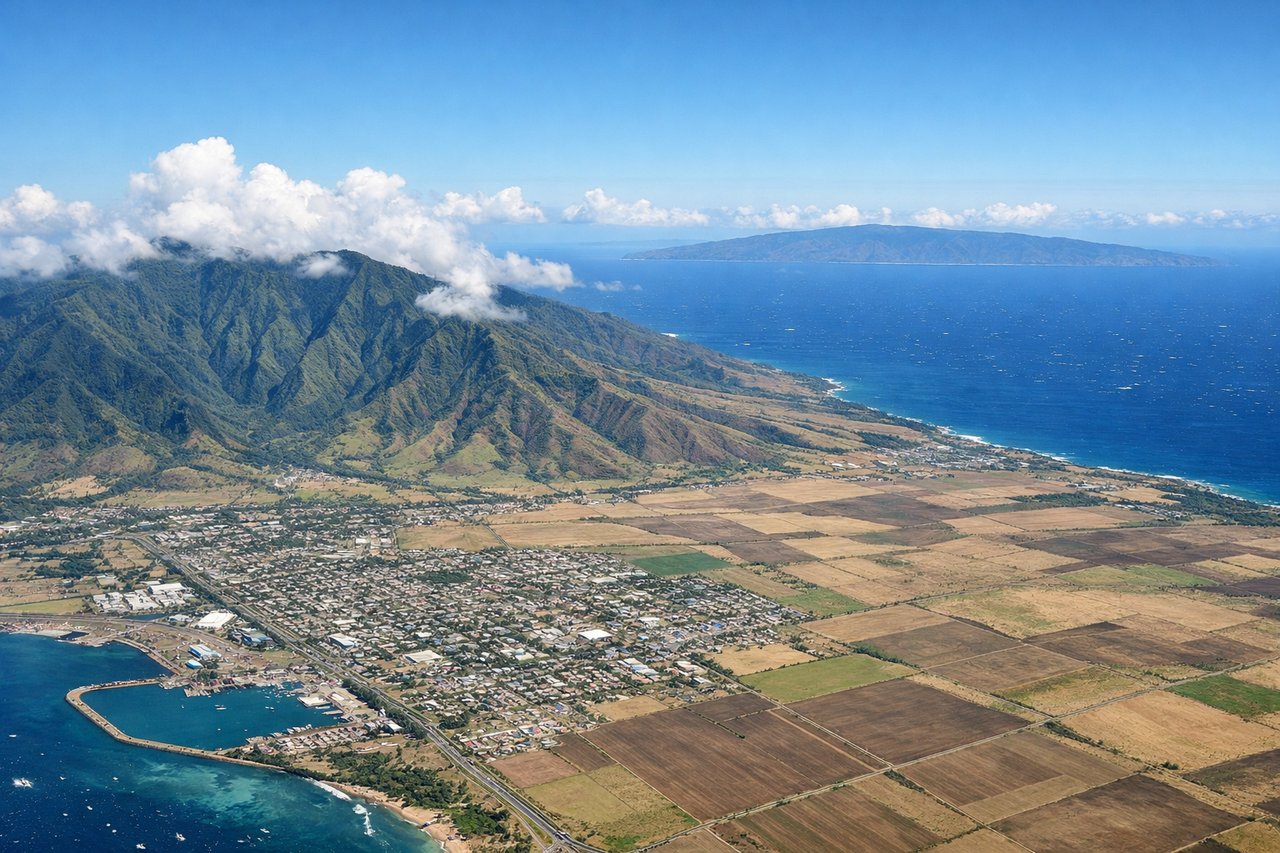
Takeoff from OGG
LEFTLeft side captures the dramatic volcanic West Maui and the Kahului harbor departure corridor. Right side faces the open Pacific with minimal immediate landmarks during climb-out.
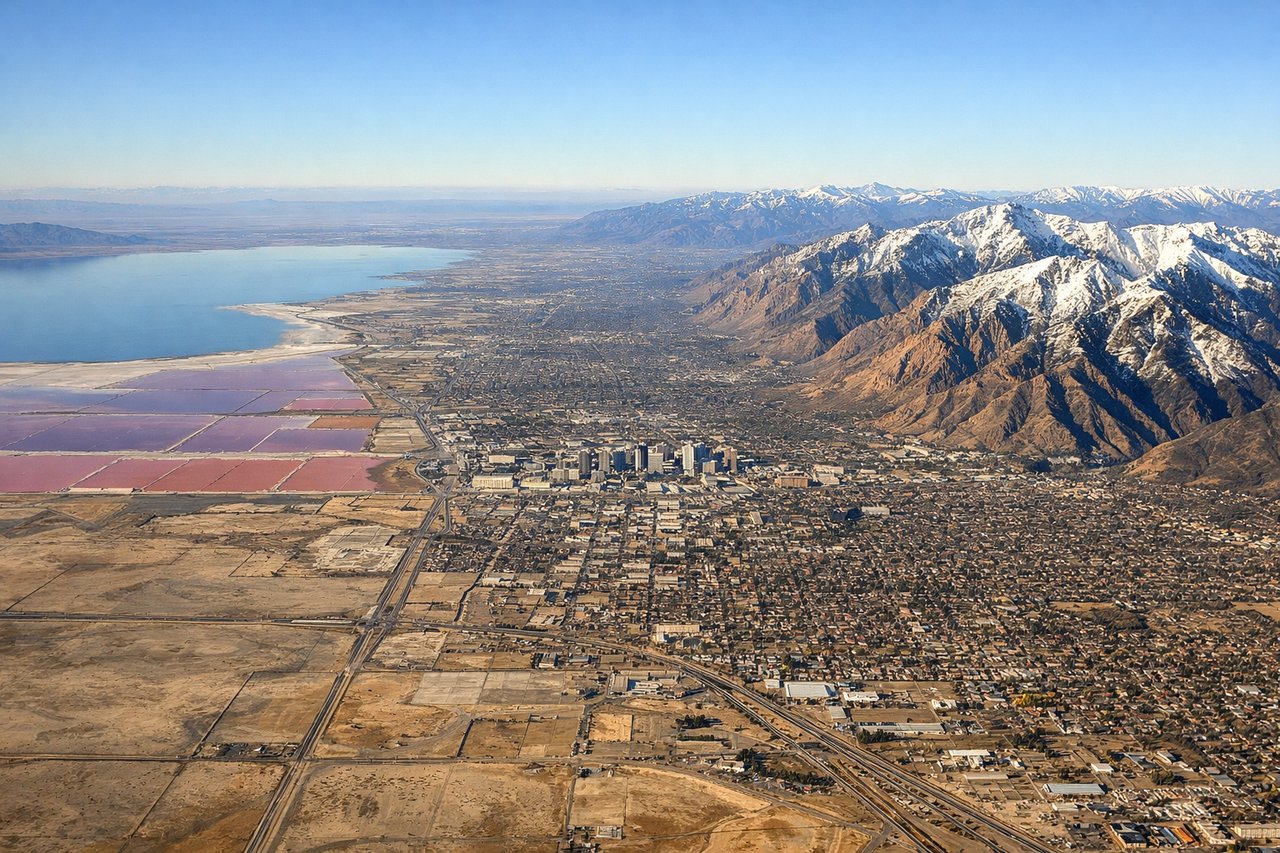
Landing at SLC
RIGHTRight side offers superior approach scenery: the Wasatch Range dominates with dramatic peaks, canyons, and the Great Salt Lake visible during descent. Left side shows the flat Great Basin and less distinctive terrain.
Landmarks on this routeAll landmarks →
Will your flight be in sunlight?
See exactly which side of the plane gets sun and shade at your departure time.
About This Route
Which side of the plane should I sit on flying from Kahului (OGG) to Salt Lake City International (SLC)?
Sit on the Right side of the plane for the best views on flights from Kahului to Salt Lake City. While the Maui departure offers volcanic drama, the Salt Lake City landing provides superior scenic value with the Wasatch Range's jagged peaks, the Great Salt Lake, and dramatic topographic contrast. The landing experience outweighs the takeoff advantage, and the overall flight path from Hawaii to Utah favors the right side for the most visually distinctive terrain during the critical descent phase.
What can I see during takeoff from Kahului in Kahului?
During takeoff from Kahului (OGG), sit on the Left side for the best views. Left side captures the dramatic volcanic West Maui and the Kahului harbor departure corridor. Right side faces the open Pacific with minimal immediate landmarks during climb-out. Notable sights include: West Maui volcanic ridge, Kahului Bay, Haleakala volcano (distant), central Maui isthmus.
What can I see when landing at Salt Lake City International in Salt Lake City?
When landing at Salt Lake City International (SLC), sit on the Right side for the best views. Right side offers superior approach scenery: the Wasatch Range dominates with dramatic peaks, canyons, and the Great Salt Lake visible during descent. Left side shows the flat Great Basin and less distinctive terrain. Notable sights include: Wasatch Range peaks, Great Salt Lake, Salt Lake Valley urban grid, Oquirrh Mountains.
How long is the flight from Kahului to Salt Lake City?
The flight from Kahului (OGG) to Salt Lake City International (SLC) takes 5h 15m.
What does the Kahului to Salt Lake City flight path pass over?
Arizona high desert plateau, Colorado River drainage systems, Grand Canyon region (distant, north of direct route), Utah Basin and Range topography with scattered mountain ranges, transition from volcanic Hawaiian landscape through southwestern desert to Rocky Mountain front