Right-side seats capture the Kerama Islands and Okinawa's interior during departure, while left-side seats dominate the landing sequence with Seto Inland Sea views. However, the takeoff scenery is more visually distinctive and geographically dramatic, making right the overall preference for this northbound route.
Flight Path
The flight path crosses the East China Sea between Okinawa and Hiroshima. Notable features include the transition from Okinawa's subtropical waters to the cooler Seto Inland Sea approaches, with the Onomichi Strait and western approaches to the Seto Inland Sea visible during the descent phase. The route passes east of the Shikoku island mass.
Great circle distance and headings ›Phase by phase
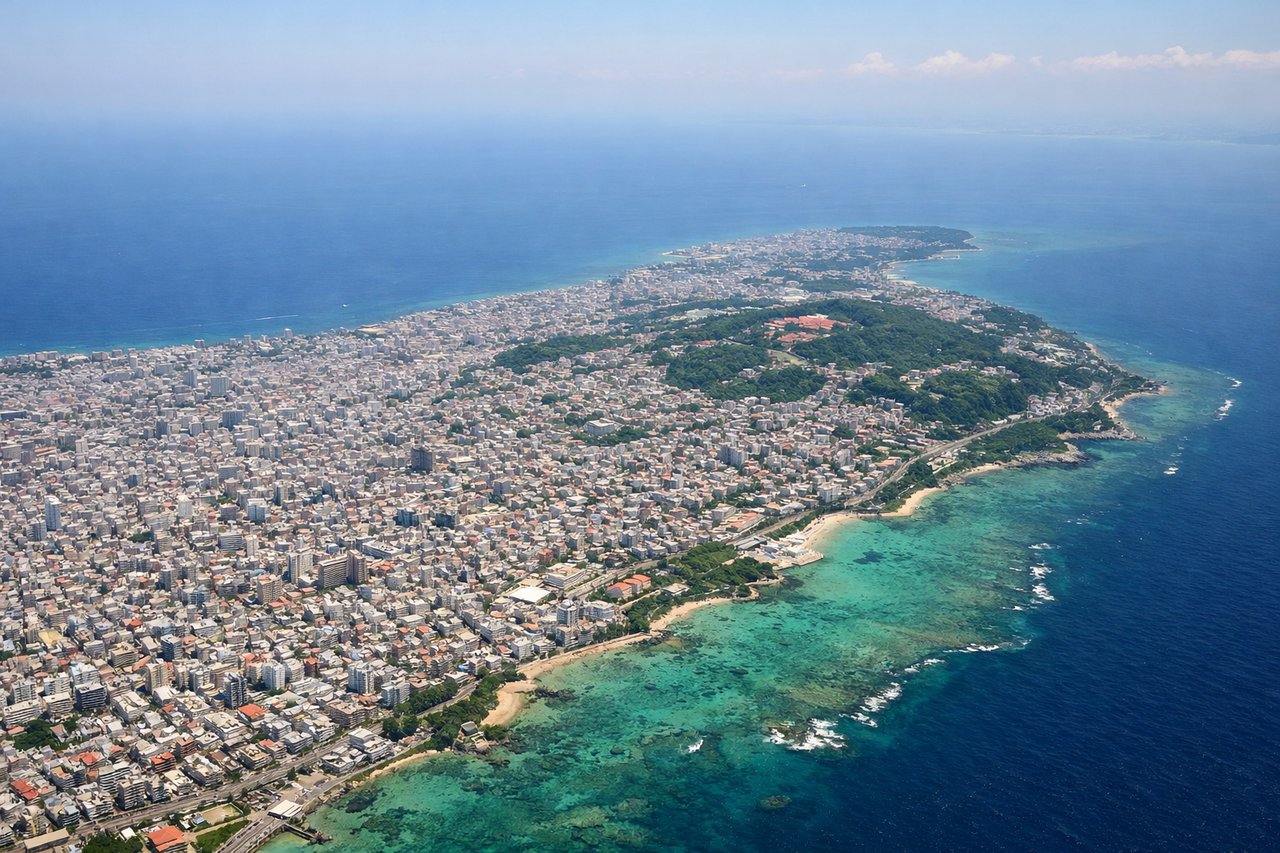
Takeoff from OKA
RIGHTRight-side seats offer views of Okinawa's interior and the Kerama Islands to the west as the aircraft climbs. The left side faces the East China Sea with minimal distinctive features during the initial climb-out.
Landing at HIJ
LEFTLeft-side seats provide excellent views of the Seto Inland Sea's eastern approaches and the Hiroshima Bay area during descent. The right side faces inland terrain with fewer distinctive water features during final approach.
Will your flight be in sunlight?
See exactly which side of the plane gets sun and shade at your departure time.
About This Route
Which side of the plane should I sit on flying from Naha (OKA) to Hiroshima (HIJ)?
Sit on the Right side of the plane for the best views on flights from Naha to Hiroshima. Right-side seats capture the Kerama Islands and Okinawa's interior during departure, while left-side seats dominate the landing sequence with Seto Inland Sea views. However, the takeoff scenery is more visually distinctive and geographically dramatic, making right the overall preference for this northbound route.
What can I see during takeoff from Naha in Naha?
During takeoff from Naha (OKA), sit on the Right side for the best views. Right-side seats offer views of Okinawa's interior and the Kerama Islands to the west as the aircraft climbs. The left side faces the East China Sea with minimal distinctive features during the initial climb-out. Notable sights include: Kerama Islands (west), central Okinawa plateau, Naha urban sprawl (south), East China Sea coastline.
What can I see when landing at Hiroshima in Hiroshima?
When landing at Hiroshima (HIJ), sit on the Left side for the best views. Left-side seats provide excellent views of the Seto Inland Sea's eastern approaches and the Hiroshima Bay area during descent. The right side faces inland terrain with fewer distinctive water features during final approach. Notable sights include: Seto Inland Sea (north and west), Hiroshima Bay, Ujina district waterfront, Itsukushima Strait approaches.
How long is the flight from Naha to Hiroshima?
The flight from Naha (OKA) to Hiroshima (HIJ) takes 1h 15m.
What does the Naha to Hiroshima flight path pass over?
The flight path crosses the East China Sea between Okinawa and Hiroshima. Notable features include the transition from Okinawa's subtropical waters to the cooler Seto Inland Sea approaches, with the Onomichi Strait and western approaches to the Seto Inland Sea visible during the descent phase. The route passes east of the Shikoku island mass.