While the right side wins at takeoff for Okinawa island views, the left side delivers the more dramatic payoff on approach into Tokyo with the bay and potential Fuji sighting. During the cruise portion heading northeast, the left side also tracks closer to the Ryukyu island chain and eventually the Kyushu coastline, offering more consistent land and coastal scenery over the roughly two-hour flight.
Flight Path
The route tracks northeast over the East China Sea, passing within view of the northern Ryukyu Islands including Amami-Oshima, then crossing the Osumi Strait near Kyushu's southern tip. The flight then passes over or near the Kyushu coastline before crossing Shikoku or the Kii Peninsula depending on routing, with the Pacific Ocean to the right and the Seto Inland Sea visible to the left at lower altitudes.
Great circle distance and headings ›

Phase by phase
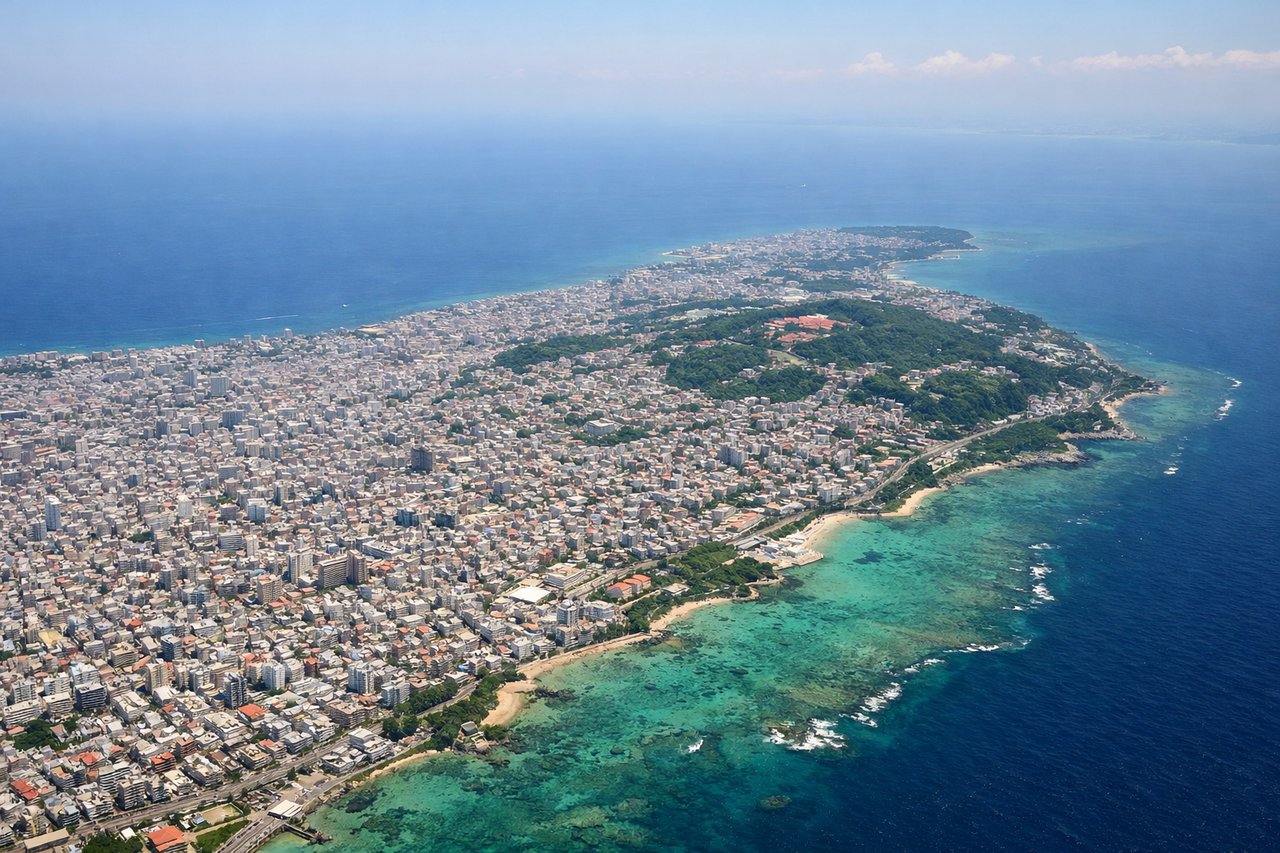
Takeoff from OKA
RIGHTNaha Airport's primary departure runway 18 sends aircraft southward before turning northeast, putting the right side over Naha city and the sheltered waters of Naha Port. You get a clear look back at the urban core of Okinawa's capital and the distinctive shape of the main island stretching northward.
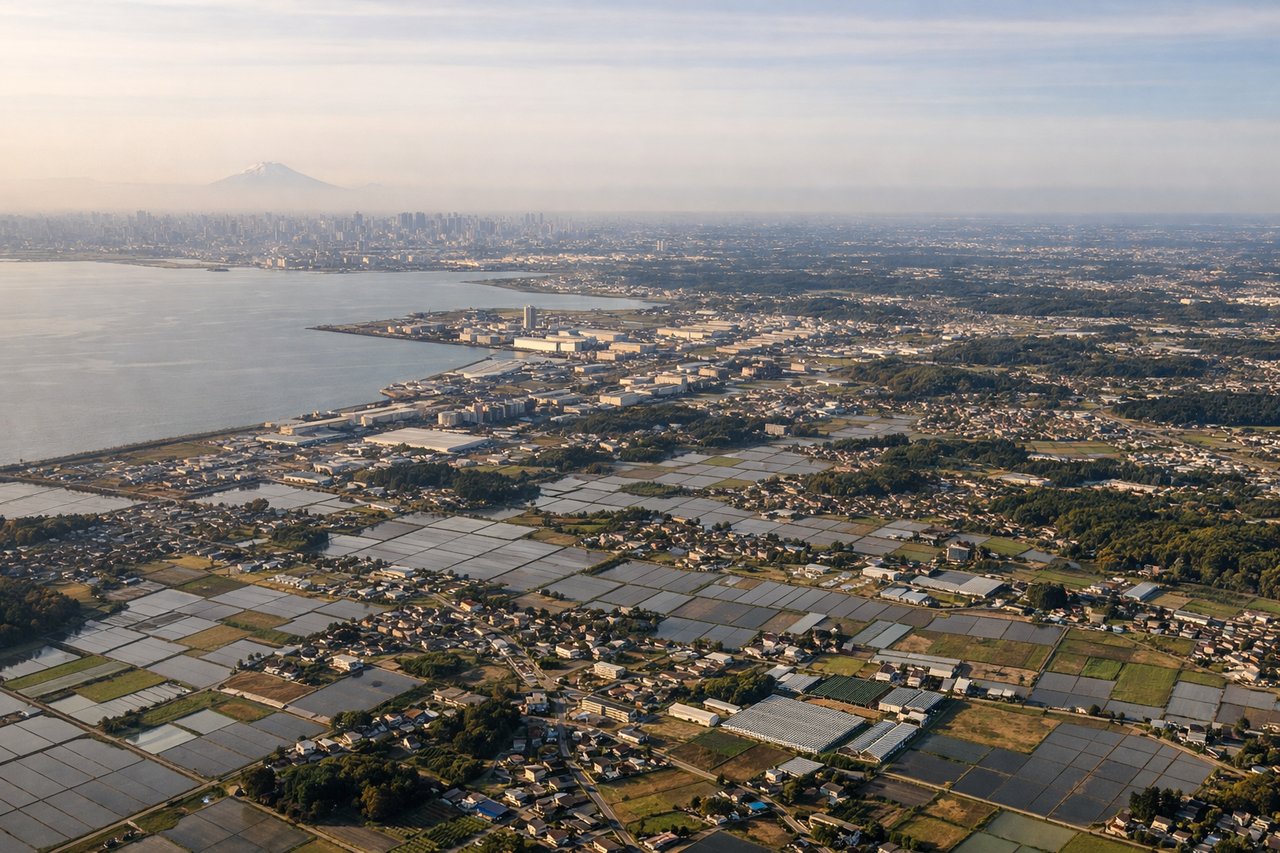
Landing at NRT
LEFTFlights from Okinawa typically approach NRT from the southwest, often landing on runway 34L or 16R. On a southwest approach, the left side faces Tokyo Bay and the greater Tokyo metropolitan area, giving you a sweeping view of the bay, the dense urban sprawl of Tokyo, and on clear days Mount Fuji on the distant western horizon.
Landmarks on this routeAll landmarks →
Will your flight be in sunlight?
See exactly which side of the plane gets sun and shade at your departure time.
About This Route
Which side of the plane should I sit on flying from Naha (OKA) to New Tokyo International (NRT)?
Sit on the Left side of the plane for the best views on flights from Naha to Tokyo. While the right side wins at takeoff for Okinawa island views, the left side delivers the more dramatic payoff on approach into Tokyo with the bay and potential Fuji sighting. During the cruise portion heading northeast, the left side also tracks closer to the Ryukyu island chain and eventually the Kyushu coastline, offering more consistent land and coastal scenery over the roughly two-hour flight.
What can I see during takeoff from Naha in Naha?
During takeoff from Naha (OKA), sit on the Right side for the best views. Naha Airport's primary departure runway 18 sends aircraft southward before turning northeast, putting the right side over Naha city and the sheltered waters of Naha Port. You get a clear look back at the urban core of Okinawa's capital and the distinctive shape of the main island stretching northward. Notable sights include: Naha city center and port, Okinawa's narrow main island spine, East China Sea coastline, Kerama Islands visible to the west.
What can I see when landing at New Tokyo International in Tokyo?
When landing at New Tokyo International (NRT), sit on the Left side for the best views. Flights from Okinawa typically approach NRT from the southwest, often landing on runway 34L or 16R. On a southwest approach, the left side faces Tokyo Bay and the greater Tokyo metropolitan area, giving you a sweeping view of the bay, the dense urban sprawl of Tokyo, and on clear days Mount Fuji on the distant western horizon. Notable sights include: Tokyo Bay, greater Tokyo metropolitan area, Mount Fuji (on clear days, distant western horizon), Chiba coastline.
How long is the flight from Naha to Tokyo?
The flight from Naha (OKA) to New Tokyo International (NRT) takes Approximately 2 hours 15 minutes.
What does the Naha to Tokyo flight path pass over?
The route tracks northeast over the East China Sea, passing within view of the northern Ryukyu Islands including Amami-Oshima, then crossing the Osumi Strait near Kyushu's southern tip. The flight then passes over or near the Kyushu coastline before crossing Shikoku or the Kii Peninsula depending on routing, with the Pacific Ocean to the right and the Seto Inland Sea visible to the left at lower altitudes.