Right-side seats dominate both takeoff and landing for this westbound route. The Missouri River and Omaha's geography reward the climb-out, while the Pacific coastline, Mission Bay, and San Diego's urban-coastal interface are far more visually compelling on approach than inland terrain visible from the left.
Flown OMA to SAN? Did we get it right?
Flight Path
Omaha to San Diego is 1,311 miles (2,109 km), a flight of about 3 hours 10 minutes.
The flight path crosses the High Plains of Colorado and Wyoming, passing south of the Rocky Mountains. Notable features include the South Platte River valley near Denver (visible to the north on left-side seats), the Colorado Front Range as a distant ridge, and the vast high desert plateau of eastern Colorado and western Kansas. Further west, the San Juan Mountains and the Colorado Plateau become visible on the left side during cruise. As the flight approaches California, the Sierra Nevada and the Mojave Desert dominate the landscape. The Salton Sea (a large inland salt lake) is visible to the left during the final descent into San Diego, along with the Peninsular Ranges.
Great circle distance and headings ›


Phase by phase
Takeoff from OMA
RIGHTRight-side seats capture the Missouri River and Omaha's urban grid during westbound climb-out. The river's distinctive meanders are clearly visible from 5,000–10,000 feet, and you'll see the city's street layout and surrounding agricultural patchwork receding beneath the wing.
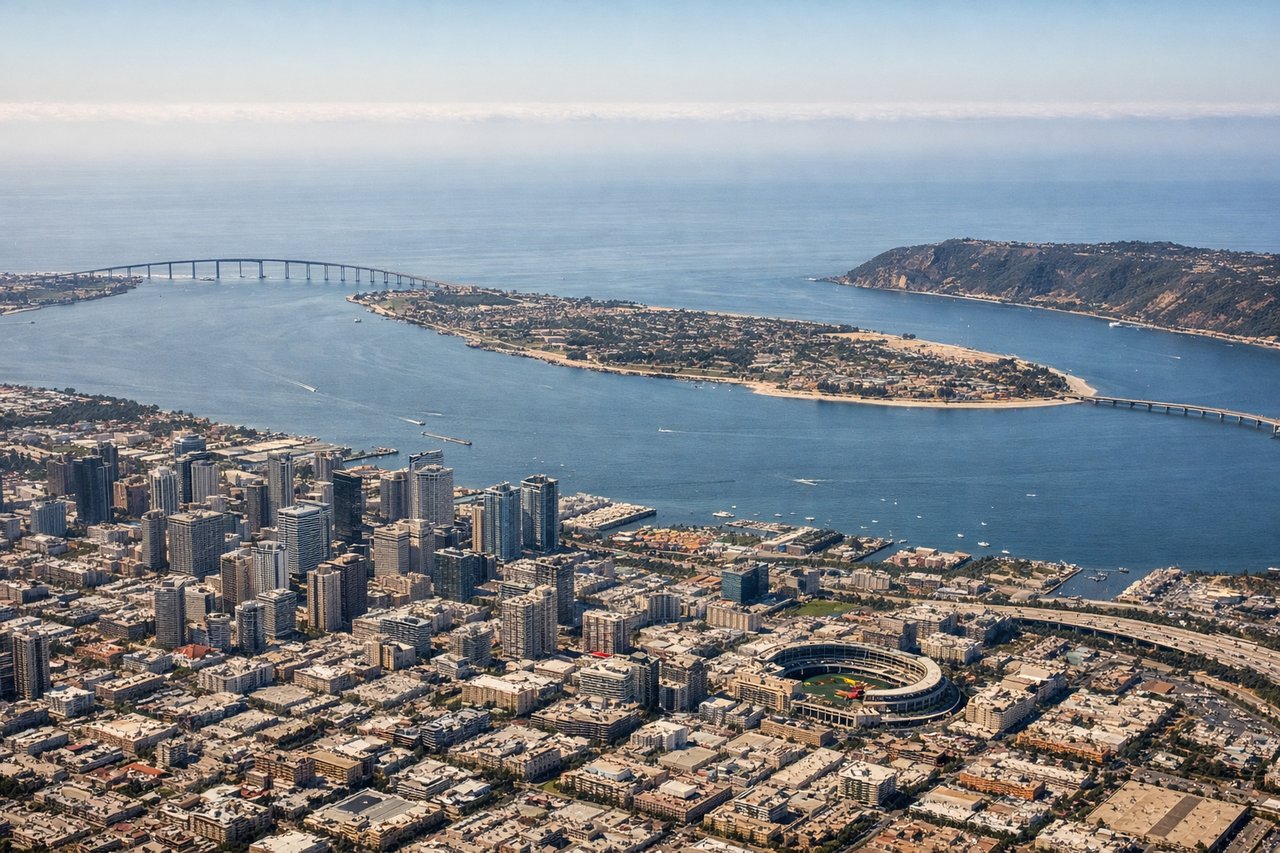
Landing at SAN
RIGHTRight-side seats offer the best views during the eastbound approach into San Diego. You'll see the Pacific coastline, Mission Bay, and the San Diego Bay complex with downtown's high-rises visible before final descent. The contrast between ocean, urban development, and surrounding hills is striking.
Will your flight be in sunlight?
Pick a date and time in the Sun Map to watch the sun move across your whole flight.
About This Route
Which side of the plane should I sit on flying from Eppley Afld (OMA) to San Diego International Lindbergh Fld (SAN)?
Sit on the Right side of the plane for the best views on flights from Omaha to San Diego. Right-side seats dominate both takeoff and landing for this westbound route. The Missouri River and Omaha's geography reward the climb-out, while the Pacific coastline, Mission Bay, and San Diego's urban-coastal interface are far more visually compelling on approach than inland terrain visible from the left.
What can I see during takeoff from Eppley Afld in Omaha?
During takeoff from Eppley Afld (OMA), sit on the Right side for the best views. Right-side seats capture the Missouri River and Omaha's urban grid during westbound climb-out. The river's distinctive meanders are clearly visible from 5,000–10,000 feet, and you'll see the city's street layout and surrounding agricultural patchwork receding beneath the wing. Notable sights include: Missouri River, Omaha metropolitan area, agricultural grid pattern of eastern Nebraska, Platte River confluence (visible to the south).
What can I see when landing at San Diego International Lindbergh Fld in San Diego?
When landing at San Diego International Lindbergh Fld (SAN), sit on the Right side for the best views. Right-side seats offer the best views during the eastbound approach into San Diego. You'll see the Pacific coastline, Mission Bay, and the San Diego Bay complex with downtown's high-rises visible before final descent. The contrast between ocean, urban development, and surrounding hills is striking. Notable sights include: Pacific Ocean and Southern California coastline, Mission Bay, San Diego Bay with downtown skyline, Point Loma peninsula.
How long is the flight from Omaha to San Diego?
The flight from Eppley Afld (OMA) to San Diego International Lindbergh Fld (SAN) takes about 3 hours 10 minutes. The shortest flight path between them is 1,311 miles (2,109 km); winds and air traffic control usually add a few percent.
What does the Omaha to San Diego flight path pass over?
The flight path crosses the High Plains of Colorado and Wyoming, passing south of the Rocky Mountains. Notable features include the South Platte River valley near Denver (visible to the north on left-side seats), the Colorado Front Range as a distant ridge, and the vast high desert plateau of eastern Colorado and western Kansas. Further west, the San Juan Mountains and the Colorado Plateau become visible on the left side during cruise. As the flight approaches California, the Sierra Nevada and the Mojave Desert dominate the landscape. The Salton Sea (a large inland salt lake) is visible to the left during the final descent into San Diego, along with the Peninsular Ranges.