Oslo to Seattle is 4,554 miles (7,329 km), a flight of about 10 hours.
While takeoff offers decent fjord views on the right, the landing approach on the left provides far more dramatic scenery with Mount Rainier and the Cascade Range as dominant visual features. The left side captures the most memorable part of this transatlantic route.
Flight Path
The flight crosses the North Atlantic at high altitude (typically 35,000+ feet). Notable features along the route include: Greenland's ice sheet (visible on clear days, roughly 4-5 hours into flight), the Canadian Arctic archipelago and northern Canadian terrain, and the Rocky Mountains as the aircraft approaches North America. Most of the mid-flight occurs over open ocean where window views are limited to cloud patterns and the curvature of the horizon.
Great circle distance and headings ›

.jpg?width=600)

Phase by phase

Takeoff from OSL
RIGHTRight-side seats offer views of the Oslo fjord system and the forested terrain east of the airport during the initial climb. The aircraft departs northwestward, so right-side passengers see the Oslofjord's eastern shoreline and inland lakes receding below.
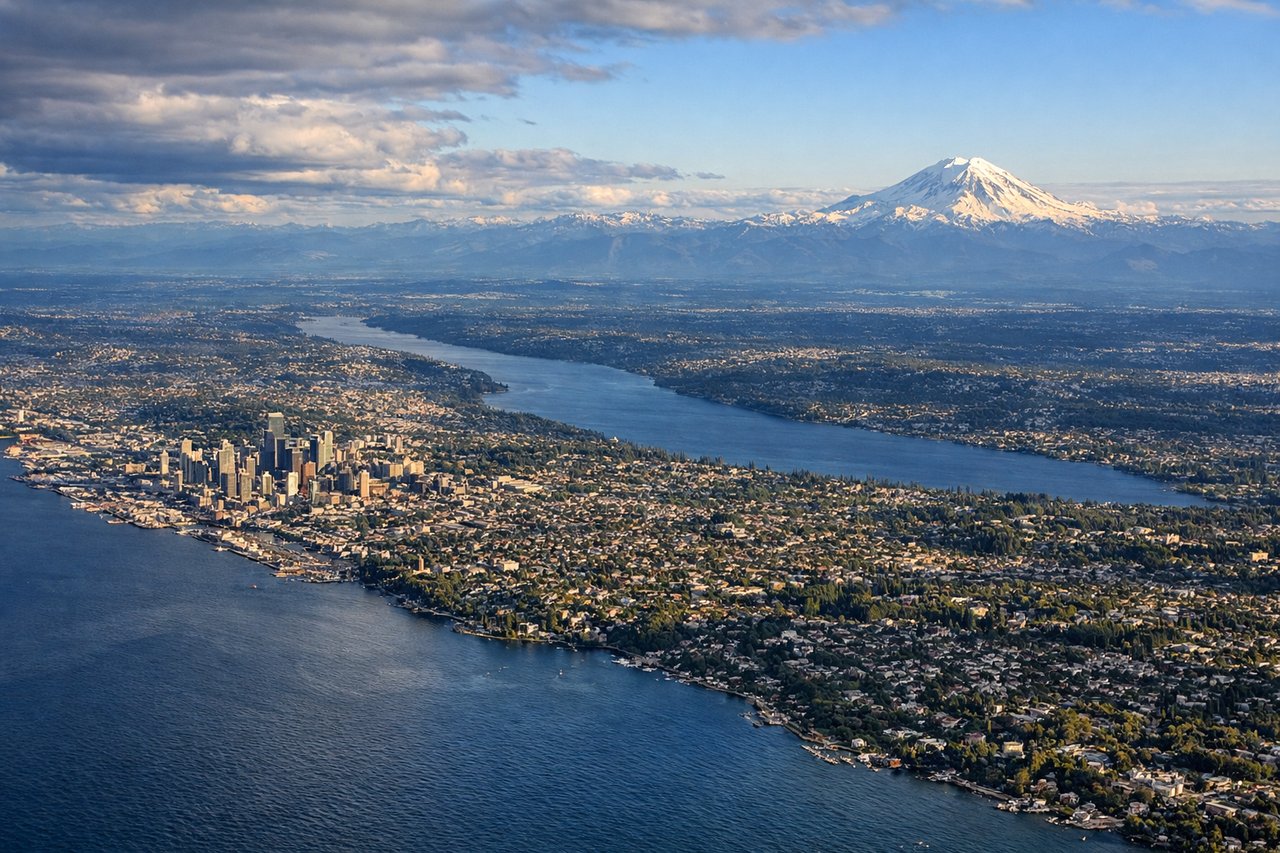
Landing at SEA
LEFTLeft-side seats provide excellent views during the approach to Seattle-Tacoma. The aircraft descends from the northeast over the Cascade Range foothills and Puget Sound, with left-side passengers seeing Mount Rainier, the Cascade peaks, and the sound's eastern shoreline.
Landmarks on this routeAll landmarks →
Will your flight be in sunlight?
Pick a date and time in the Sun Map to watch the sun move across your whole flight.
About This Route
Which side of the plane should I sit on flying from Oslo Gardermoen (OSL) to Seattle Tacoma International (SEA)?
Sit on the Left side of the plane for the best views on flights from Oslo to Seattle. While takeoff offers decent fjord views on the right, the landing approach on the left provides far more dramatic scenery with Mount Rainier and the Cascade Range as dominant visual features. The left side captures the most memorable part of this transatlantic route.
What can I see during takeoff from Oslo Gardermoen in Oslo?
During takeoff from Oslo Gardermoen (OSL), sit on the Right side for the best views. Right-side seats offer views of the Oslo fjord system and the forested terrain east of the airport during the initial climb. The aircraft departs northwestward, so right-side passengers see the Oslofjord's eastern shoreline and inland lakes receding below. Notable sights include: Oslofjord (eastern arm), Lillehammer region forests, Mjøsa lake (visible in distance), Oslo city sprawl to the southwest.
What can I see when landing at Seattle Tacoma International in Seattle?
When landing at Seattle Tacoma International (SEA), sit on the Left side for the best views. Left-side seats provide excellent views during the approach to Seattle-Tacoma. The aircraft descends from the northeast over the Cascade Range foothills and Puget Sound, with left-side passengers seeing Mount Rainier, the Cascade peaks, and the sound's eastern shoreline. Notable sights include: Mount Rainier (dominant snow-capped peak), Cascade Range foothills, Puget Sound eastern shore, Lake Washington.
How long is the flight from Oslo to Seattle?
The flight from Oslo Gardermoen (OSL) to Seattle Tacoma International (SEA) takes about 10 hours. The shortest flight path between them is 4,554 miles (7,329 km); winds and air traffic control usually add a few percent.
What does the Oslo to Seattle flight path pass over?
The flight crosses the North Atlantic at high altitude (typically 35,000+ feet). Notable features along the route include: Greenland's ice sheet (visible on clear days, roughly 4-5 hours into flight), the Canadian Arctic archipelago and northern Canadian terrain, and the Rocky Mountains as the aircraft approaches North America. Most of the mid-flight occurs over open ocean where window views are limited to cloud patterns and the curvature of the horizon.