While the right side wins the takeoff with the Cascade volcanoes, the left side carries the flight: the great-circle route swings north across Hudson Bay and passes near southern Greenland's ice cap and fjords, a genuinely rare and dramatic cruise-phase view, and the left side also gets the Amsterdam cityscape on arrival.
Flight Path
Alberta and Saskatchewan prairies giving way to Hudson Bay, then the Labrador Sea and the glaciated southern tip of Greenland before the route continues over the North Atlantic toward the Dutch coast
Great circle distance and headings ›

.jpg?width=600)


Phase by phase

Takeoff from PDX
RIGHTDeparting PDX on runway 28, the aircraft climbs west over the Willamette Valley then banks right to head northeast toward Canada. That turn puts the Cascade volcanoes—Mount St. Helens and Mount Adams—directly under the right wing, a much more dramatic sight than the receding city view on the left.
Landing at AMS
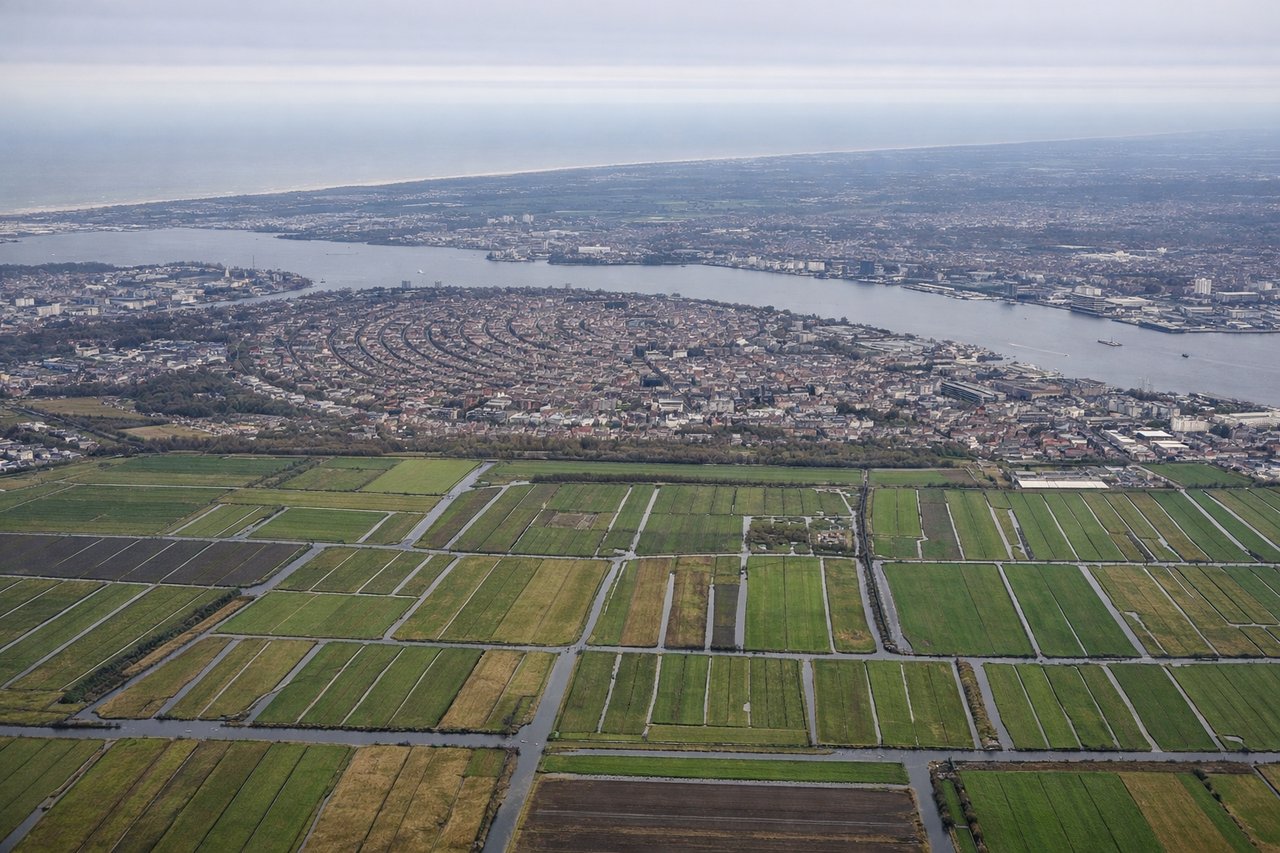
LEFTArriving from the North Sea, flights into Schiphol typically curve south to line up with the Polderbaan or Zwanenburgbaan, passing just west of Amsterdam. That puts the city's canal ring, harbor, and the glint of the IJsselmeer on the left side of the aircraft during final descent.
Landmarks on this routeAll landmarks →
Will your flight be in sunlight?
See exactly which side of the plane gets sun and shade at your departure time.
About This Route
Which side of the plane should I sit on flying from Portland International (PDX) to Schiphol (AMS)?
Sit on the Left side of the plane for the best views on flights from Portland to Amsterdam. While the right side wins the takeoff with the Cascade volcanoes, the left side carries the flight: the great-circle route swings north across Hudson Bay and passes near southern Greenland's ice cap and fjords, a genuinely rare and dramatic cruise-phase view, and the left side also gets the Amsterdam cityscape on arrival.
What can I see during takeoff from Portland International in Portland?
During takeoff from Portland International (PDX), sit on the Right side for the best views. Departing PDX on runway 28, the aircraft climbs west over the Willamette Valley then banks right to head northeast toward Canada. That turn puts the Cascade volcanoes—Mount St. Helens and Mount Adams—directly under the right wing, a much more dramatic sight than the receding city view on the left. Notable sights include: Mount St. Helens, Mount Adams, the Columbia River near Vancouver WA, Cascade foothills.
What can I see when landing at Schiphol in Amsterdam?
When landing at Schiphol (AMS), sit on the Left side for the best views. Arriving from the North Sea, flights into Schiphol typically curve south to line up with the Polderbaan or Zwanenburgbaan, passing just west of Amsterdam. That puts the city's canal ring, harbor, and the glint of the IJsselmeer on the left side of the aircraft during final descent. Notable sights include: Amsterdam canal ring and church spires, IJ harbor, IJsselmeer, Haarlemmermeer polder fields.
How long is the flight from Portland to Amsterdam?
The flight from Portland International (PDX) to Schiphol (AMS) takes 9h 15m.
What does the Portland to Amsterdam flight path pass over?
Alberta and Saskatchewan prairies giving way to Hudson Bay, then the Labrador Sea and the glaciated southern tip of Greenland before the route continues over the North Atlantic toward the Dutch coast