The right side wins across every phase: Cascade volcanoes at departure, then during the long North Pacific cruise it faces the Alaska coastal ranges, Aleutian volcanic islands, and Kamchatka's volcanic peaks, finishing with Tokyo Bay and a possible Mount Fuji view on arrival. The left side spends most of the 10+ hour flight over featureless open ocean.
Flight Path
The flight's midpoint lies over the North Pacific near the Aleutian Island chain and the Kamchatka Peninsula, close to the International Date Line, where the great-circle route curves along the volcanic arc separating the Pacific from the Bering Sea.
Great circle distance and headings ›

Phase by phase
Takeoff from PDX
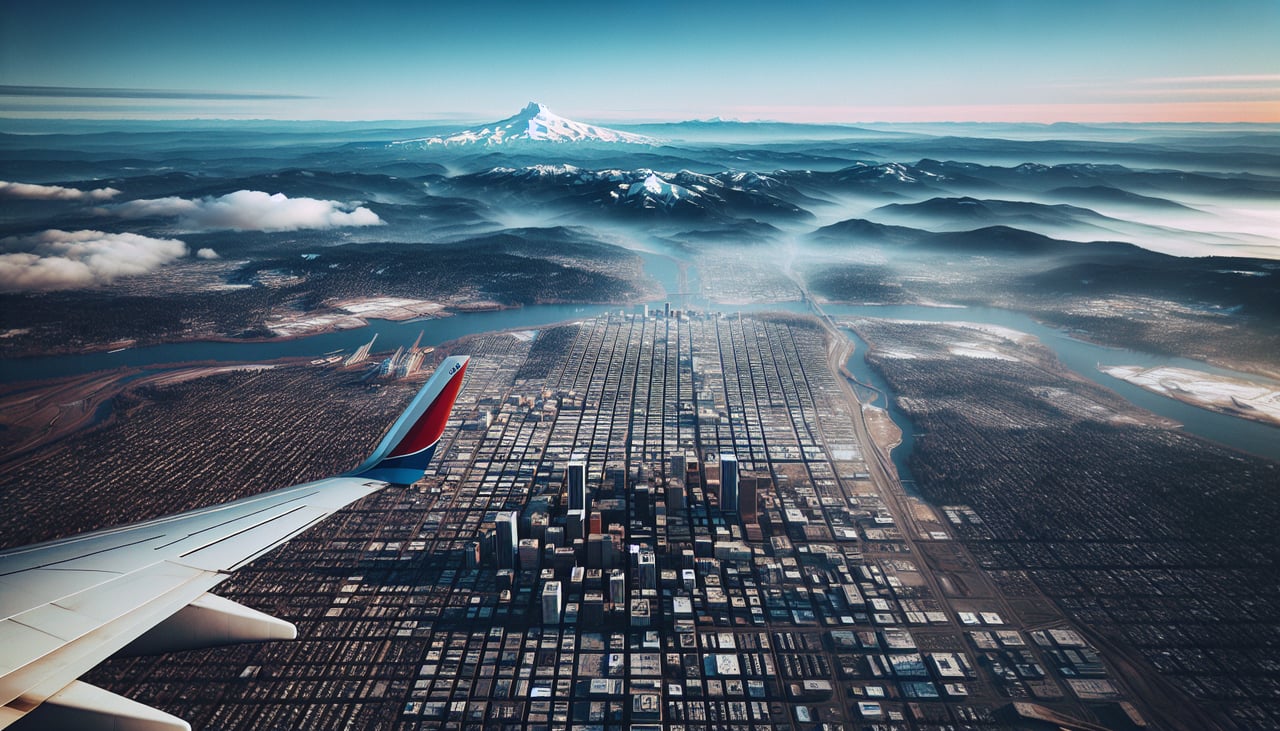
RIGHTDeparting PDX, aircraft typically climb out to the west on 28 then bank north toward the Gulf of Alaska routing, putting the Cascade volcanoes on the right side. Passengers get a close, elevated view of Mount St. Helens, Mount Adams, and Mount Rainier rising above the forested Cascade foothills.
Landing at NRT
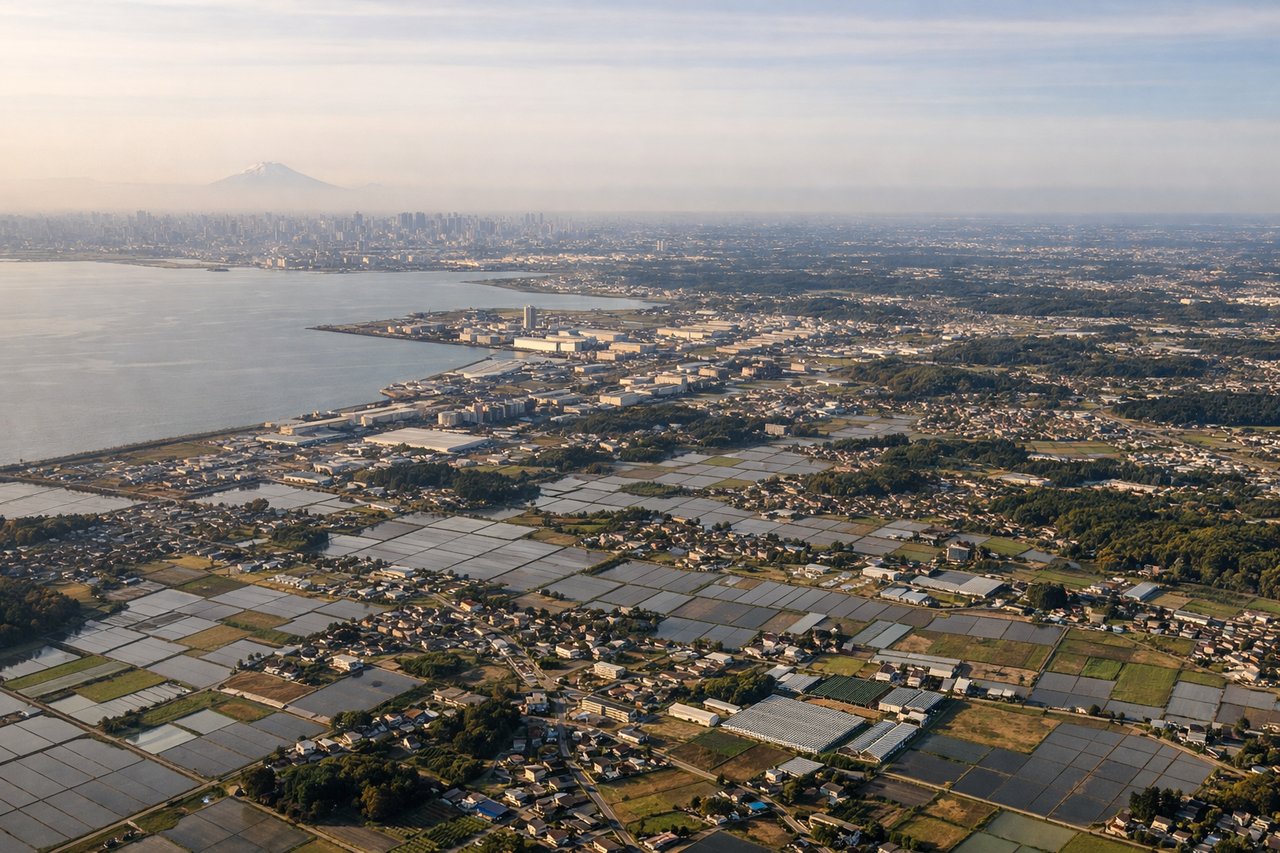
RIGHTArriving from the North Pacific/Kamchatka side, flights descend over the Boso Peninsula and Chiba coastline before turning onto final. The right side typically faces west toward Tokyo Bay and, on clear days, the distant silhouette of Mount Fuji beyond the city haze.
Landmarks on this routeAll landmarks →
Will your flight be in sunlight?
See exactly which side of the plane gets sun and shade at your departure time.
About This Route
Which side of the plane should I sit on flying from Portland International (PDX) to New Tokyo International (NRT)?
Sit on the Right side of the plane for the best views on flights from Portland to Tokyo. The right side wins across every phase: Cascade volcanoes at departure, then during the long North Pacific cruise it faces the Alaska coastal ranges, Aleutian volcanic islands, and Kamchatka's volcanic peaks, finishing with Tokyo Bay and a possible Mount Fuji view on arrival. The left side spends most of the 10+ hour flight over featureless open ocean.
What can I see during takeoff from Portland International in Portland?
During takeoff from Portland International (PDX), sit on the Right side for the best views. Departing PDX, aircraft typically climb out to the west on 28 then bank north toward the Gulf of Alaska routing, putting the Cascade volcanoes on the right side. Passengers get a close, elevated view of Mount St. Helens, Mount Adams, and Mount Rainier rising above the forested Cascade foothills. Notable sights include: Mount St. Helens, Mount Adams, Mount Rainier, Columbia River lowlands.
What can I see when landing at New Tokyo International in Tokyo?
When landing at New Tokyo International (NRT), sit on the Right side for the best views. Arriving from the North Pacific/Kamchatka side, flights descend over the Boso Peninsula and Chiba coastline before turning onto final. The right side typically faces west toward Tokyo Bay and, on clear days, the distant silhouette of Mount Fuji beyond the city haze. Notable sights include: Tokyo Bay, Boso Peninsula coastline, Mount Fuji (distant), Chiba farmland surrounding Narita.
How long is the flight from Portland to Tokyo?
The flight from Portland International (PDX) to New Tokyo International (NRT) takes 10h 50m.
What does the Portland to Tokyo flight path pass over?
The flight's midpoint lies over the North Pacific near the Aleutian Island chain and the Kamchatka Peninsula, close to the International Date Line, where the great-circle route curves along the volcanic arc separating the Pacific from the Bering Sea.