While takeoff favors the right for Cauca River views, the landing approach on runway 01L provides superior and more extended views of the Aburrá Valley and Medellín's geography. The landing experience outweighs the brief takeoff advantage.
Flight Path
The flight path crosses the northern coffee region and enters the Aburrá Valley corridor. Notable features include the transition from rolling coffee plantation terrain to steeper cordillera slopes, the Río Cauca remaining visible for much of the route as a geographic reference, and the gradual widening of the Aburrá Valley as the aircraft descends toward Medellín. The Central Cordillera's eastern and western walls frame the entire approach corridor.
Great circle distance and headings ›

Phase by phase
Takeoff from PEI
RIGHTPEI typically departs runway 01 (northbound). Right-side seats offer immediate views of the Cauca River valley and the western slopes of the Central Cordillera as the aircraft climbs northeastward toward MDE.
Landing at MDE
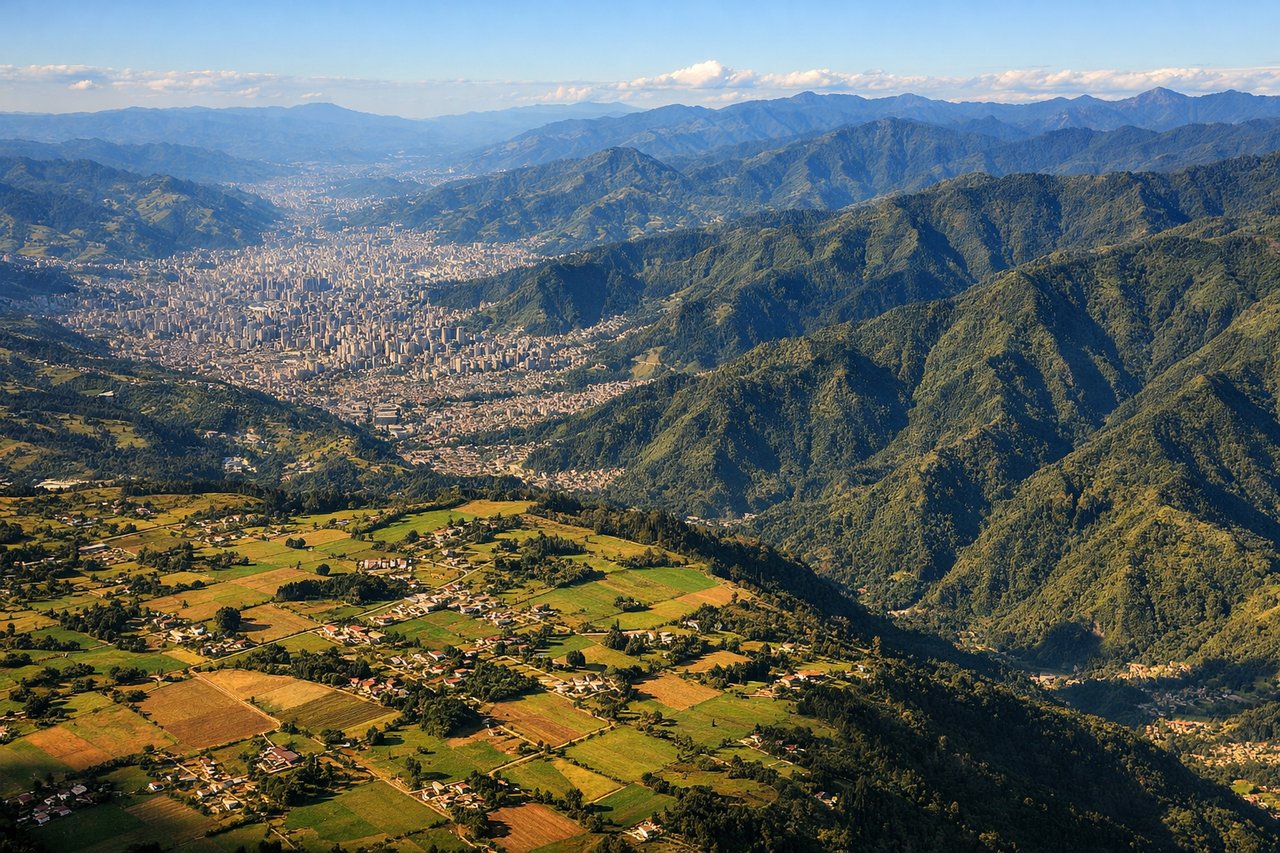
LEFTMDE's primary runway is 01L/19R. Approaching from the south on runway 01L, left-side seats provide direct views of the Aburrá Valley, Medellín's urban sprawl, and the Río Cauca as it flows northward through the city. The descent path aligns perfectly with the valley's north-south orientation.
Landmarks on this routeAll landmarks →
Will your flight be in sunlight?
See exactly which side of the plane gets sun and shade at your departure time.
About This Route
Which side of the plane should I sit on flying from Matecana (PEI) to Jose Maria Cordova (MDE)?
Sit on the Left side of the plane for the best views on flights from Pereira to Rio Negro. While takeoff favors the right for Cauca River views, the landing approach on runway 01L provides superior and more extended views of the Aburrá Valley and Medellín's geography. The landing experience outweighs the brief takeoff advantage.
What can I see during takeoff from Matecana in Pereira?
During takeoff from Matecana (PEI), sit on the Right side for the best views. PEI typically departs runway 01 (northbound). Right-side seats offer immediate views of the Cauca River valley and the western slopes of the Central Cordillera as the aircraft climbs northeastward toward MDE. Notable sights include: Cauca River (visible as a ribbon winding through the valley floor), Western slopes of Cordillera Central, Pereira city sprawl (directly below during initial climb), Coffee region terrain (rolling hills with agricultural patchwork).
What can I see when landing at Jose Maria Cordova in Rio Negro?
When landing at Jose Maria Cordova (MDE), sit on the Left side for the best views. MDE's primary runway is 01L/19R. Approaching from the south on runway 01L, left-side seats provide direct views of the Aburrá Valley, Medellín's urban sprawl, and the Río Cauca as it flows northward through the city. The descent path aligns perfectly with the valley's north-south orientation. Notable sights include: Aburrá Valley (the entire urban corridor), Río Cauca (flowing north through the valley), Medellín's downtown district and surrounding neighborhoods, Eastern and western cordillera walls (framing the valley).
How long is the flight from Pereira to Rio Negro?
The flight from Matecana (PEI) to Jose Maria Cordova (MDE) takes Approximately 25-30 minutes.
What does the Pereira to Rio Negro flight path pass over?
The flight path crosses the northern coffee region and enters the Aburrá Valley corridor. Notable features include the transition from rolling coffee plantation terrain to steeper cordillera slopes, the Río Cauca remaining visible for much of the route as a geographic reference, and the gradual widening of the Aburrá Valley as the aircraft descends toward Medellín. The Central Cordillera's eastern and western walls frame the entire approach corridor.