The left side wins both the departure, with the Yanshan Mountains and Great Wall terrain near Beijing, and the arrival, with a clear view of Mount Fuji and the Izu Peninsula on the Haneda approach — giving it far more dramatic, named terrain than the flatter, water-dominated right side.
Flight Path
Bohai Sea and Yellow Sea crossing, the Korean Peninsula near Seoul/Daegu, the Korea Strait, and the coastal approach to Honshu near the Sea of Japan side of Kyushu/Chugoku before the final descent into Tokyo.
Great circle distance and headings ›


Phase by phase
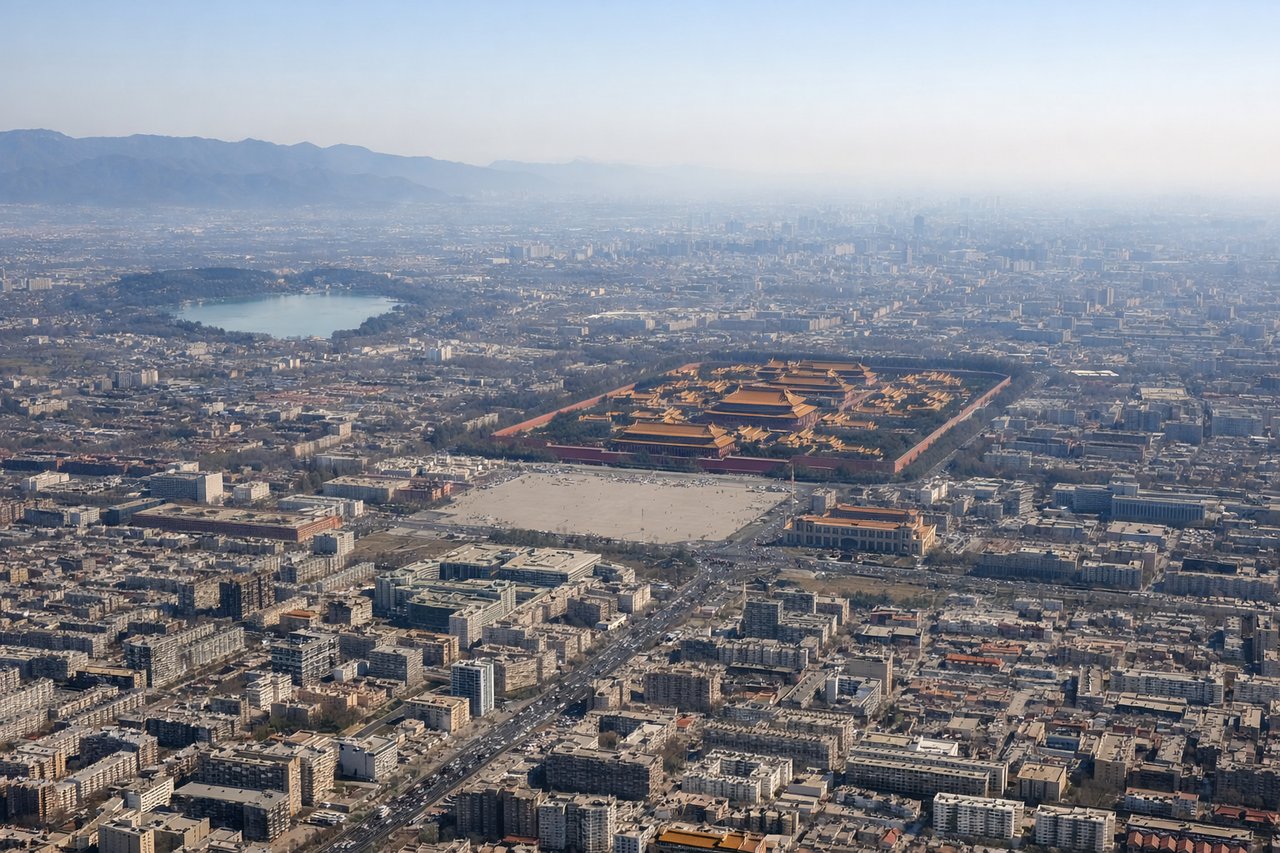
Takeoff from PEK
LEFTUnder PEK's common northerly departure flow, aircraft climb out toward Huairou/Miyun before turning right onto an easterly heading for Japan, putting the Yanshan Mountains and nearby Great Wall sections on the left. The right side mainly shows the flat, hazy North China Plain and Beijing's suburban sprawl.
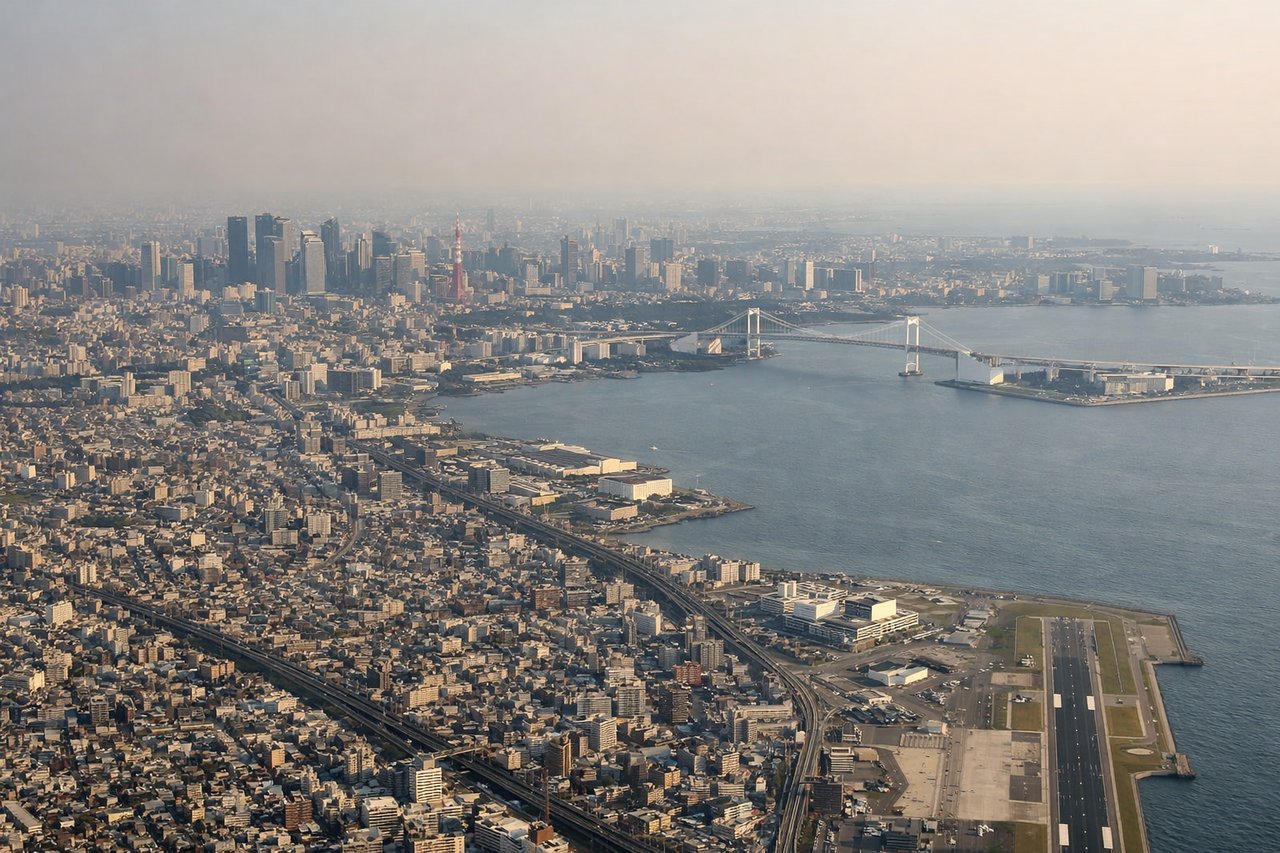
Landing at HND
LEFTOn the typical south-facing arrival into Haneda's 34L/34R runways, the aircraft lines up heading north over Tokyo Bay, putting Mount Fuji, the Izu Peninsula, and the Hakone highlands off to the west on the left side. The right side instead faces Chiba and the open Pacific approach, with less distinctive scenery.
Landmarks on this routeAll landmarks →
Will your flight be in sunlight?
See exactly which side of the plane gets sun and shade at your departure time.
About This Route
Which side of the plane should I sit on flying from Capital (PEK) to Tokyo International (HND)?
Sit on the Left side of the plane for the best views on flights from Beijing to Tokyo. The left side wins both the departure, with the Yanshan Mountains and Great Wall terrain near Beijing, and the arrival, with a clear view of Mount Fuji and the Izu Peninsula on the Haneda approach — giving it far more dramatic, named terrain than the flatter, water-dominated right side.
What can I see during takeoff from Capital in Beijing?
During takeoff from Capital (PEK), sit on the Left side for the best views. Under PEK's common northerly departure flow, aircraft climb out toward Huairou/Miyun before turning right onto an easterly heading for Japan, putting the Yanshan Mountains and nearby Great Wall sections on the left. The right side mainly shows the flat, hazy North China Plain and Beijing's suburban sprawl. Notable sights include: Yanshan Mountains, Great Wall (Mutianyu/Huairou sections), Miyun Reservoir, Yanqing basin foothills.
What can I see when landing at Tokyo International in Tokyo?
When landing at Tokyo International (HND), sit on the Left side for the best views. On the typical south-facing arrival into Haneda's 34L/34R runways, the aircraft lines up heading north over Tokyo Bay, putting Mount Fuji, the Izu Peninsula, and the Hakone highlands off to the west on the left side. The right side instead faces Chiba and the open Pacific approach, with less distinctive scenery. Notable sights include: Mount Fuji, Izu Peninsula, Hakone mountains, Sagami Bay/Yokohama coastline.
How long is the flight from Beijing to Tokyo?
The flight from Capital (PEK) to Tokyo International (HND) takes 3h 25m.
What does the Beijing to Tokyo flight path pass over?
Bohai Sea and Yellow Sea crossing, the Korean Peninsula near Seoul/Daegu, the Korea Strait, and the coastal approach to Honshu near the Sea of Japan side of Kyushu/Chugoku before the final descent into Tokyo.