The right side wins on both ends of the flight: the desert mountain scenery around Phoenix during departure and glimpses of White Sands and the Guadalupe Mountains near the route's midpoint outweigh the flat, featureless plains seen from the left side for most of the trip.
Flight Path
White Sands National Park's gypsum dunes, the Franklin Mountains near El Paso, Guadalupe Mountains National Park, and the oil-field grid of the Permian Basin in west Texas
Great circle distance and headings ›Phase by phase
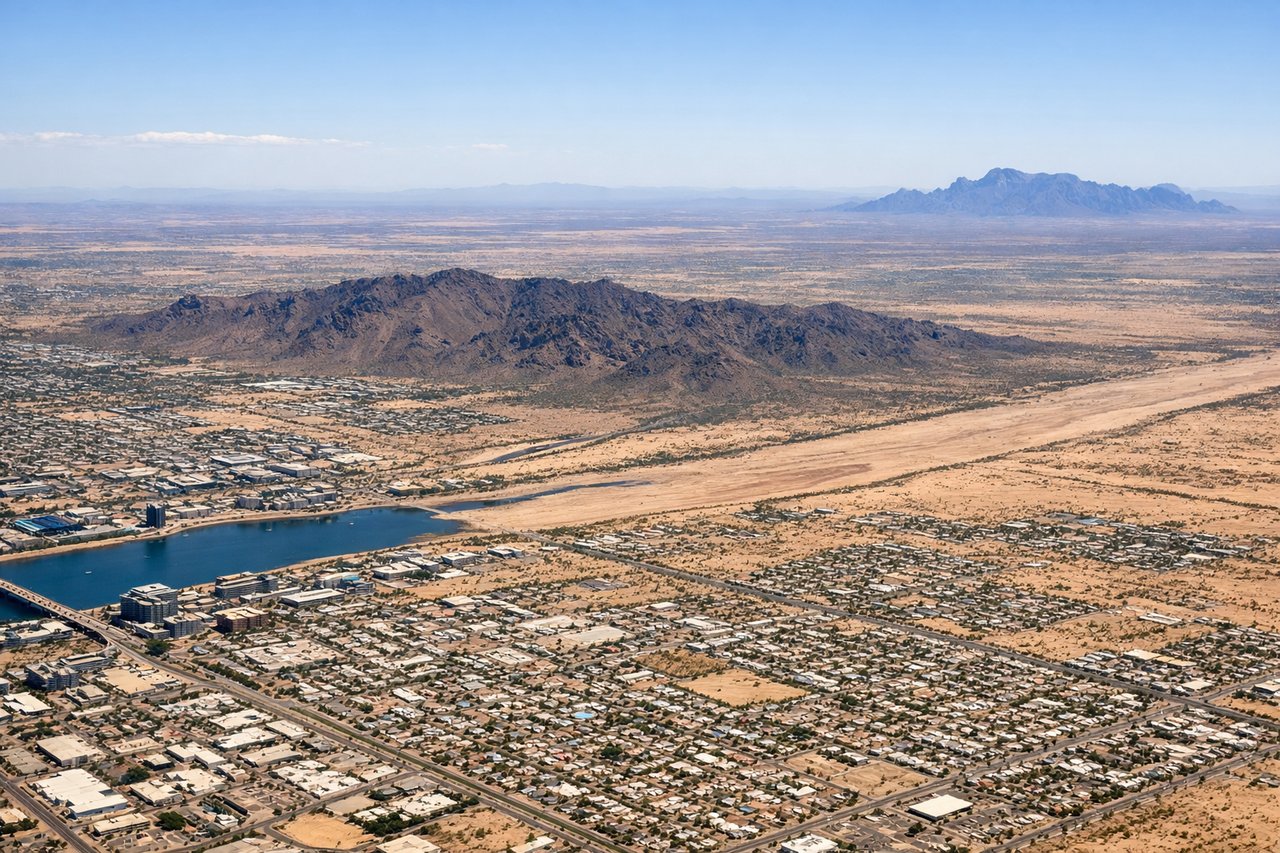
Takeoff from PHX
RIGHTDeparting PHX to the east, the right side gives passengers a good look at South Mountain Park's rugged ridgeline just south of the airport, followed by the jagged profile of the Superstition Mountains as the plane climbs over the Salt River Valley. The left side mostly shows flat suburban Phoenix sprawl with Camelback Mountain a minor, quickly-passing feature.
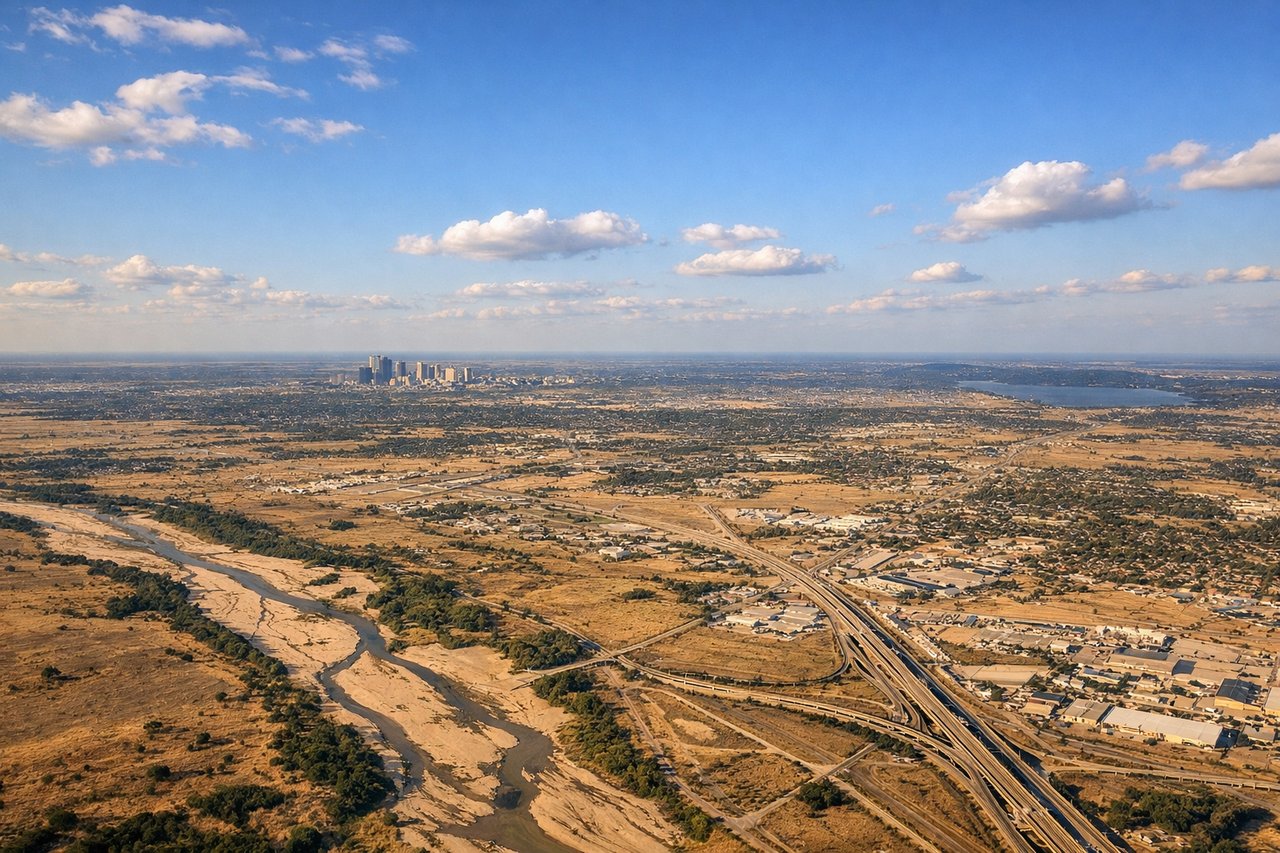
Landing at DFW
RIGHTOn approach into DFW from the west, the right side offers a brief but clear view of the Fort Worth skyline and the patchwork of ranchland and reservoirs west of the metro before the final turn onto the runway. The left side mostly faces open flat plains with little to distinguish it.
Landmarks on this routeAll landmarks →
Will your flight be in sunlight?
See exactly which side of the plane gets sun and shade at your departure time.
About This Route
Which side of the plane should I sit on flying from Phoenix Sky Harbor International (PHX) to Dallas Fort Worth International (DFW)?
Sit on the Right side of the plane for the best views on flights from Phoenix to Dallas-Fort Worth. The right side wins on both ends of the flight: the desert mountain scenery around Phoenix during departure and glimpses of White Sands and the Guadalupe Mountains near the route's midpoint outweigh the flat, featureless plains seen from the left side for most of the trip.
What can I see during takeoff from Phoenix Sky Harbor International in Phoenix?
During takeoff from Phoenix Sky Harbor International (PHX), sit on the Right side for the best views. Departing PHX to the east, the right side gives passengers a good look at South Mountain Park's rugged ridgeline just south of the airport, followed by the jagged profile of the Superstition Mountains as the plane climbs over the Salt River Valley. The left side mostly shows flat suburban Phoenix sprawl with Camelback Mountain a minor, quickly-passing feature. Notable sights include: South Mountain Park, Superstition Mountains, Salt River agricultural valley, downtown Phoenix skyline.
What can I see when landing at Dallas Fort Worth International in Dallas-Fort Worth?
When landing at Dallas Fort Worth International (DFW), sit on the Right side for the best views. On approach into DFW from the west, the right side offers a brief but clear view of the Fort Worth skyline and the patchwork of ranchland and reservoirs west of the metro before the final turn onto the runway. The left side mostly faces open flat plains with little to distinguish it. Notable sights include: Fort Worth skyline, Trinity River bends, DFW airport terminal complex, west Texas ranchland.
How long is the flight from Phoenix to Dallas-Fort Worth?
The flight from Phoenix Sky Harbor International (PHX) to Dallas Fort Worth International (DFW) takes 2h 55m.
What does the Phoenix to Dallas-Fort Worth flight path pass over?
White Sands National Park's gypsum dunes, the Franklin Mountains near El Paso, Guadalupe Mountains National Park, and the oil-field grid of the Permian Basin in west Texas